A Heritage of Kolkata by Dipsankar Saha
Captured near the historic Kumartuli district of Kolkata, this poignant image documents the fading tradition of human-powered rickshaws. The photographer utilized a wide aperture to isolate the subject against the bustling urban backdrop, emphasizing the immense physical toll and resilience of the worker. By focusing on this vanishing mode of transport, the image serves as a powerful social commentary on modernization and the preservation of heritage. Its award-worthy status stems from the raw, empathetic storytelling that transforms a fleeting street encounter into a profound visual record of human endurance within a rapidly changing cityscape.
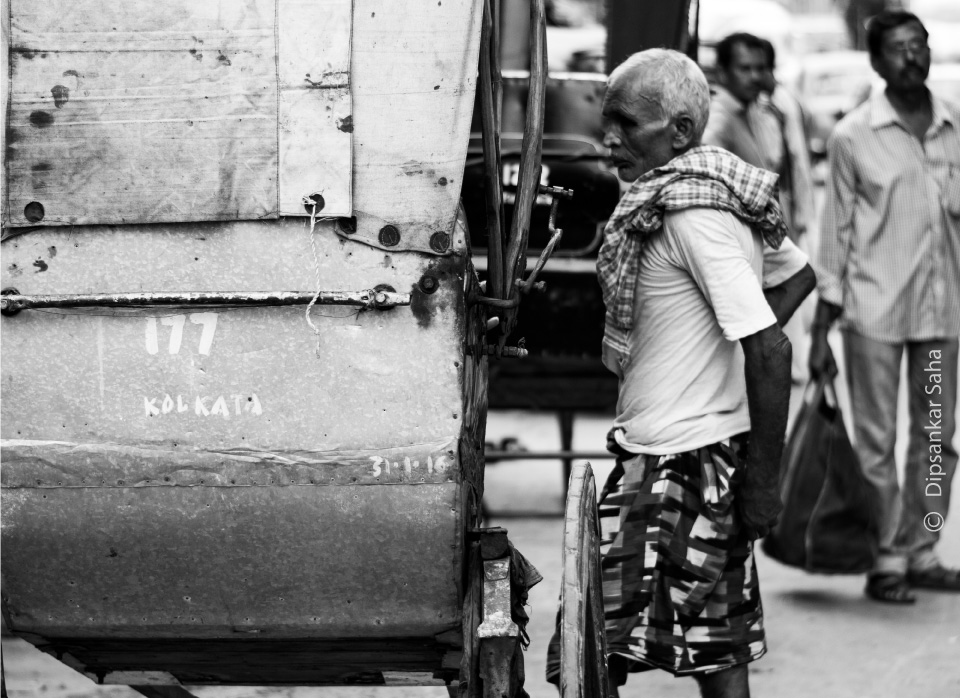
Exposure 1/1000sec @ f/1.8 | ISO 252 | Focal Length 50mm
Dipsankar Saha
Based in the vibrant city of Kolkata, India, Dipsankar Saha is a dedicated explorer who views photography as a vital tool for cultural engagement and discovery. His work is driven by a lifelong passion for travel and an innate curiosity about diverse human experiences. By documenting the nuances of his surroundings, Saha seeks to deepen his connection to the world, transforming his personal adventures into evocative visual narratives that resonate with audiences across the globe.
Resonance Score Breakdown
Transparency Note: The resonance score (11.5/20) is calculated based on social engagement metrics collected before the award announcement.
Expert Photography Reviews · 7
The Weight of Yesterday
Why do we insist on measuring progress by what we leave behind? We build cities that hunger for the new, paving over the echoes of those who walked the same streets with different burdens.
Read the reflection →The Weight of the Pavement
There is a rhythm to the city that exists only in the soles of our shoes, a steady, rhythmic tapping against the stone that tells us we are still moving, still part of the machinery.
Read the reflection →Reviews & Comments
Share your thoughts about this award-winning photograph. Your reviews contribute to the community engagement score.
Kumartuli’s rickshaw puller is rendered as a relic, blurred into the background like a ghost of progress. Why does the shallow depth of field isolate his struggle so aggressively? It’s a choice that feels uncomfortably aestheticized. I’ve walked these streets, and the raw humidity hits harder than this soft focus suggests. Does this framing honor his labor, or does it simply turn his exhaustion into a convenient, romanticized prop for our consumption? It’s a troubling distance.
Kolkata’s heat radiates off this frame. That rickshaw puller isn’t just moving; he’s fighting time itself. I love the way the 50mm isolates his grit against the chaos. One tenth of a second later and the composition would’ve collapsed into mere noise. Saha caught the exact tension in the man’s stride. It’s raw, it’s honest, and it’s fast. Winogrand would’ve tipped his hat to this. You didn’t blink, and that’s why it works. Pure, unrepeatable energy.
It’s strange to look at this dry, dusty street after years of compensating for light absorption and the refractive index of water. Here, the light is constant, not stolen by depth. I’m struck by the rickshaw puller’s sweat; it’s a stark contrast to the fluid, weightless world I inhabit. He’s fighting gravity, not buoyancy. While I’m used to battling backscatter and colour shift, he’s battling the relentless, grinding friction of Kolkata’s pavement. It’s hauntingly beautiful.
1/1000sec at f/1.8, 50mm. A razor-thin plane of focus on a moving subject. It’s an aggressive gamble. Most would’ve missed the eyes, but Saha didn’t. The ISO 252 suggests a lack of confidence in the sensor’s noise floor, yet the shutter speed was necessary to freeze the rickshaw’s motion. I’m actually impressed by the focus accuracy here. It’s a technical tightrope walk that pays off. The shallow depth of field isolates the struggle perfectly. Correct execution.
The ochre of the rickshaw’s rusted frame, echoing the sun-drenched dust of a Morandi still life, creates a melancholic dissonance against the cool, slate-grey shadows of Kolkata’s narrow lanes. It’s a palette of exhaustion, where the skin’s warm, earthy tones struggle against the encroaching urban gloom. I’ve felt my heart ache at this specific, bruised violet light; it’s the colour of a fading history, clinging to the pavement before the modern world washes it away.
The rickshaw’s diagonal trajectory anchors the frame, slicing through the chaotic urban geometry of Kumartuli. It’s a precise geometry that forces the eye toward the subject’s strained posture. The shallow depth of field isolates the worker, yet the background’s blurred vertical lines provide necessary structural resistance. I’ve rarely seen such a brutal, effective use of negative space. It doesn’t rely on sentimentality. The composition holds its own weight, demanding total attention to the mechanics of the frame.
In Kumartuli, we see a man pulling a weight that isn’t just wood and iron, but the heavy history of Kolkata itself. Dipsankar didn’t just snap a shutter; he waited until the rickshaw puller’s exhaustion met the lens. I feel a deep ache in my own chest looking at those calloused hands. It’s a quiet, brutal conversation between the worker and the city. This is a portrait that asks to be returned to, again and again.