Colouring the Egyptian Sky by Fabrizio Bues
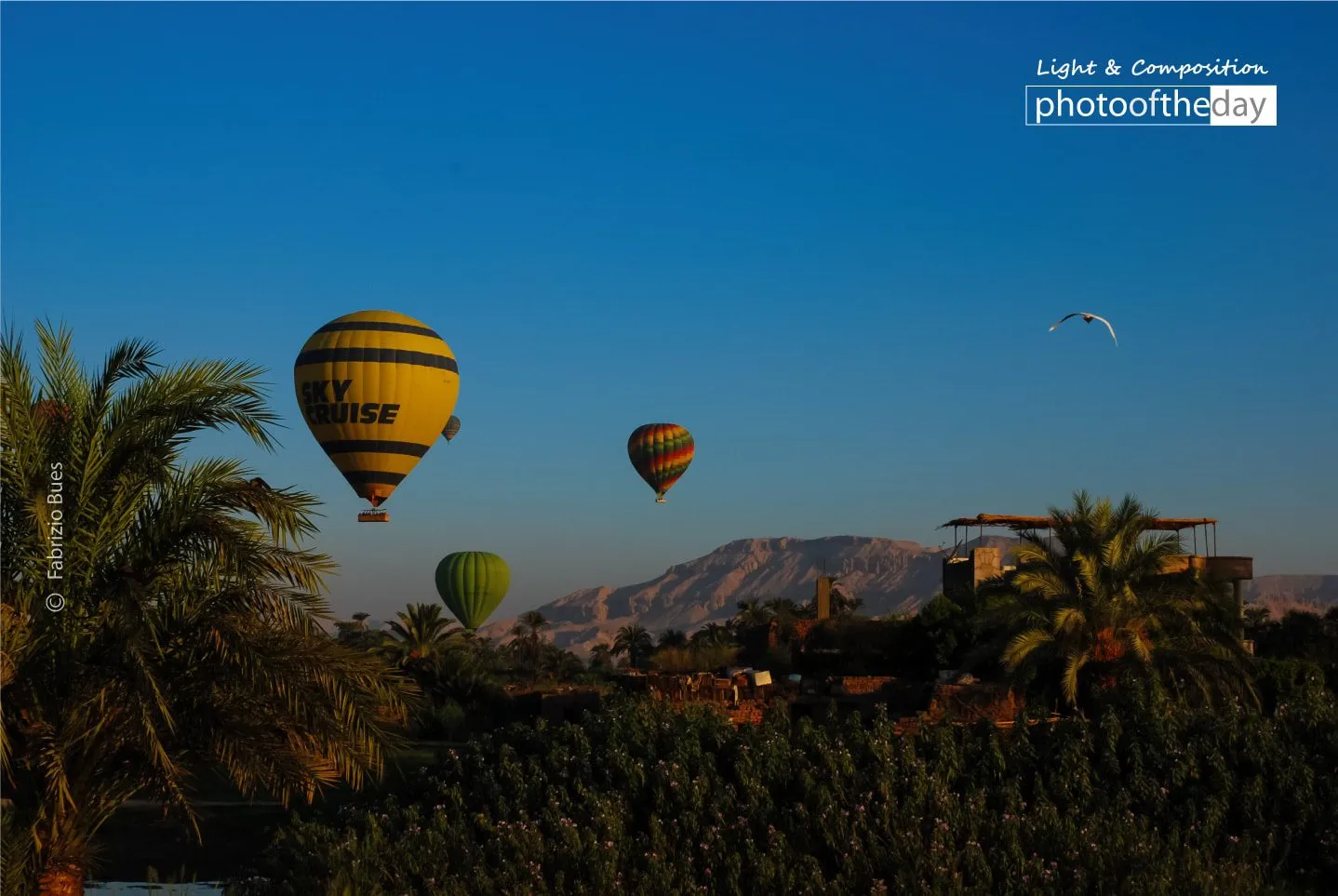
Captured at the break of dawn near the banks of the Nile, this photograph documents a breathtaking moment as dozens of hot air balloons ascended to mark the conclusion of Ramadan. The photographer skillfully framed the scene as the sun dipped behind the hills, transforming the Egyptian sky into a vibrant canvas of color and movement. This image is award-worthy for its masterful composition and the ethereal quality of light, which perfectly captures the serene yet celebratory atmosphere of the landscape at such a significant cultural moment.
Fabrizio Bues
Born in Turin, Italy, in 1972, Fabrizio Bues balances a professional career as a Project Manager for an American corporation with a deep-seated passion for photography. His frequent international travels provide the perfect backdrop for his creative pursuits, allowing him to document diverse landscapes and cultural moments. Dedicated to refining his craft, he actively pursues advanced photographic education to elevate his technical skills and artistic vision, consistently seeking to capture the beauty of the world through his lens.
Resonance Score Breakdown
Transparency Note: The resonance score (5.1/20) is calculated based on social engagement metrics collected before the award announcement.
Expert Photography Reviews · 3
The Breath of Morning
There is a specific quality to the light that arrives just before the world fully wakes. It is a soft, tentative arrival, a promise that the night has finished its work and the day is ready to begin.
Read the reflection →The Breath of Morning
There is a specific weight to the air just before the sun fully claims the horizon. It is a thin, fragile threshold where the night’s cool breath still clings to the earth, yet the promise of heat is already stirring in the marrow of the world.
Read the reflection →Reviews & Comments
Share your thoughts about this award-winning photograph. Your reviews contribute to the community engagement score.
Bues offers us a sky saturated with color, yet I find myself mourning the light he’s surrendered. These balloons drift like ghosts, untethered from the gravity of the earth. It’s a pretty spectacle, sure, but it’s terrified of the dark. Where are the shadows of the Nile? Without them, the scene lacks the weight of existence. I’ve spent my life looking for the abyss in a frame, and here, it’s been bleached away by the sun.
Getting up before dawn in Cairo is a chore, but one suspects Bues didn’t just stumble upon this. The alignment of those balloons against the rising sun suggests he’d been scouting the riverbank for days, waiting for the wind to behave. It’s a rare, quiet spectacle. I’ve spent enough mornings shivering in the dark to appreciate the commitment here. He didn’t just take a picture; he earned the light. It’s a fine, patient piece of work.
The focal plane here captures the Nile’s morning haze with remarkable acuity. By stopping down, Bues has pushed the diffraction limit just enough to render the balloons as crisp, geometric silhouettes against the sun’s flare. I’m genuinely moved by how the chromatic aberration at the edges of the frame softens the harsh desert light into a painterly glow. It’s a rare instance where the optics don’t just record the scene; they elevate the atmosphere itself.