Leave a Reply
Want to join the discussion?Feel free to contribute!

In Geometric Frame, the photographer explores the intersection of urban architecture and human perception at Sialkot Station. By meticulously scouting the location, the photographer identified a unique arrangement of lines and shapes that transform an ordinary transit space into a compelling visual study. The image highlights the photographer's ability to see beyond the mundane, utilizing a keen eye to frame the environment with precision. This work is award-worthy for its disciplined composition and the creative intent behind capturing the hidden geometry of a familiar setting, demonstrating how technical awareness can elevate everyday street scenes into art.
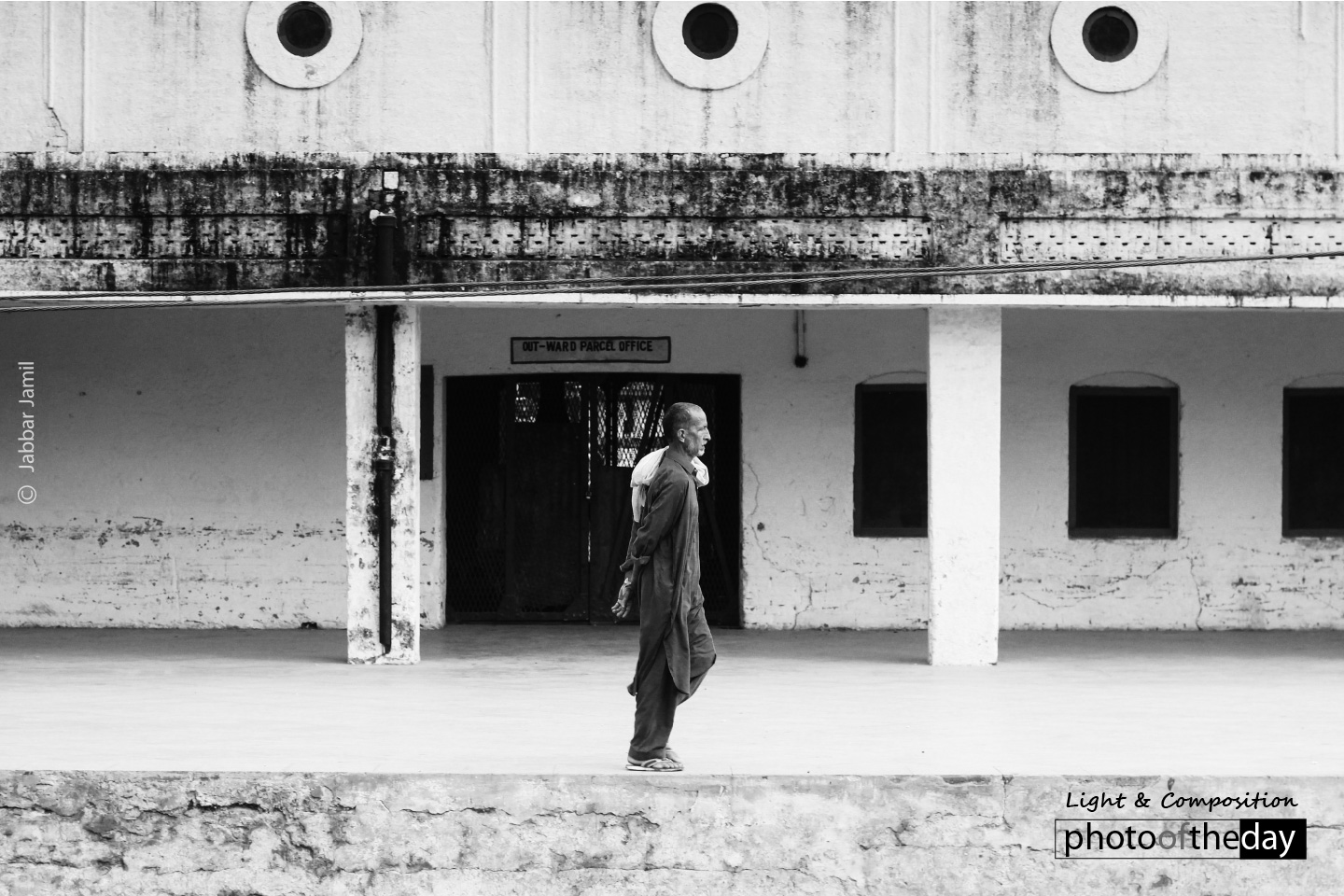 (c) Light & Composition
Based in Sialkot, Pakistan, Jabbar Jamil is a dedicated street photographer who views the camera as both a creative outlet and a vital tool for personal expression. His work focuses on the raw, authentic moments of daily life, often venturing outside his comfort zone to forge deeper connections with the world around him. Through his lens, Jamil captures the unfiltered reality of his surroundings, transforming the ordinary into meaningful visual narratives that serve as a testament to his observant and contemplative approach to photography.
Transparency Note: The resonance score (10.9/20) is calculated based on social engagement metrics collected before the award announcement.
The orb-weaver spider constructs its web with a mathematical precision that defies the chaos of the forest floor, laying down radial threads that act as a structural watershed for every vibration in the air.
Read the reflection →The smell of damp concrete always brings me back to the train platforms of my childhood. It is a sharp, mineral scent, like rain hitting stone that has been baking in the sun for hours.
Read the reflection →
 The Weight of a Witness
Share your thoughts about this award-winning photograph. Your reviews contribute to the community engagement score.