Spring in Offenbach by Minh Nghia Le
Captured during a first-time visit to Germany, this image celebrates the vibrant awakening of spring in Offenbach. The photographer was struck by the sudden beauty of fresh, budding leaves illuminated by soft sunlight filtering through the canopy. By framing the shot to utilize the intricate network of branches as a natural, textured background, the photographer transformed an impulsive observation into a deliberate study of light and form. This photograph is award-worthy for its ability to distill the essence of a new season, turning a simple encounter with nature into a serene and evocative visual narrative.
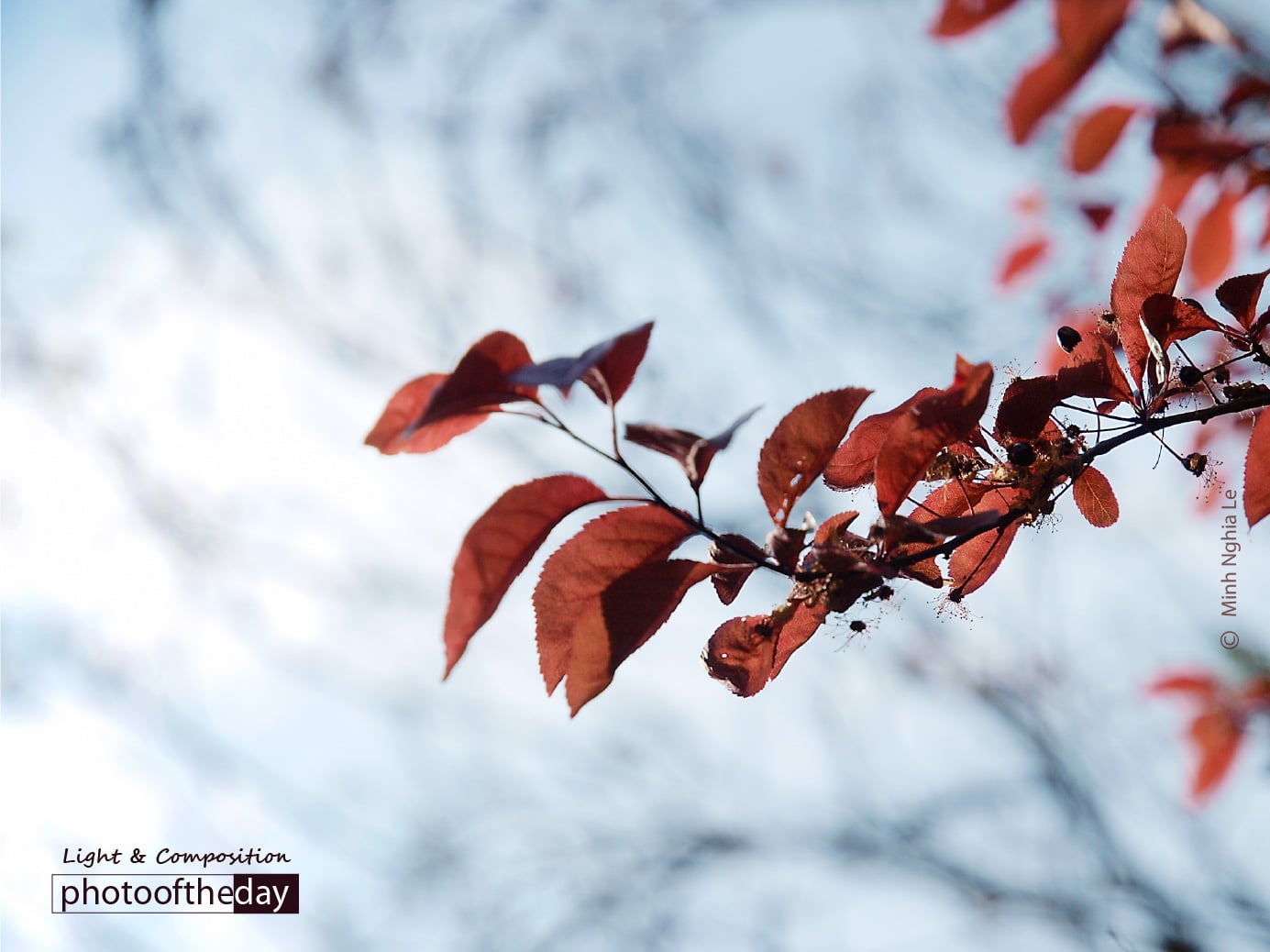
Exposure 1/1250sec @ f/4 | ISO | Focal Length 60mm
Minh Nghia Le
Based in Singapore, Minh Nghia Le is a dedicated photographer who balances a professional career with a profound, long-standing passion for the visual arts. Alongside his wife and creative partner, Mai Phuong Duong, he explores the world through his lens, seeking to share his unique perspective with an international audience. His work is driven by a desire to capture the beauty in everyday moments, reflecting a commitment to photography as a meaningful personal pursuit that transcends his daily professional life.
Resonance Score Breakdown
Transparency Note: The resonance score (11.9/20) is calculated based on social engagement metrics collected before the award announcement.
Expert Photography Reviews · 7
The Weight of Green
I keep a small, dried pressed leaf inside the pages of a book I rarely open. It is brittle now, a ghost of a summer that felt like it would never end, its edges curled and darkened like the skin of a bruised fruit.
Read the reflection →The Architecture of Awakening
When a tree breaks dormancy, it does not do so all at once; it begins with a subtle shift in the vascular system, a slow upward movement of sap that defies gravity to reach the highest, most vulnerable tips of the canopy. This is a quiet, hydraulic persistence.
Read the reflection →Reviews & Comments
Share your thoughts about this award-winning photograph. Your reviews contribute to the community engagement score.
Before the eye identifies the budding leaves, the chest softens. There’s a quiet, rhythmic pulse to the way light catches those Offenbach branches. It’s an invitation to exhale. I’ve returned to this frame three times today, and each time, the intricate, tangled backdrop feels less like wood and more like a memory of waking up. It doesn’t demand attention; it simply settles into the nervous system, leaving a lingering, cool clarity that stays long after I look away.
The light hits those budding leaves like a soft focus lens flare in a French New Wave drama. It’s a quiet, rhythmic pulse of spring. I’ve spent hours in editing suites looking for this exact quality of light, that fleeting moment where the canopy turns into a textured, breathing background. It doesn’t need a pan or a zoom. The shot holds perfectly. Honestly, it makes me miss the stillness of a forest after a long, loud shoot.
We look at these budding leaves in Offenbach and we aren’t just seeing spring; we’re hearing the quiet conversation between the light and the branch. Minh Nghia Le didn’t just look at a tree; they listened to the season’s first breath. It’s a portrait of growth itself, fragile and persistent. I find myself holding my own breath, waiting for the buds to unfurl. It’s a photograph that asks to be returned to, again and again.
Spring in Offenbach feels like a postcard from a stranger who hasn’t yet learned the city’s scars. Why does the lens fixate on these budding leaves while ignoring the industrial grit just beyond the frame? It’s pretty, sure, but it’s also a sanitized gaze. I’m left wondering whose Germany this is meant to be. Does the photographer’s outsider status demand this romanticized softness, or is it just a refusal to look at the real Offenbach?
It’s a pleasant study of light, but let’s be honest: it’s a tourist’s snapshot, not a field study. That 60mm focal length suggests the photographer was standing right there, grabbing a quick frame while walking through the park. I’ve spent weeks in damp hides waiting for a single bud to catch the light properly. This lacks that earned intimacy. It’s pretty, sure, but it’s just an impulsive glance at nature, not a relationship with it.
Spring in Offenbach doesn’t celebrate; it interrogates. Those budding leaves aren’t merely decorative; they’re fragile barricades against the encroaching dark of the canopy. I’ve spent hours staring at the way the Olympus lens forces the branches into a suffocating, textured cage. It’s unsettling. When I look at the light bleeding through, I feel a sudden, sharp ache for the things we leave unlit. It’s a quiet, cold struggle, and frankly, it’s the only honest way to see nature.
Of the thousands of nature studies I’ve reviewed, most are merely pretty. What separates this from the clutter is the depth of field. By pushing the focus onto those budding leaves while letting the branch network dissolve into a soft, textured blur, Le avoids the trap of a flat, literal record. It’s a quiet, honest moment. I felt a genuine sense of relief looking at it; it’s a breath of air that will still feel vital decades from now.