Right on Target by Yasef Imroze
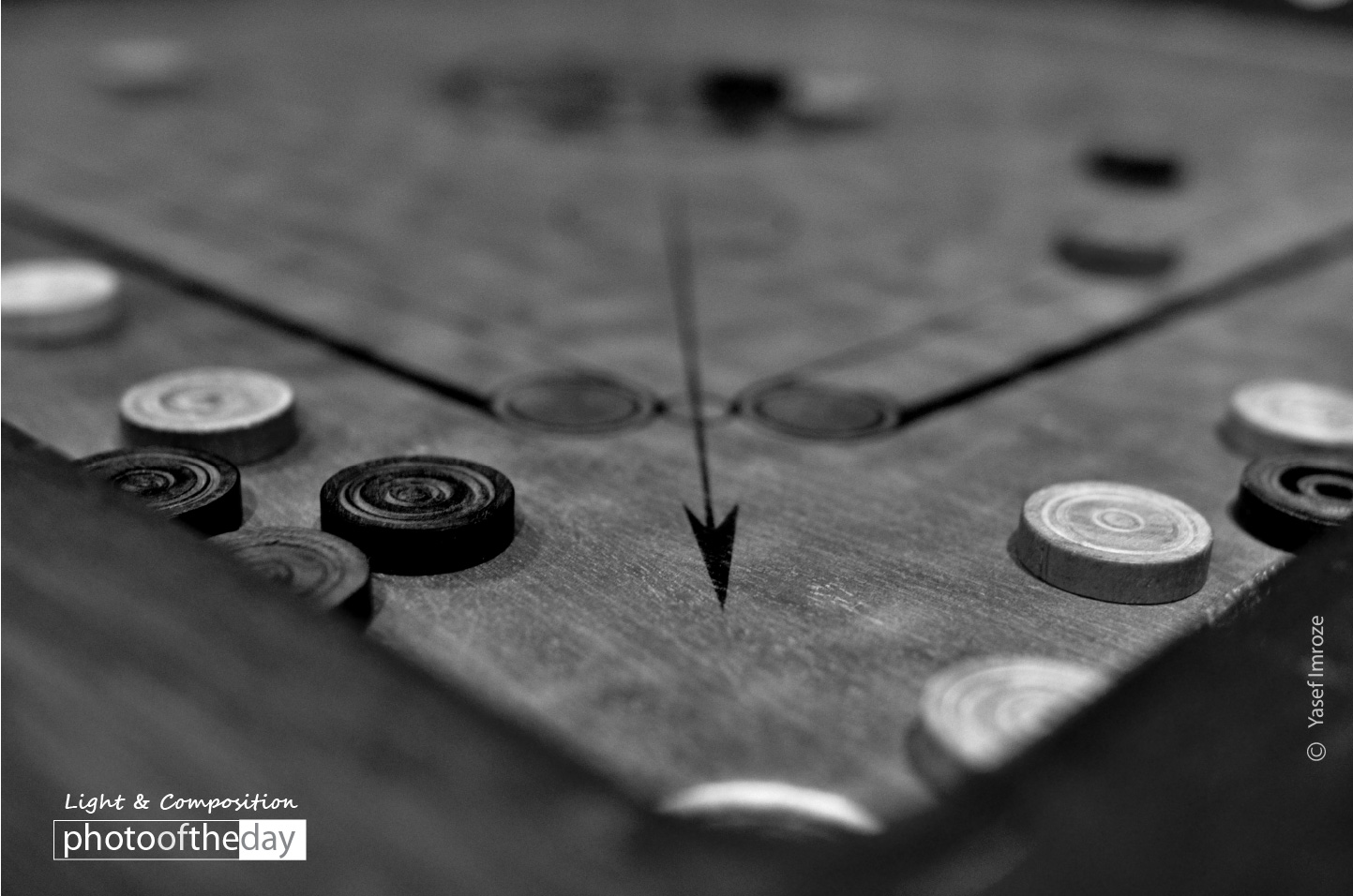
Captured during a relaxed gathering with family and friends, this photograph centers on the classic board game Carrom. Yasef Imroze masterfully documents the quiet intensity and social connection inherent in the game, using a shallow depth of field to draw the viewer into the moment. The composition highlights the tactile nature of the play, turning a simple pastime into a compelling visual narrative. By focusing on the human element and the shared experience of the game, the photographer elevates a casual scene into an award-worthy study of connection and focus, beautifully rendered in black and white.
Yasef Imroze
Originally from Dhaka, Bangladesh, Yasef Imroze Ifaz is currently based in Sydney, Australia, where he balances his professional career and postgraduate studies in Accounting at the University of Western Sydney. A graduate of Macquarie University, he discovered photography as a creative outlet that has fundamentally reshaped his perspective on the natural world. While he specializes in close-up and landscape photography, he remains dedicated to capturing the beauty of his homeland. With a passion for travel, he aspires to explore the globe with his camera, finding immense joy in the art of storytelling through his lens.
Resonance Score Breakdown
Transparency Note: The resonance score (10.6/20) is calculated based on social engagement metrics collected before the award announcement.
Expert Photography Reviews · 6
The Geometry of Sunday
My grandfather kept a wooden board in the hallway closet, stained dark by decades of thumb-flicks and nervous anticipation. On Sunday afternoons, the house would go quiet, save for the rhythmic clack of discs colliding and the low murmur of score-keeping.
Read the reflection →The Geometry of Intention
We spend so much of our lives waiting for the grand collision, the moment when the world finally aligns to meet our desires. We lean into the silence, holding our breath as if the air itself might carry the weight of our aim.
Read the reflection →Reviews & Comments
Share your thoughts about this award-winning photograph. Your reviews contribute to the community engagement score.
You waited for that flick of the finger, didn’t you? There’s a quiet tension in this frame that I’ve felt a thousand times in rooms like this. It’s not just a game; it’s the way they’re leaning in, entirely forgotten by the world outside. Because you chose that shallow depth, I’m right there at the board with them. I can almost hear the striker hitting the wood. You caught a real, breathing moment. Well done.
The shallow depth of field isolates the Carrom board, yet the spatial tension remains unresolved. The frame’s fulcrum shifts awkwardly toward the periphery, leaving the central action adrift. It’s a messy geometry. While the tactile focus on the striker provides a momentary anchor, the background blur lacks the necessary discipline to hold the picture plane. I’m frustrated by the lack of structural rigor here. It doesn’t quite cohere. The composition simply fails to command the space.
We lean in close, drawn by the quiet tension of the Carrom board. Yasef didn’t just watch a game; he listened to the rhythm of the flicking strikers and the shared breath of the players. It’s in their eyes—that sharp, singular focus that makes the world outside the frame vanish. I feel a sudden, deep nostalgia for my own childhood gatherings. It’s a beautiful, human stillness that asks to be returned to again and again.
The shutter clicks, and the room goes silent. It’s a tight, 28mm frame where the tension of the Carrom board pulls everything inward. I love the way the shallow depth of field isolates that flick of the finger; it’s pure, kinetic energy frozen mid-air. The grain feels like film stock pushed to its limit. It’s the shot the editor keeps because it’s where the story actually happens. I’d have held this frame forever.
At f/2.2, the focal plane is razor-thin, isolating the striker’s texture against a soft, creamy bokeh. It’s a delicate optical dance. The 28mm lens captures the tactile grain of the board, yet the diffraction limit remains mercifully distant. I’m genuinely moved by how the light clings to the wood’s edge; it’s a quiet, physical perfection. Imroze has harnessed the glass to reveal a fleeting, human intensity that the naked eye would surely have missed.
It’s a pleasant enough scene, though one suspects the shutter clicked between sips of tea. There’s a certain ease here that makes me suspicious; it doesn’t smell of damp boots or the exhaustion of a long vigil. I’ve spent enough nights waiting for the light to know when a moment was simply stumbled upon. Still, the focus on those tactile fingers is sharp. It’s a decent snapshot, but I’m left wondering if he ever returned.