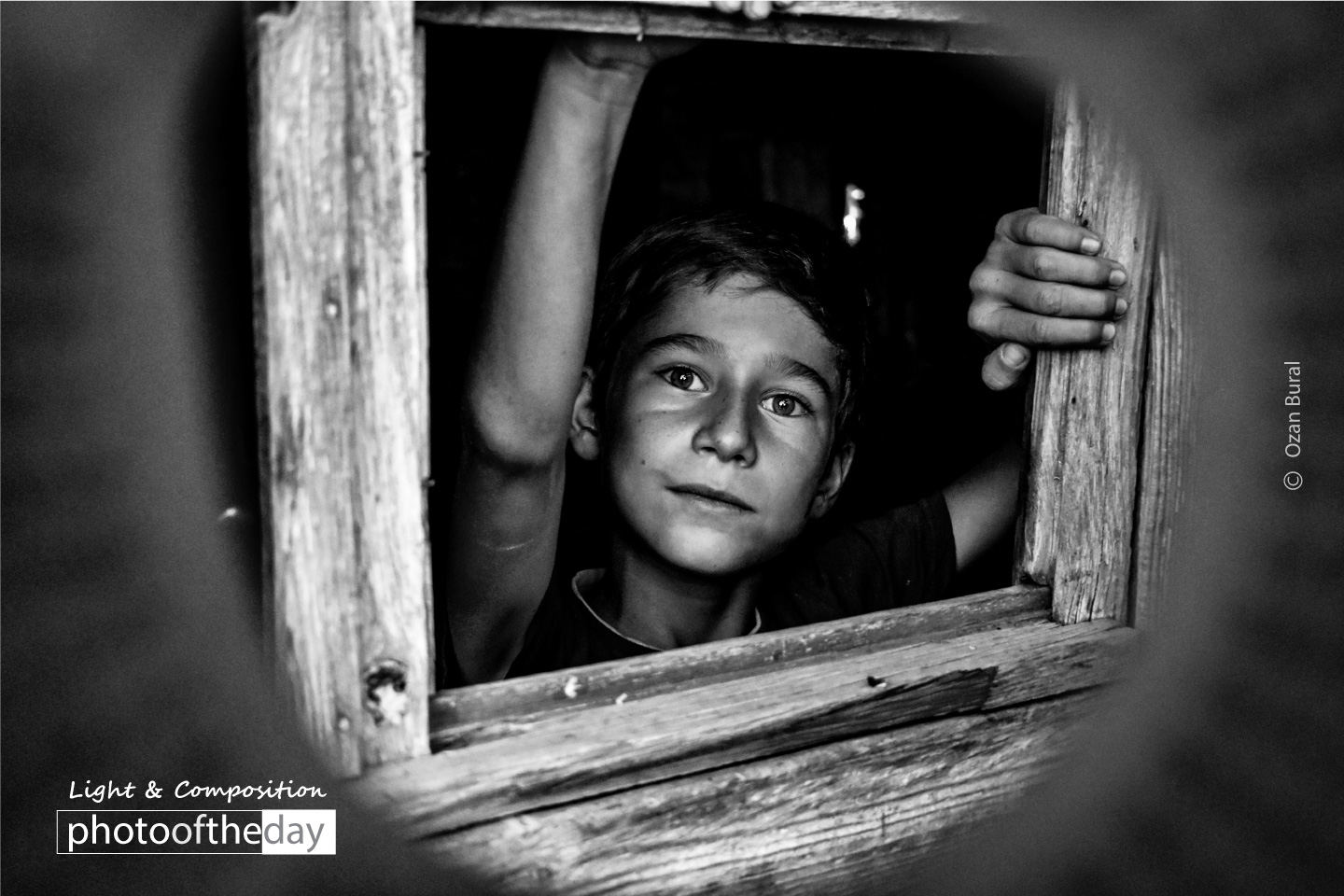
Through the Window by Ozan Bural
Through the Window captures a poignant moment of introspection, reflecting the photographer’s fascination with the intersection of privacy and human emotion. Taken on a summer day in 2019, the image utilizes a wide-angle perspective to frame its subject within a delicate, layered environment. The photographer’s deliberate choice of a high ISO and shallow depth of field emphasizes the subject’s isolation, drawing the viewer into a quiet, contemplative narrative. This photograph is award-worthy for its raw, authentic portrayal of human vulnerability, demonstrating a sophisticated ability to transform a fleeting, everyday moment into a profound visual exploration of the internal state.
Ozan Bural
Based in Usak, Turkey, Ozan Bural is an emerging photographer whose work is defined by a deep curiosity about the human experience. Born in 2000, he channels his passion for travel and human connection into his imagery, constantly seeking to document the emotional landscapes of the people he encounters. His evolving portfolio reflects a dedicated pursuit of storytelling through the lens, as he balances his academic life with a growing ambition to make his mark on the international photography community.
Resonance Score Breakdown
Transparency Note: The resonance score (12.1/20) is calculated based on social engagement metrics collected before the award announcement.
Expert Photography Reviews · 8
The Glass Between Us
In the nineteenth century, the invention of clear, large-pane glass changed how we understood the boundary between the private self and the public world. Before that, windows were small, thick, and often distorted, keeping the outside at a distance.
Read the reflection →The Architecture of Silence
We often mistake the glass for a barrier, forgetting that it is merely a membrane between the pulse of the world and the quiet theater of the self.
Read the reflection →Reviews & Comments
Share your thoughts about this award-winning photograph. Your reviews contribute to the community engagement score.
Peering through that glass, I wonder if she knew Ozan was there. There’s a heavy, guarded stillness in her posture that feels like a private sanctuary breached. It’s not a gift; it’s a theft of a quiet moment. I find myself wanting to look away, yet her eyes hold a weary depth that stops me cold. This face has a whole life in it, but I’m left wishing she’d been invited into the frame.
That glass is a barrier, but Ozan caught the exact heartbeat where the subject’s gaze meets the world. It’s raw. If he’d fired a fraction later, the reflection would’ve swallowed the eyes, and the tension would’ve vanished. I love the way the light hits that frame; it’s honest, unposed, and perfectly timed. Cartier-Bresson would’ve nodded at this. It’s not just a portrait; it’s a collision of interior silence and the chaotic street outside. Brilliant timing.
Most entries this year relied on heavy post-processing to fake depth, but Bural’s work earns its place through restraint. The grain from that ISO 3200 isn’t a flaw; it’s the texture of a memory. I’ve stared at this window for an hour, and it’s the way the glass obscures the subject that gets me—it feels like I’m intruding on a secret. It’ll endure because it captures the ache of being alone, not just the look of it.
Peering through glass at a subject unaware of your presence is a voyeuristic act I’ve spent my life avoiding. While the composition is tight, it feels extracted rather than earned. I find myself recoiling at the intrusion; there’s no consent here, only a stolen moment of vulnerability. In the wild, I’d wait hours to be accepted by a creature. Here, the photographer simply took. It’s technically proficient, sure, but it lacks the necessary respect.
One suspects the light cooperated on the first attempt. It often does, for the patient. Shooting at ISO 3200 in daylight suggests a hurried grab rather than a long, cold vigil. I’ve spent enough afternoons waiting for a window to reveal a soul to know when a moment’s been earned. It’s a decent frame, certainly, but I’m left wondering if Bural ever returned to this spot when the light wasn’t quite so convenient.
We look at this face and we understand something about the weight of silence. Ozan didn’t just point a lens; he sat in the quiet of that Usak room until the subject forgot he was there. It’s a fragile, layered intimacy. I find my own breath catching when I trace the light hitting those tired eyes. It’s a photograph that asks to be returned to, because it’s not just a portrait—it’s a conversation held in glass.
Fenestration here acts as a threshold, not just a frame. By choosing a 32mm focal length, Bural captures the tension between the interior void and the subject’s gaze. The light grazing the wall reveals a tactile depth that’s often lost in architectural documentation. It’s a rare, honest study of how we inhabit space. I find myself holding my breath, feeling the weight of that silence; it’s as if the building itself is listening to her.
You waited for that light to hit the glass just right, didn’t you? There’s a heavy, quiet ache in the way your subject sits there, framed by the world outside but clearly miles away from it. I’ve spent enough time in rooms like that to recognize the weight of that silence. It’s not just a portrait; it’s a mirror. You caught a soul in a moment of honest, unvarnished solitude. I felt that stillness immediately.