Lubitel 166B by Jabbar Jamil
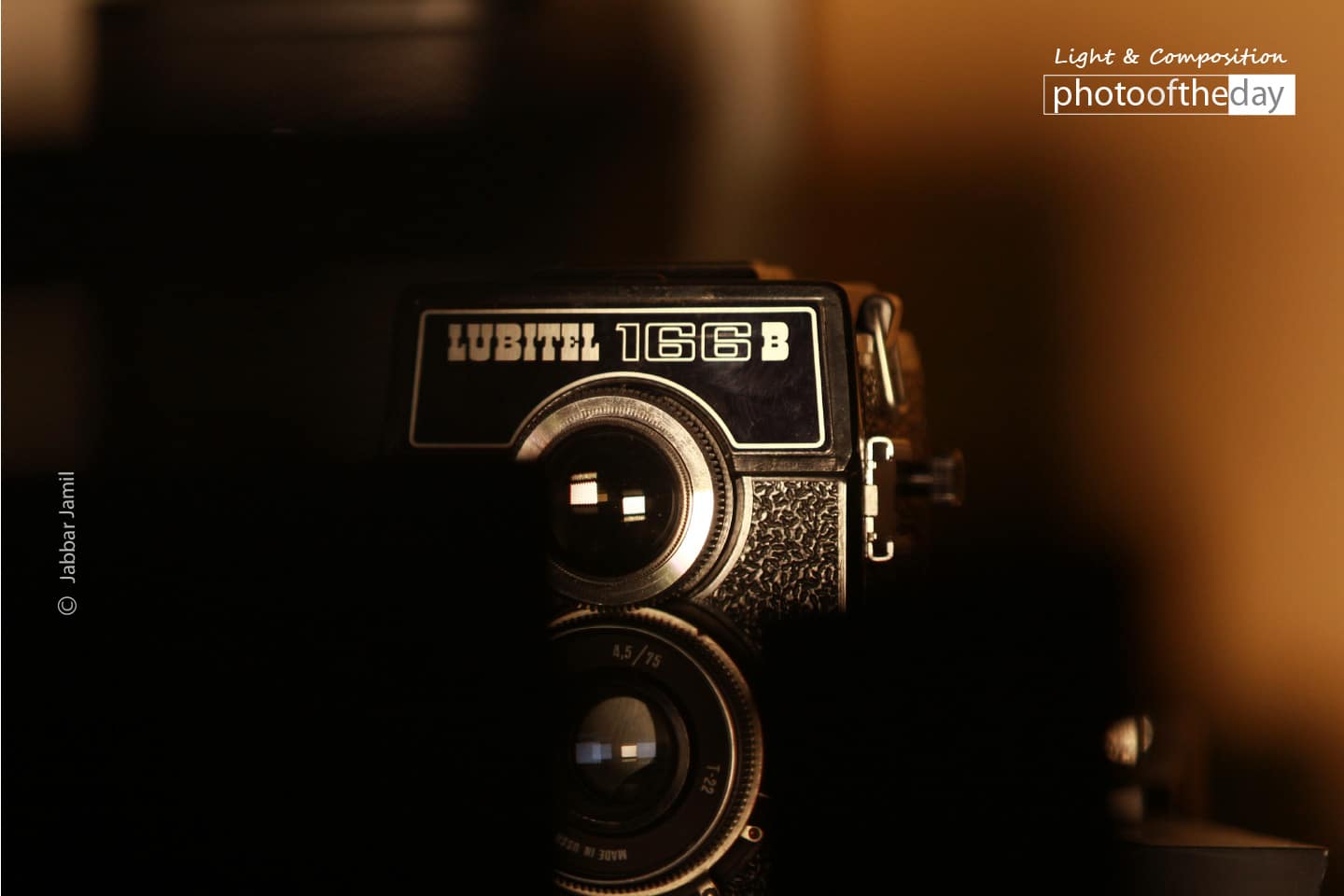
The photograph captures a unique perspective through the lens of a vintage Lubitel 166B, a classic USSR-made medium format camera. By shooting through a tripod head, the photographer intentionally restricted the focus area, creating an intimate and experimental frame. This creative decision highlights the beauty of mechanical constraints, turning a simple still life into a study of light and texture. The image stands out as an award-worthy piece for its inventive approach to composition and the photographer's willingness to push the boundaries of traditional film photography, transforming a personal gift into a compelling visual narrative.
Jabbar Jamil
Based in Sialkot, Pakistan, Jabbar Jamil is a dedicated street photographer who views his craft as a vital bridge to the outside world. He utilizes photography as both a creative outlet and a therapeutic practice, often documenting the raw, unfiltered realities of his surroundings. Through his work, Jamil seeks to forge human connections and challenge his own comfort zone, consistently finding beauty in the unexpected moments of daily life.
Resonance Score Breakdown
Transparency Note: The resonance score (11.7/20) is calculated based on social engagement metrics collected before the award announcement.
Expert Photography Reviews · 7
The Architecture of Looking
We spend our lives peering through keyholes, convinced that the sliver of light we catch is the entirety of the room. We frame the world in narrow apertures, hoping that by limiting our sight, we might finally understand the depth of what stands before us.
Read the reflection →The Weight of Yesterday
The smell of cold metal always brings me back to my father’s workbench. It is a sharp, clean scent—like iron filings mixed with the faint, oily tang of machine grease.
Read the reflection →Reviews & Comments
Share your thoughts about this award-winning photograph. Your reviews contribute to the community engagement score.
Peering through the Lubitel’s viewfinder, I’m struck by how the mechanical frame mimics the way we choose to see our own history. It’s a quiet, lonely sort of intimacy. While there’s no human subject here, the camera itself feels like a person holding its breath. I find myself wanting to reach out and touch that cold, Soviet metal. It’s a beautiful, honest study of a tool that’s seen more lives than we’ll ever know.
Peering through the tripod head of a Lubitel 166B, Jamil forces us into a claustrophobic, mechanical voyeurism. Why do we fetishize the vintage apparatus while ignoring the Sialkot context? It’s a clever trick, yet it feels hollow. I’m left cold by this obsession with the gear’s constraints. Does the camera’s history matter more than the life it obscures? I’d prefer to see what’s outside the frame, rather than being trapped by the photographer’s clever, narrow aperture.
The frame snaps shut, locking the viewer into a claustrophobic, mechanical gaze. Shooting through the tripod head is a brilliant, jagged cut; it forces the eye to fight for the light. I’m genuinely breathless at how the Lubitel’s glass turns cold metal into a soft, textured narrative. It’s a sequence compressed into a single, breathless beat. The editor wouldn’t change a thing here. It’s raw, it’s precise, and it’s exactly the frame that keeps the audience watching.
Before the eye identifies the Lubitel, something quiets in the chest. The restricted aperture forces a claustrophobic intimacy, pulling my pulse into that narrow, metallic tunnel. It’s a sensory trap. I feel the cold weight of the Soviet glass against my own cheek. When I return to this, the mechanical constraint feels less like a choice and more like a held breath. It’s haunting how such a small, dark circle can hold so much stillness.
The circular aperture of the Lubitel lens creates a rigorous geometric constraint, forcing the eye into a central focal vortex. By framing through the tripod head, Jamil establishes a precise 1:1 ratio of mechanical void to textured surface. It’s a brilliant spatial equation where the vignette acts as a secondary frame. I’m genuinely thrilled by how the rigid, dark geometry of the metal mount resolves the chaos of the background into a perfectly balanced, claustrophobic equilibrium.
We look through the Lubitel’s glass and find a conversation between metal and memory. By framing through the tripod head, Jabbar hasn’t just captured a still life; he’s listened to the camera’s own history. It’s a quiet, mechanical intimacy that feels like a secret shared between old friends. I’m struck by how the restricted focus pulls us into the texture of the past. It’s a photograph that asks to be returned to, again and again.
Lubitel 166B, fixed aperture, mechanical shutter. It’s a primitive tool, yet Jamil forces a constrained perspective through the tripod head. The focus is razor-thin, bordering on clinical. It’s a gamble that pays off. I’ve spent years staring at digital perfection, but this raw, mechanical grit actually makes me miss the tactile resistance of film. The technical limitation isn’t a failure here; it’s the entire point. He’s successfully weaponized the camera’s own inherent design flaws.