The Birds by Adam Foster
Venturing onto a wooden dock over the serene waters of Lake Rotorua, the photographer captured a candid moment of avian patience. As fishermen stood waist-deep in the water, a cluster of seagulls gathered nearby, their eyes fixed on the activity in anticipation of a potential catch. This image is award-worthy for its masterful composition and the subtle tension between the human presence and the wildlife. By isolating the birds against the expansive, reflective surface of the lake, the photographer highlights the quiet, opportunistic nature of the subjects, transforming a simple scene into a compelling narrative of life in the wild.
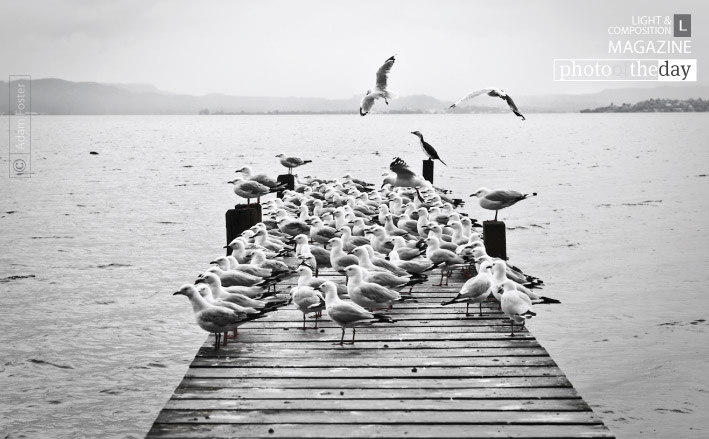
Exposure 1/500sec @ f/8 | ISO 200 | Focal Length 67mm
Adam Foster
Based in Manchester, England, Adam Foster is a multifaceted photographer, digital artist, and frontend developer. His work is defined by a meticulous attention to detail and a broad curiosity that drives him to experiment with diverse styles and technical approaches. Drawing inspiration from the rhythms of everyday life, Foster crafts a varied portfolio that captures people, places, and wildlife through a distinct and personal lens.
Resonance Score Breakdown
Transparency Note: The resonance score (15.1/20) is calculated based on social engagement metrics collected before the award announcement.
Expert Photography Reviews · 4
The Salt on the Wind
The air near the water always tastes of cold iron and wet feathers. I remember standing on a pier as a child, the wood groaning beneath my bare feet, damp and splintered, pressing into my skin with the stubborn memory of the tide.
Read the reflection →The Geometry of Waiting
In the journals of early naturalists, one often finds sketches of birds perched upon fence posts, their bodies rendered as simple, static triangles against the vastness of a field.
Read the reflection →Reviews & Comments
Share your thoughts about this award-winning photograph. Your reviews contribute to the community engagement score.
It’s awesome Sir…
The grey of these feathers, echoing the bruised, slate-heavy expanse of Lake Rotorua, creates a chromatic tension that’s truly haunting. It’s a palette Morandi would’ve adored, where the muted, chalky whites of the gulls dissolve into the water’s cold, metallic sheen. I’m breathless at how the light doesn’t merely illuminate, but rather stains the scene with a melancholy, silver-blue chill that feels like a secret shared between the birds and the damp, waiting air.
Lake Rotorua isn’t merely water here; it’s a void waiting to swallow the birds. Foster captures them in a fragile, grey suspension, yet he’s ignored the weight of the encroaching dark. It’s too bright, too eager to please. I’ve spent hours staring at these gulls, and frankly, it makes me lonely. They’re waiting for scraps, but the frame lacks the necessary gloom to make their hunger feel existential. It’s a scene that’s forgotten how to hide.
Most wildlife shots are just snapshots of feathers. What separates this from the thousands of mediocre bird photos I’ve reviewed is the deliberate geometry of the gulls against the flat, silver expanse of Lake Rotorua. It’s the tension between the fishermen’s stillness and the birds’ predatory focus that makes me lean in. I’d hang this in a study thirty years from now because it captures a quiet, universal hunger that doesn’t age. It’s honest, sharp, and perfectly composed.
One suspects the light cooperated on the first attempt. It often does, for the patient. Foster has captured a tidy scene at Rotorua, but I’m left wondering if he’s ever stood in that water until his toes went numb. The composition is clean, yet it lacks the grit of a long, miserable vigil. It’s a pleasant enough snapshot, but I’ve seen more honest work from a tripod left out in a gale. It’s just too comfortable.