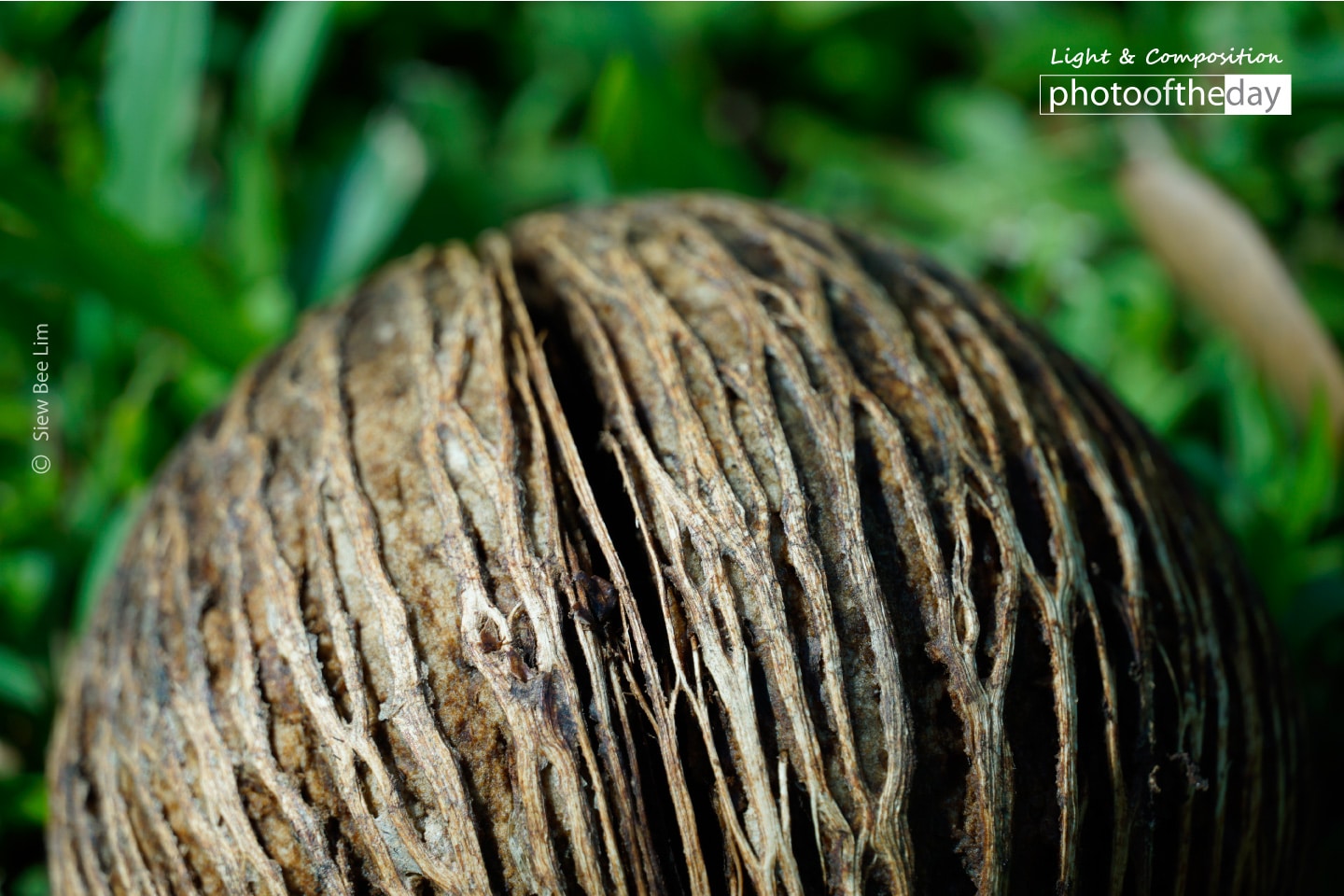
A Pong-pong Fruit by Siew Bee Lim
Captured during a mid-morning excursion to the Chinese and Japanese Gardens in September 2018, this image highlights the quiet beauty of a fallen pong-pong fruit. The photographer was drawn to the transformation of the fruit, noting its shift from a vibrant green, mango-like appearance to a weathered, brown state resting upon the garden path. This close-up study is award-worthy for its keen observation of nature’s cycle, turning an overlooked botanical detail into a compelling subject through careful framing and a focus on texture, demonstrating a sophisticated eye for the subtle narratives found within the natural environment.
Siew Bee Lim
Born in Singapore in 1965, Siew Bee Lim is a dedicated photographer who balances her professional background as a programmer with a long-standing passion for visual storytelling. Though she initially explored photography as a hobby in her youth, she has returned to the craft with renewed purpose, seeking formal education to refine her artistic vision. Drawing inspiration from her appreciation for Chinese painting and a lifelong love of literature, she continues to develop her technical skills and creative perspective through the Light & Composition platform.
Resonance Score Breakdown
Transparency Note: The resonance score (11.7/20) is calculated based on social engagement metrics collected before the award announcement.
Expert Photography Reviews · 7
The Grace of Decay
Seneca once remarked that everything which is destined to grow must first be prepared to wither. We are often obsessed with the bloom, the vibrant green of the beginning, yet we avert our eyes from the inevitable return to the earth.
Read the reflection →The Weight of What Remains
Why do we insist that beauty must be synonymous with the bloom? We celebrate the arrival, the vibrant pulse of life at its peak, yet we turn our gaze away when the rhythm shifts toward the earth. There is a quiet, stubborn dignity in the surrender of form.
Read the reflection →Reviews & Comments
Share your thoughts about this award-winning photograph. Your reviews contribute to the community engagement score.
The pong-pong fruit’s decay isn’t merely botanical; it’s a Morandi-esque study in desaturated ochre and the bruised, dusty violet of a shadow retreating from the Singaporean sun. I’m utterly transfixed by how the skin’s leathery, necrotic brown harmonizes with the path’s gritty, sun-bleached limestone. It’s a quiet, melancholic alchemy of light that doesn’t just document a cycle, but rather, it’s a visceral, tactile ache of fading life that I’ve rarely seen captured so poignantly.
The frame holds its breath. It’s a slow, deliberate pan across decay, finding rhythm in the weathered skin of the pong-pong fruit. I’ve spent hours in editing suites, and I know this is the shot the editor keeps—the one that anchors the scene. It doesn’t need movement; the texture tells the whole story of the fall. Honestly, it makes me want to reach out and touch the grit. A perfect, silent cut.
We often walk past the fallen, ignoring the history written in decay. Here, Siew Bee Lim has listened to the pong-pong fruit’s final chapter. Its weathered, brown skin tells a story of time’s passage that human faces usually keep hidden. I find myself aching for the vibrant green it once held, yet there’s a quiet dignity in this transformation. It’s a portrait of a life cycle, and honestly, it makes me feel quite small.
It’s a relief to see a frame that doesn’t demand a pulse from its subject. By focusing on the decay of a fallen pong-pong fruit, Lim avoids the frantic, invasive pursuit of wildlife that usually clutters our galleries. I’ve spent enough time in the field to appreciate this stillness; it’s a quiet, honest observation of the garden’s cycle. It’s refreshing to see a photographer simply let nature be, without forcing an encounter.
It’s a curious study of decay against the rigid datum of a paved path. Architecture is usually about the permanence of solid and void, but here, the fruit’s weathered texture challenges that stability. The light hits the fibrous skin with a harshness that makes me feel the humidity of that Singapore morning. It’s a quiet, structural tension; the organic form disrupts the geometry of the walkway, reminding us that nature eventually reclaims every built threshold.
Nature’s decay isn’t usually my beat, but Siew Bee Lim caught this pong-pong fruit right as it surrendered to the pavement. It’s a quiet, brutal transition. I’ve walked past a thousand rotting things without looking, yet here, the texture of that weathered skin pulls me in. It’s not a fleeting street gesture, but it’s honest. One tenth of a second later and the light shifts, the mood dies. She saw it. I’m actually impressed.
It’s easy to overlook a rotting fruit on a Singaporean path, yet here it sits, demanding attention. One suspects the photographer didn’t just stumble upon this; they waited for the light to catch that fibrous, decaying texture just so. I’ve spent enough mornings in damp gardens to appreciate the patience required to make rot look dignified. It’s a quiet, disciplined study. I find myself actually wanting to reach out and touch the grit. Well earned.