Fishermen’s Livelihood by Tanmoy Saha
Captured during the golden hours at Cox's Bazar, Bangladesh, this photograph documents the rhythmic return of local fishermen from the Bay of Bengal. The photographer utilized a telephoto lens to isolate the subjects against the coastal backdrop, emphasizing the raw, industrious spirit of their daily labor. The image is award-worthy for its evocative storytelling and balanced composition, which transforms a routine moment of survival into a poignant visual narrative. By focusing on the interplay of light and human effort, the work provides an intimate glimpse into the essential connection between the community and the sea.
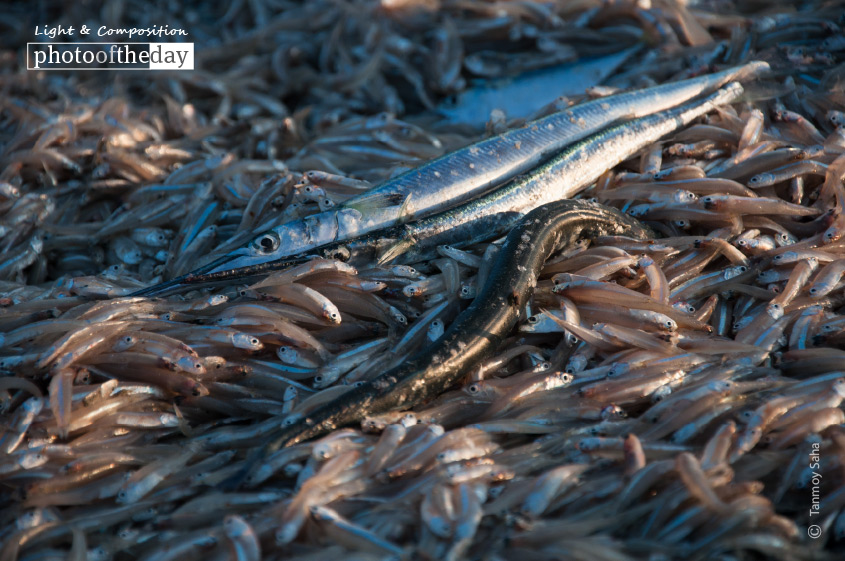
Exposure 1/800sec @ f/7.1 | ISO 400 | Focal Length 105mm
Tanmoy Saha
Based in Dhaka, Bangladesh, Tanmoy Saha is a dedicated photographer who began his creative journey in 2007. An Electronics and Telecommunication Engineering graduate, he balances his technical background with a passion for portrait, landscape, and wildlife photography, having honed his craft through courses at the Dhaka University Photography Society and Pathshala. His evocative work has been featured in multiple exhibitions at the National Art Gallery in Bangladesh, reflecting his commitment to capturing the authentic human experience.
Resonance Score Breakdown
Transparency Note: The resonance score (12.4/20) is calculated based on social engagement metrics collected before the award announcement.
Expert Photography Reviews · 7
The Weight of the Tide
I remember sitting on a wooden pier in Cornwall, watching a fisherman mend his nets. His hands were thick, calloused, and moved with a rhythm that didn't require his eyes. I asked him if he ever grew tired of the salt and the early starts.
Read the reflection →The Salt in Our Veins
There is a rhythm to the tide that mirrors the pulse of a human heart, a constant pulling away and returning that defines the shape of our days. We are all, in some sense, tethered to the horizon, waiting for the water to yield what we need to survive.
Read the reflection →Reviews & Comments
Share your thoughts about this award-winning photograph. Your reviews contribute to the community engagement score.
The frame resolves into a precise 3:1 ratio, grounding the fishermen’s silhouettes against the vast, negative space of the surf. The diagonal vectors of the nets create a tension that pulls the eye toward the lower-left quadrant, perfectly balancing the vertical axis of the figures. It’s a rigorous spatial equation. I’m genuinely moved by how the geometry anchors such chaotic labor; it’s a beautifully solved problem of mass and light. Everything here just clicks into place.
Most entries in this category rely on the golden hour to mask a lack of narrative depth. What separates this from the pack is the compression of the 105mm lens, which turns the fishermen’s struggle into a dense, rhythmic pattern of silhouettes. It’s not just a pretty sunset; it’s a document of exhaustion. I’ve looked at thousands of these, but the way the water catches the light here actually makes me hold my breath. It’ll endure.
We watch these men emerge from the Bay of Bengal, their bodies etched with the salt of a long day’s labor. Tanmoy didn’t just capture a scene; he listened to the rhythm of their exhaustion. We look at their faces and we understand the weight of the nets they carry. It’s a quiet, heavy grace that moves me. I’ve felt that same pull of the tide in my own bones. This is a photograph that asks to be returned to.
The salt air clings to these frames. I’ve stood in that same humid haze, waiting for the light to soften into gold. Tanmoy didn’t rush; he let the Bay of Bengal dictate the rhythm. Watching those fishermen haul their nets, I feel a quiet ache in my own shoulders. It’s not just labor; it’s a prayer offered to the tide. He listened to the sea, and it finally whispered back in this perfect, fleeting moment.
Cox’s Bazar isn’t a place for the faint of heart, and one suspects Mr. Saha didn’t just wander down for a quick snap. The salt spray on a D90 sensor is a miserable chore to clean, yet he’s committed to the grit here. I’ve spent enough mornings shivering on a shoreline to recognize the patience required for this light. It’s a hard-won frame. He didn’t just find these men; he waited until they belonged to the sea.
Before the eye identifies the nets or the salt-crusted skin, something in the chest tightens. It’s the weight of the sea, I think. I’ve felt that specific, rhythmic exhaustion in my own limbs just looking at them. When I return to this frame a year later, the golden light doesn’t feel warm; it feels like a closing door. It’s a quiet, heavy reminder that survival is a cycle we’re all just watching from the shore.
You waited for that light to hit their faces, and it pays off. I can feel the salt spray and the exhaustion in their shoulders. It’s not just a scene of labor; it’s the weight of a life spent pulling nets from the Bay. Because you didn’t rush the frame, I’m right there on the sand with them. There’s something honest happening here. You didn’t just take a picture; you felt their rhythm. That’s rare.