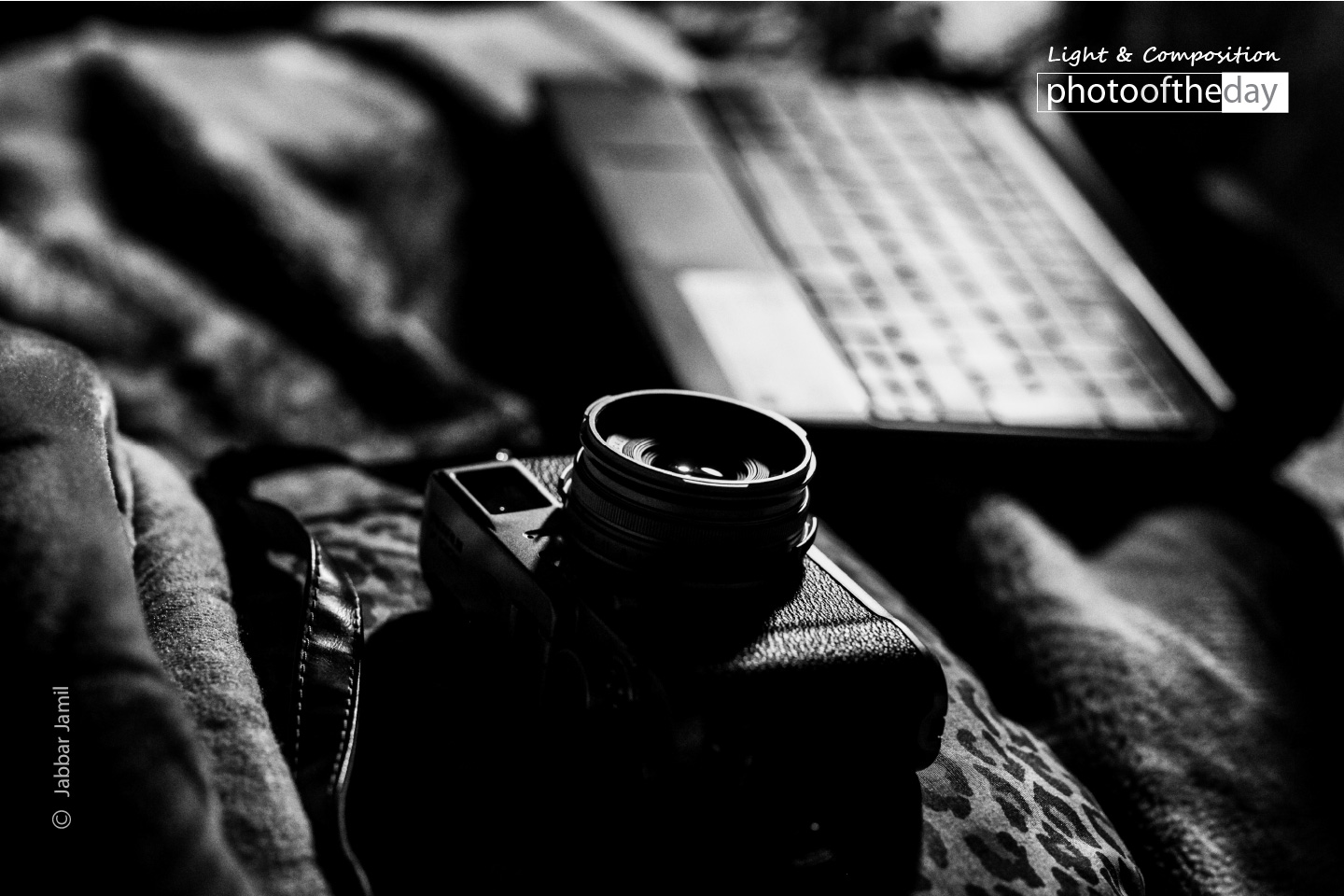
A Noninterchangeable Lens by Jabbar Jamil
This still life study captures the essence of the Fuji X100, a camera defined by its fixed, non-interchangeable lens. By embracing the limitations of a single 23mm focal length, the photographer eliminates the technical distractions of gear management, allowing for a deeper, more intuitive connection with the subject. The image serves as a testament to the philosophy that creative freedom often emerges from restriction. It is award-worthy for its minimalist approach and the photographer's ability to transform a functional tool into a compelling narrative subject, highlighting how simplicity in equipment can lead to greater clarity in artistic vision.
Jabbar Jamil
Based in Sialkot, Pakistan, Jabbar Jamil is a dedicated street photographer who views the medium as a vital bridge to the outside world. His work serves as both a creative outlet and a therapeutic practice, enabling him to document the raw, unfiltered realities of his surroundings. By stepping outside his comfort zone, Jamil prioritizes human connection and authentic observation, consistently seeking to capture the essence of life beyond mere aesthetics.
Resonance Score Breakdown
Transparency Note: The resonance score (12.2/20) is calculated based on social engagement metrics collected before the award announcement.
Expert Photography Reviews · 5
The Weight of One Choice
I once spent a week in a small village in the Pyrenees with nothing but a notebook and a single pen. I had intended to bring a full kit of supplies, but in the rush of departure, I left the rest behind. At first, the limitation felt like a cage.
Read the reflection →The Virtue of Constraint
Epictetus taught that the essence of freedom lies not in having every option at our disposal, but in mastering the few that are truly ours. We often mistake abundance for power, believing that if we could only reach further or possess more, our vision would finally become clear.
Read the reflection →Reviews & Comments
Share your thoughts about this award-winning photograph. Your reviews contribute to the community engagement score.
The Fuji X100 is a street machine, not a museum piece. I’ve spent years chasing light with that same fixed 23mm, and seeing it here feels like looking at a mirror. It’s honest. You don’t zoom; you move your feet. One tenth of a second later and the shadow has moved, the frame has collapsed. Jamil gets it. It’s a quiet, sharp reminder that the best gear is the one you don’t have to think about.
Most still lifes of gear are sterile, but Jamil’s study of the X100 feels like a quiet rebellion. By refusing to resolve the lens into a sharp, clinical object, he forces us to confront the camera’s own limitations. It’s closer to Sugimoto’s long-exposure theatres than to product photography. I’m genuinely moved by how he’s let the edges dissolve into shadow. Why resolve the glass when the blur tells a more honest story about vision?
The frame holds. It’s a quiet, locked-off shot that breathes. No zoom, no frantic reframing, just the honest geometry of that 23mm glass. I love the way the light catches the barrel; it’s a tactile, heavy stillness. It feels like the moment before a director yells action. The cut would’ve been a mistake here. Jamil understands that by removing the choice, he’s found the rhythm. It’s the frame the editor keeps because it’s already perfect.
Restricting oneself to a fixed lens is a fine discipline, though it’s often just a convenient excuse for laziness. Yet, Jamil has clearly sat with this Fuji until the light stopped being a stranger. It’s a quiet, honest study. I’ve spent enough damp mornings waiting for the sun to hit a ridge to recognize when someone has actually put in the hours. It’s a rare, disciplined bit of work. One can’t help but respect the restraint.
We look at this fixed lens and we don’t see a machine; we see a commitment. Jabbar Jamil has chosen to listen to the world through one narrow window, refusing the distraction of the zoom. It’s a quiet, stubborn intimacy. I feel a strange, sudden peace looking at this frame. It’s a reminder that when we stop chasing every possibility, we finally start hearing the story right in front of us. It’s beautiful, really.