A Building of Former Nanyang University by Siew Bee Lim
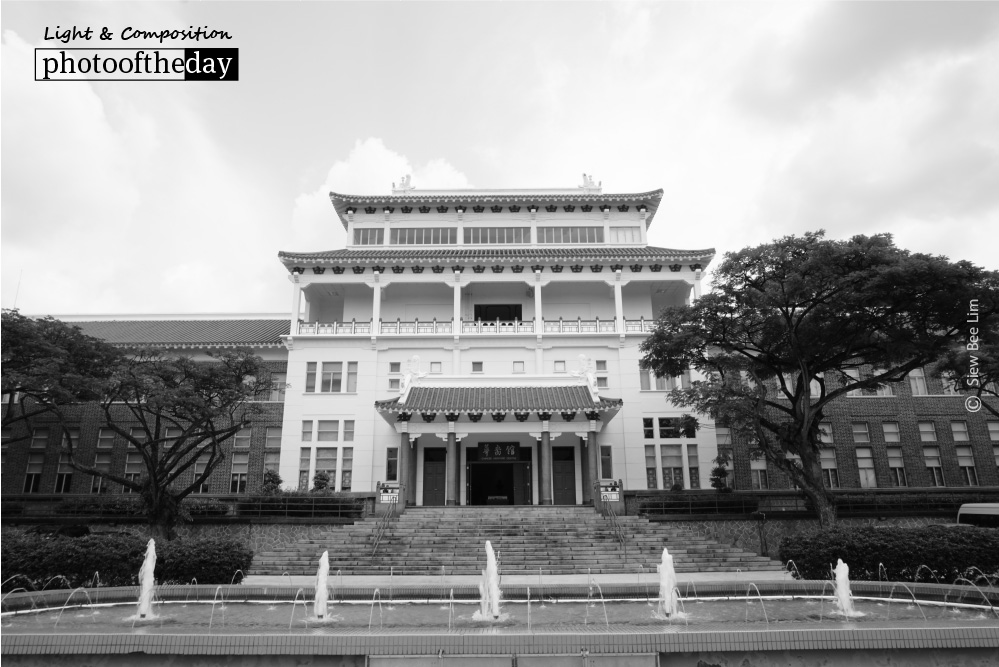
This evocative photograph captures the architectural legacy of the former Nanyang University, specifically the iconic building that served as the institution's library and administration center before becoming the Chinese Heritage Center. The photographer masterfully frames the oriental-style structure, grounding the image in the historical weight of a campus built through the collective contributions of the Chinese community. By focusing on the building's enduring silhouette, the image serves as a poignant tribute to a site of profound cultural significance, capturing a sense of nostalgia and architectural grace that resonates with the history of the Nantah era.
Siew Bee Lim
Born in 1965 in Singapore, Siew Bee Lim has long nurtured a deep passion for the art of photography. Embracing the philosophy that it is never too late to refine one's craft, she has turned to formal study to elevate her technical skills and creative vision. Her work reflects a dedicated exploration of her surroundings, often focusing on the historical and cultural landmarks that define the landscape of her home country.
Resonance Score Breakdown
Transparency Note: The resonance score (11.2/20) is calculated based on social engagement metrics collected before the award announcement.
Expert Photography Reviews · 5
The Architecture of Memory
We often mistake stone for something permanent, a stubborn refusal to yield to the slow, rhythmic pulse of the seasons.
Read the reflection →The Echo of Stone
I keep a small, rusted skeleton key in a velvet pouch, though I have long since forgotten which door it once opened. It is heavy for its size, cold to the touch, and carries the faint, metallic scent of a house that no longer exists.
Read the reflection →Reviews & Comments
Share your thoughts about this award-winning photograph. Your reviews contribute to the community engagement score.
Before the eye identifies the roof’s curve, something in the chest tightens. It’s a sudden, quiet stillness, like holding your breath in a library. The symmetry doesn’t just frame history; it demands a physical pause. I feel a strange, hollow ache in my ribs when I look at those eaves against the sky. It’s the weight of collective memory. Returning a year later, the building feels less like stone and more like a fading, persistent dream.
Most architectural shots of Nanyang University lean on symmetry, but Siew Bee Lim’s choice to frame the roofline against that heavy, overcast sky gives the building a grounded, melancholic weight. It’s the restraint that wins here. I’ve seen thousands of heritage shots, yet this one lingers because it doesn’t try to be pretty; it’s honest about the passage of time. Honestly, looking at those eaves against the grey, I feel a genuine ache for what’s been lost.
At f/18, Siew Bee Lim has chased a crispness that feels almost apologetic. It’s a safe, conventional rendering of Nanyang University’s silhouette. I’m left craving a subversion of that rigid geometry. Why resolve every tile when the history here is so fluid? I’d have preferred a long exposure to dissolve the structure into a ghost of its former self, closer to Hiroshi Sugimoto’s theatres than this polite, static postcard. It’s technically sound, but frankly, it’s bored me.
It’s a tidy composition, though one wonders if the shutter was clicked on the first pass. The light feels a bit convenient, doesn’t it? I’ve spent enough mornings shivering in damp fields to know when a frame hasn’t been properly bled for. It’s competent, certainly, but I’m left wanting the grit of a second visit. I’d have liked to see the photographer return when the sky wasn’t quite so agreeable. It’s a decent start, nothing more.
The frame holds a heavy, silent stillness. It’s a wide shot, the kind that establishes a location before the actors enter. I love how the roofline cuts against the sky; it’s a perfect, static composition that refuses to blink. The exposure is tight, sharp, and deliberate. It feels like the moment before a scene begins, where the history of the place hangs in the air. I’d keep this frame; it’s the one the editor saves.