Abandoned by Lydia Sutcliffe
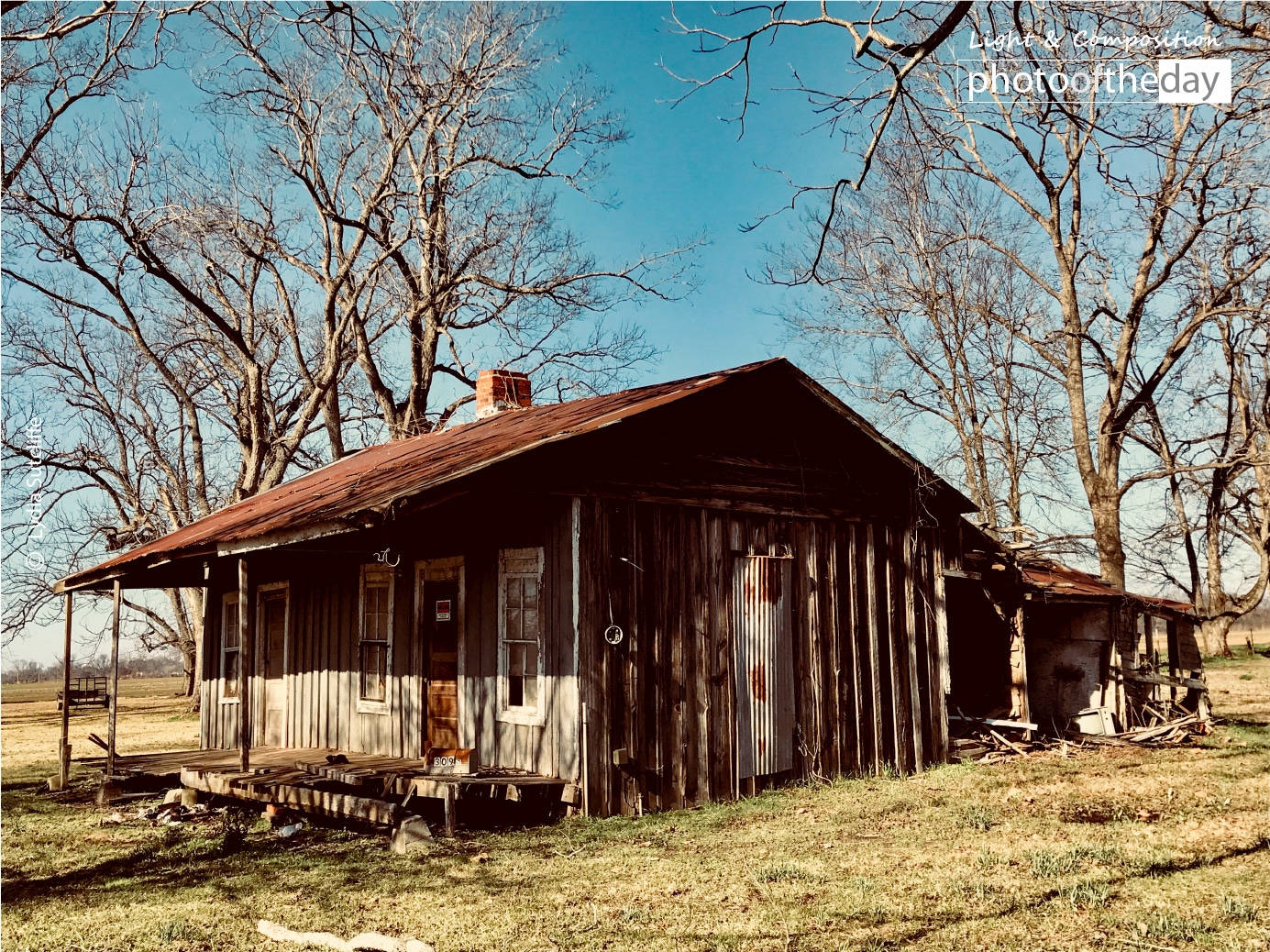
Captured during a father-daughter road trip through the rural backroads of Louisiana, this photograph highlights the haunting beauty of an abandoned structure. The photographer was struck by the stark contrast between the luminous, expansive sky and the decaying, shadowed facade of the building. By framing this forgotten gem against the bright atmosphere, the image evokes a sense of stillness and nostalgia. This piece is award-worthy for its masterful use of natural light and its ability to transform a derelict site into a compelling narrative of time and place, showcasing a keen eye for finding beauty in the overlooked.
Lydia Sutcliffe
Based in Auckland, Lydia Sutcliffe is an emerging photographer whose work is deeply rooted in a passion for visual storytelling. After achieving top honors in her Cambridge photography exams, she transitioned into a dedicated practice that now centers on the tactile beauty of film photography. Influenced by her father’s legacy and her own exploration of analog techniques, she captures images that balance technical precision with a profound sense of personal discovery and artistic curiosity.
Resonance Score Breakdown
Transparency Note: The resonance score (10.2/20) is calculated based on social engagement metrics collected before the award announcement.
Expert Photography Reviews · 7
The Architecture of Silence
I often find myself wandering the backroads of my own memory, looking for the places where the paint has peeled away to reveal the raw, honest bones of a house. There is a particular dignity in a structure that has stopped trying to impress the world.
Read the reflection →The Architecture of Silence
Why do we feel a sudden, sharp ache when we witness something that has been left behind? It is as if the walls themselves are exhaling, releasing the ghosts of conversations, meals, and quiet mornings that no longer have a witness.
Read the reflection →Reviews & Comments
Share your thoughts about this award-winning photograph. Your reviews contribute to the community engagement score.
The humidity of Louisiana clings to the wood, yet the sky remains impossibly vast. She stood here when the light turned thin, listening to the silence of a house that’s forgotten its own name. I feel a sudden, sharp ache in my chest looking at those peeling shadows against such brilliant, uncaring blue. It’s not just decay; it’s a surrender. She didn’t rush. She waited until the land finally let go of the day.
The sky presses down. It’s heavy, white, and absolute. Below, the wood rots. It’s a slow surrender to the Louisiana heat. I’ve spent minutes staring at that sliver of shadow near the porch. It’s not just decay. It’s a breath held. Nothing here is accidental. The empty corner isn’t empty. It’s where the silence lives. I feel a sudden, sharp ache for the quiet of that porch. It’s a rare, still grace.
The structure holds, though it’s fragile. The heavy, decaying mass of the facade anchors the lower quadrant, creating a necessary fulcrum against the expansive, luminous sky. It’s a precarious balance. The negative space above doesn’t collapse, which is a relief. I’ve seen enough ruin photography fail through sentimentality, but here, the geometry keeps the decay in check. It’s a disciplined frame. The tension between the light and the rot is precise. It’s structurally sound.
The diffraction of light across those weathered cypress planks is, in the strictest physical sense, extraordinary. By stopping down, Sutcliffe’s lens resolves the wood’s cellular decay against the infinite, luminous sky. It’s a sharp contrast where the focal plane holds the texture of rot with clinical precision. I’m genuinely moved by how the chromatic aberration at the structure’s edge softens into the atmosphere. It’s a rare moment where the glass finally captures what the eye simply cannot hold.
Louisiana’s rural backroads aren’t just scenery for a road trip; they’re sites of deep, often painful history. Sutcliffe captures this decaying structure against a luminous sky, but I’m left uneasy. Why does the photographer aestheticize this ruin while ignoring the lives that once anchored it? It’s pretty, sure, but it feels like a hollow souvenir. Whose story is being erased here? I find myself wanting to know who lived behind those peeling walls before they were abandoned.
Most entries in this category rely on the easy melancholy of rot, but this one avoids the trap. By pinning that decaying porch against such a violent, expansive sky, it forces a conversation about persistence. I’ve seen thousands of ruins, yet this one makes me feel the humidity of that Louisiana afternoon. It’s the tension between the peeling paint and the infinite blue that ensures this will still matter in thirty years. It’s earned its place.
Louisiana’s humidity is a cruel mistress to the patient, yet here, the light hasn’t been rushed. One suspects Lydia sat through the mosquitoes until the sky finally relented, offering that precise, luminous glow against the rot. It’s a quiet, aching sort of patience I’ve spent many damp mornings chasing myself. She didn’t just stumble upon this ruin; she earned it. It’s a rare, honest bit of work that doesn’t beg for your attention.
Such a breathtaking photograph. I love the contrast of an old, dark building against the bright and uplifting surroundings. Wonderful work