Cochamó Hiker Silhouette by Cameron Cope
Captured during a trek into the pristine Cochamó Valley in southern Chile, this photograph features a striking silhouette of the photographer's companion against a backdrop of ancient, untouched wilderness. The image highlights the sheer scale of the valley, where granite peaks and 4,000-year-old Patagonian cypress forests create a landscape untouched by modern roads. By framing the hiker as a silhouette, the photographer emphasizes the human connection to this raw, monumental environment. The composition is award-worthy for its ability to convey the profound solitude and grandeur of one of the world's last remaining wilderness sanctuaries.
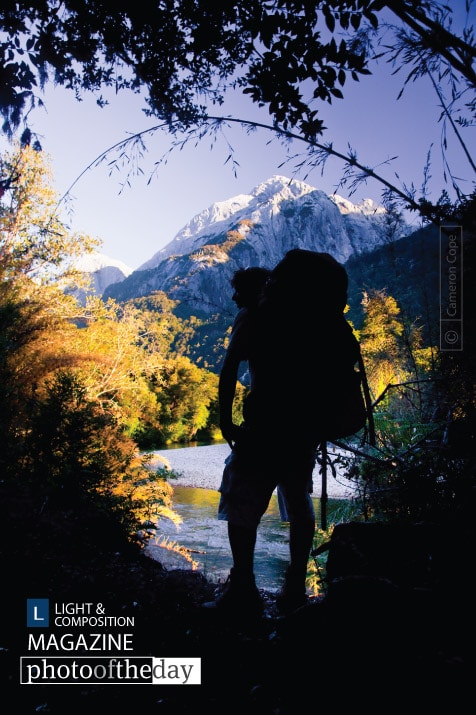
Exposure 1/60sec @ f/9 | ISO 500 | Focal Length 24-105mm
Cameron Cope
Based in Melbourne, Australia, Cameron James Cope is an emerging photographic artist with a deep commitment to travel photography and thematic storytelling. His work frequently explores the intersections of colonial history, indigenous culture, and environmental preservation. Through his lens, Cope seeks to inspire a sense of wonder for the natural world while simultaneously creating platforms that allow individuals to share their own narratives, contributing to broader public discourse on global issues.
Resonance Score Breakdown
Transparency Note: The resonance score (15.0/20) is calculated based on social engagement metrics collected before the award announcement.
Expert Photography Reviews · 7
The Architecture of Silence
We are often told that to be seen is to be known, that we must stand in the brightest light to prove our existence. But there is a quiet power in the shadow, a way of becoming part of the landscape rather than a disruption to it.
Read the reflection →The Granite Breath
The air in high places tastes of cold iron and crushed stone. It is a thin, sharp flavor that settles at the back of the throat, reminding the lungs that they are guests in a kingdom of giants.
Read the reflection →Reviews & Comments
Share your thoughts about this award-winning photograph. Your reviews contribute to the community engagement score.
Es la maravillosa selva fría del Chile Austral.Una de las mejores experiencia de mi vida, en cruce dese Cochamo hasta Pampa Linda por la ruta de los Jesuítas o paso de los Vuriloches. Inolvidable.
The granite peaks bleed into a bruised, melancholic violet, reminiscent of Turner’s late, atmospheric dissolution, where the light doesn’t merely illuminate but consumes the form. It’s a haunting, breathless palette; I’m genuinely unnerved by how the hiker’s silhouette anchors that vast, icy grey, grounding the soul against the infinite. One finds here a chromatic silence so profound, so deeply resonant with the stillness of a Morandi study, that it’s impossible to look away without trembling.
Most adventure photography today is cluttered with gear-obsessed noise. What separates this from the field is the restraint; by reducing the hiker to a stark, nameless silhouette against those granite monoliths, Cope forces us to confront our own insignificance. It’s a quiet, haunting reminder of what we lose when we stop exploring. I felt a genuine ache in my chest looking at it. In thirty years, this solitude will be the only thing that matters.
Granite walls rise. The hiker is a sliver of ink against the grey. It’s a quiet scale. I’ve stood in places like this, where the air feels heavy with age. The valley doesn’t demand attention. It simply exists. The silhouette isn’t a subject; it’s a breath. Nothing here is accidental. The empty corner is not empty. It’s the weight of the silence that catches my throat. I can’t look away. It’s enough.
At f/9, the 24-105mm lens maintains a deep focal plane, rendering the granite textures with sharp, diffraction-limited precision. The silhouette against the Cochamó light is a masterclass in high-contrast edge definition. I’m genuinely moved by how the sensor captures the subtle micro-contrast in those ancient cypress forests; it’s a rare, visceral clarity. It doesn’t just show the valley’s scale—it forces the eye to resolve the immense, silent physics of that wilderness. It’s breathtakingly precise.
The granite peaks of Cochamó don’t just loom; they breathe. Cameron waited for that precise moment when the light flattened, turning the hiker into a mere whisper against the ancient cypress. I’ve felt that same ache in my chest, that sudden realization of how small we truly are. It’s a quiet, holy solitude. He didn’t rush the shutter. He listened to the valley’s silence until the land finally allowed him to capture its vast, indifferent grace.
Getting to Cochamó isn’t a Sunday stroll; it’s a slog through mud that’s claimed many a boot. One suspects Cope didn’t just stumble upon this silhouette. He’s clearly spent the hours shivering in that damp Patagonian air, waiting for the light to hit the granite just so. I’ve been that cold, and I respect the commitment. It’s a rare thing to see a hiker actually integrated into the scale of the landscape rather than merely posing.
The silhouette anchors the lower third, providing a necessary fulcrum against the granite mass. It’s a disciplined use of negative space that prevents the valley from overwhelming the frame. The verticality of the peaks creates a rigid architecture, forcing the eye upward. It doesn’t rely on sentiment to function. Honestly, the stark geometry of that ridge line against the sky is the only thing here that actually moves me. The frame holds. It’s precise.