Taj Mahal by Shirren Lim
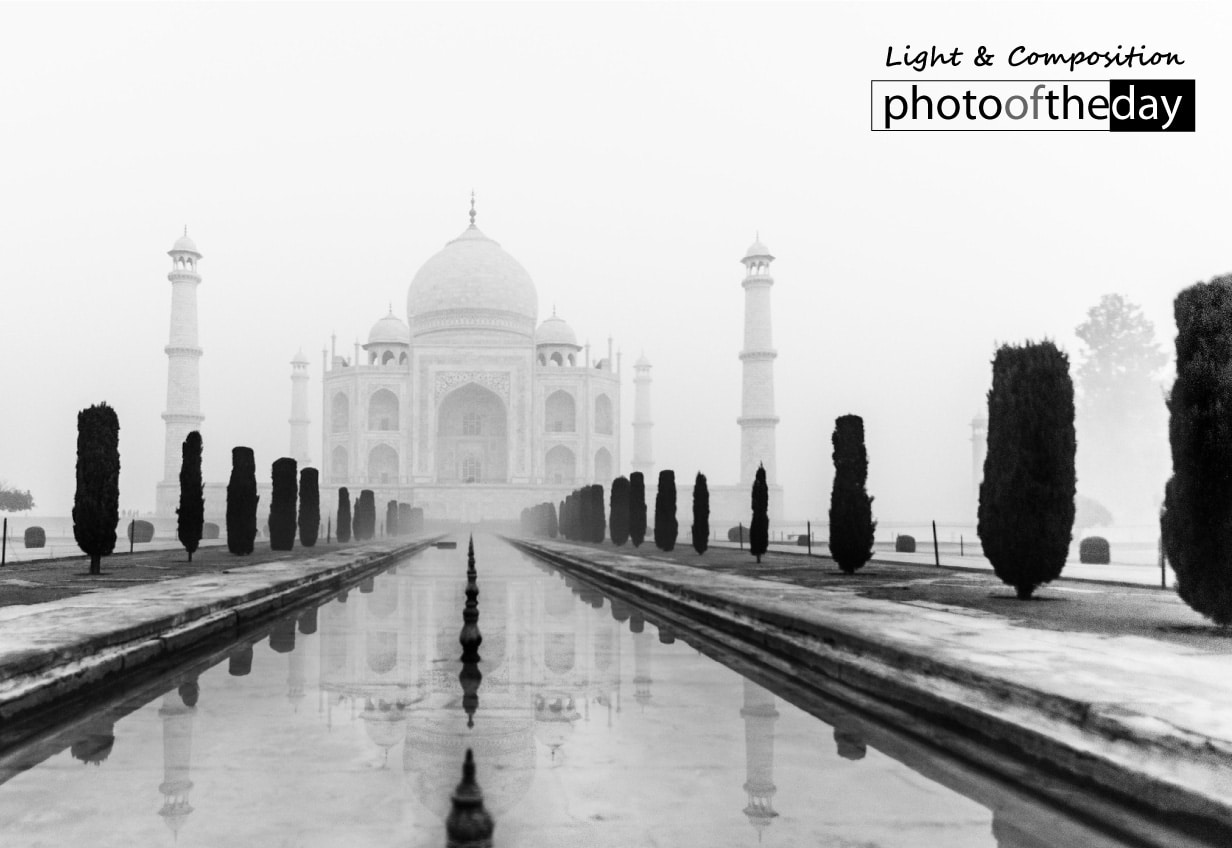
The photographer captured the majestic Taj Mahal during a crisp, misty morning in Northern India. By arriving at the gates early, she successfully avoided the crowds, allowing for a serene composition that emphasizes the ethereal quality of the monument emerging from the fog. This shot is award-worthy for its masterful use of atmospheric conditions and precise framing, which transforms a world-renowned landmark into a quiet, evocative moment of stillness. The technical choices, including a wide aperture and high sensitivity, perfectly balance the low morning light to preserve the intricate details of the architecture against the soft, diffused backdrop.
Shirren Lim
Born in Penang Island, Malaysia, in 1970, Shirren Lim is a Jakarta-based photographer who discovered her true passion for the craft in 2009. Renowned for her intense and earthy portraiture, she strives to capture the raw sincerity of human expression, drawing inspiration from the iconic documentary work of Steve McCurry. Her evocative imagery, characterized by simple yet powerful compositions, has been featured in various international web and print publications as she continues her lifelong pursuit of capturing moments that resonate globally.
Resonance Score Breakdown
Transparency Note: The resonance score (10.4/20) is calculated based on social engagement metrics collected before the award announcement.
Expert Photography Reviews · 6
The Architecture of Breath
Memory is a landscape that shifts with the weather. We carry our histories like heavy stones, yet sometimes, the morning arrives with a soft, grey veil that blurs the sharp edges of what we think we know.
Read the reflection →The Architecture of Silence
Can a monument truly be considered stone if it is built entirely from the weight of a memory? We often mistake the permanence of marble for the permanence of the emotion that birthed it, forgetting that time is a solvent that eventually dissolves even the hardest foundations.
Read the reflection →Reviews & Comments
Share your thoughts about this award-winning photograph. Your reviews contribute to the community engagement score.
1/500sec at f/1.8, ISO 1000, 20mm. A wide aperture on a 20mm lens for architecture is a gamble. At f/1.8, the depth of field is razor-thin; it’s an odd choice for a monument. The ISO 1000 is noisy, yet it’s necessary for that shutter speed. I’ve spent years analyzing these files, and honestly, the softness here irritates me. It’s technically sloppy, even if the mist hides the worst of it. The math doesn’t quite add up.
The fog swallows the frame, turning the Taj into a ghost. It’s a masterclass in negative space. Lim didn’t just wait for the light; she waited for the silence. That 20mm lens pulls the architecture into a dream, holding the monument in a suspended, breathless state. I’ve seen this landmark a thousand times, but this? It’s the cut that never came. It’s the frame the editor keeps because it’s the only one that truly breathes.
The Taj Mahal is a graveyard of clichés, yet Lim’s 20mm perspective breathes fresh air into the marble. It’s reminiscent of Samuel Bourne’s 19th-century explorations, though she trades his wet-plate patience for a modern, ethereal diffusion. The way the fog swallows the plinth recalls the tonal delicacy of Le Gray’s seascapes. I’ve seen this monument a thousand times, but this quiet, misty isolation actually made me catch my breath. It’s a rare, hauntingly elegant departure from the usual tourist noise.
It’s a beautiful morning in Agra, but I’m left looking for a pulse. The Taj Mahal is perfectly framed in the mist, yet it feels like a postcard bought at the gate. Where are the people who live in its shadow? I’ve spent my life chasing the human story, and this architecture feels cold without a soul to anchor it. It’s technically precise, sure, but it doesn’t tell me anything about the life breathing nearby.
Mist is a gift, but it’s a trap too. You’ve got to catch the Taj Mahal before the tourists swarm or the light flattens. Lim nailed it. That 20mm wide angle pulls the architecture into the void, making the marble feel like it’s floating. I’ve stood in that fog, and it’s haunting. One tenth of a second later and the atmosphere shifts, the frame collapses. She didn’t blink. It’s quiet, sharp, and perfectly timed.
The mist clings to the marble like a shroud, softening the geometry of the Taj into something dreamlike. It’s a quiet, heavy atmosphere that dictates the mood before we even consider the architecture. I’m struck by how the fog isolates the monument, turning it into an intimate, personal sanctuary. It doesn’t feel like a tourist site here; it feels like a private memory. The environment isn’t just a backdrop—it’s the very breath of this portrait.