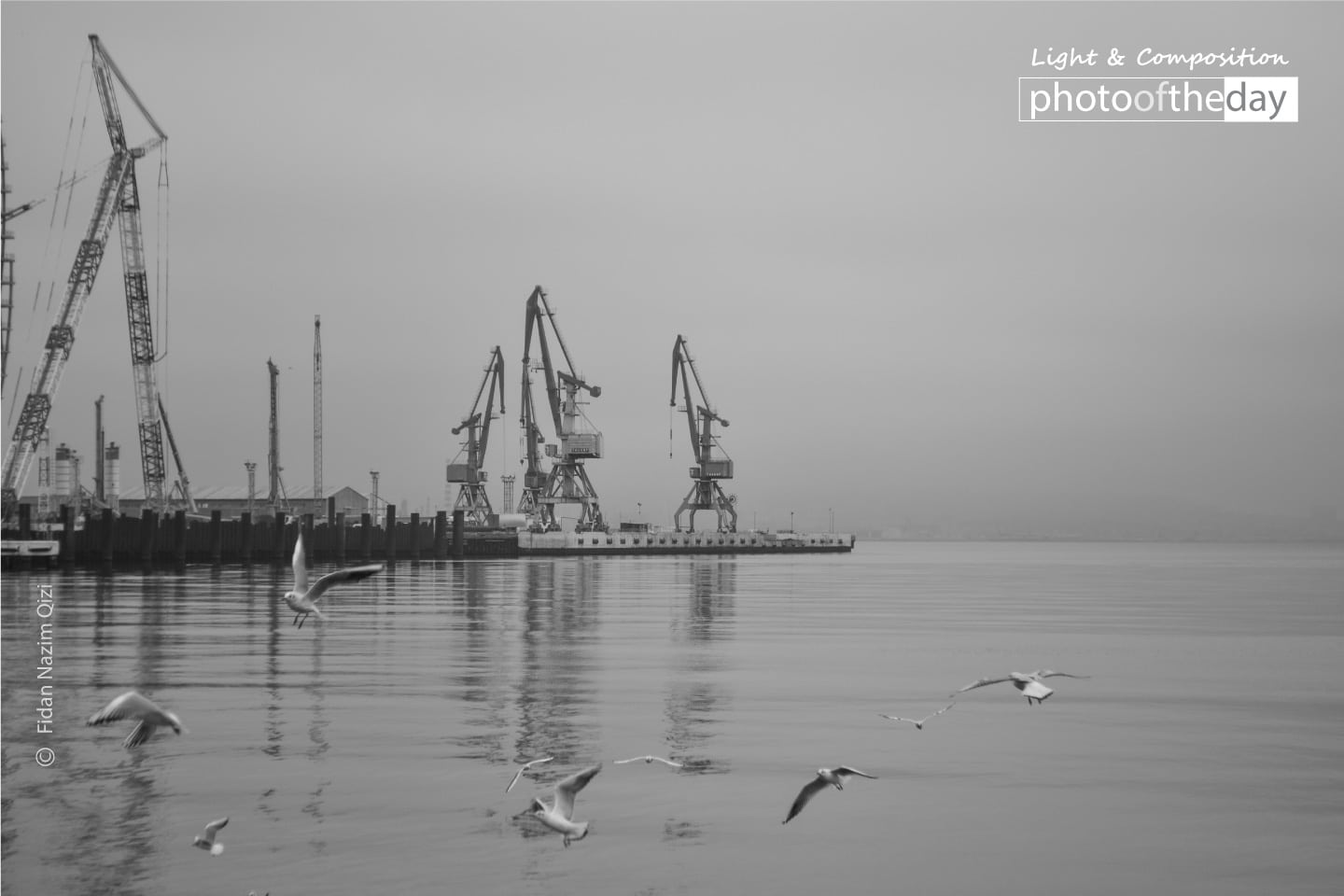
Baku City in Monochrome by Fidan Nazim Qizi
Baku City in Monochrome captures the unique architectural and atmospheric essence of Azerbaijan’s capital through a stark, high-contrast lens. By stripping away the distraction of color, the photographer emphasizes the geometric lines and historical depth of the city’s urban landscape, which sits uniquely below sea level on the Caspian coast. This image is award-worthy for its masterful use of light and shadow, transforming a familiar metropolitan environment into a timeless, evocative study of form. The composition reflects a deep appreciation for the interplay between the city's ancient roots and its modern evolution, offering viewers a profound sense of place and quiet, monochromatic energy.
Fidan Nazim Qizi
Born in Baku, Azerbaijan, Fidan Nazim Qizi remains deeply connected to her home city while frequently traveling abroad to explore diverse landscapes. Inspired by the evocative black-and-white work of Vivian Maier, she specializes in monochromatic photography, viewing the medium as a vital source of energy and inspiration. Her practice is driven by a passion for nature, hiking, and the mountains, which informs her keen eye for composition and light. Through her lens, she seeks to capture the hidden feelings and narratives embedded within the world around her.
Resonance Score Breakdown
Transparency Note: The resonance score (7.3/20) is calculated based on social engagement metrics collected before the award announcement.
Expert Photography Reviews · 3
The Architecture of Echoes
There was a blue velvet coat my mother wore in the winter of 1998. It had heavy brass buttons that clicked against the doorframe whenever she leaned in to kiss my forehead.
Read the reflection →The Weight of Grey
There is a specific, heavy silence that descends when the sky loses its colour, turning the exact shade of a wet slate roof in late October. In the north, we learn to trust this grey.
Read the reflection →Reviews & Comments
Share your thoughts about this award-winning photograph. Your reviews contribute to the community engagement score.
Baku’s rigid geometry often feels cold, yet here, the light carves through the urban density with a surprising, tactile weight. By stripping away color, Qizi forces us to confront the raw relationship between solid and void. I’m struck by how the shadows anchor these structures, grounding the architecture against the sky. It’s a stark, honest sequence. I find myself wanting to walk through those thresholds, feeling the cold stone beneath my own hands. It’s hauntingly precise.
Baku’s geometry here echoes the stark, constructivist rigor of Rodchenko, yet it’s the Caspian light that truly arrests me. It’s a rare, haunting clarity. While the high-contrast rendering flirts with the graphic severity of Bill Brandt’s nudes, it’s grounded in a specific, subterranean urbanity. I’ve spent decades tracing these lines, but there’s a genuine, shivering thrill in how Qizi captures the city’s weight. It’s not just architecture; it’s a dialogue between history and the void.
f/8 at 1/250, ISO 100, 35mm. A standard architectural baseline. The choice of f/8 keeps the Caspian stonework sharp from foreground to horizon. It’s a safe, calculated aperture. I’ve seen enough soft urban shots to appreciate the discipline here. The high-contrast conversion doesn’t hide the lack of micro-contrast in the shadows, though. It’s technically competent, yet it leaves me cold. I wanted more grit in the highlights. It’s a clean execution, but it’s missing a pulse.