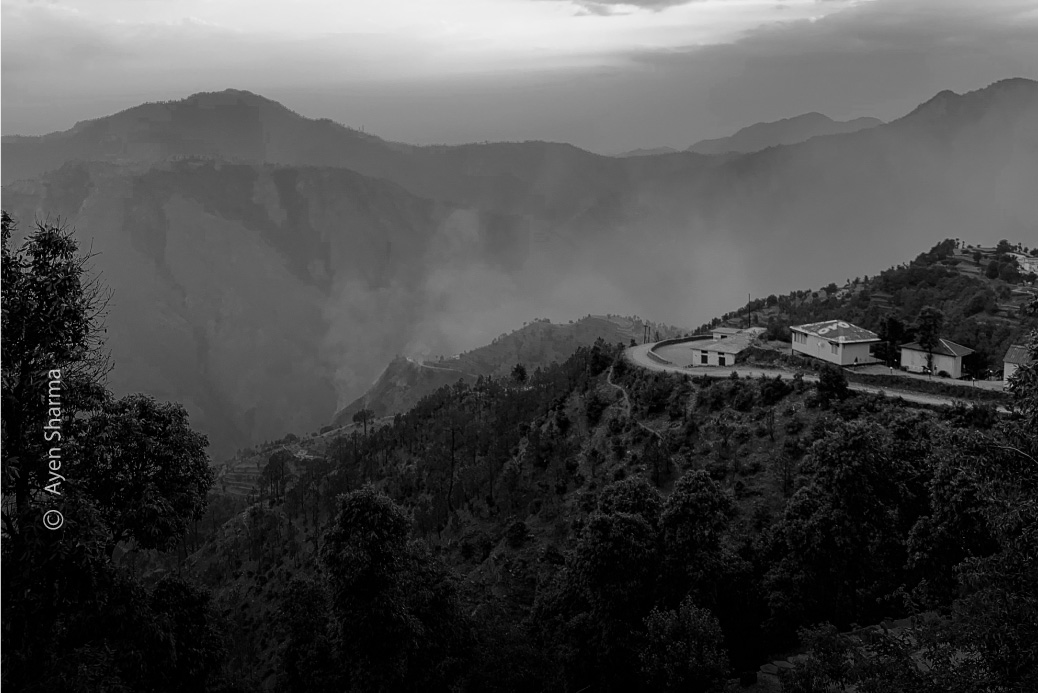
Thunder by Ayen Sharma
Captured during the monsoon season in a remote village near Mussoorie, India, this photograph showcases the dramatic interplay between architecture and the elements. The photographer patiently waited for the heavy cloud cover to break, allowing the perfect atmospheric light to illuminate a solitary cottage nestled in the landscape. This image is award-worthy for its masterful composition and the evocative mood created by the fleeting, soft light against the rugged terrain, transforming a simple rural scene into a compelling narrative of solitude and natural beauty.
Ayen Sharma
Born in Delhi, India, Ayen Sharma is a dedicated landscape photographer with a profound passion for the timeless aesthetic of black and white imagery. Having transitioned from a career as a commercial photographer, he currently balances his creative pursuits with a professional role in an advertising agency in Gurgaon. Sharma remains deeply engaged with the global photographic community, constantly refining his craft and drawing inspiration from contemporary visual trends to capture the essence of the Indian landscape.
Resonance Score Breakdown
Transparency Note: The resonance score (9.6/20) is calculated based on social engagement metrics collected before the award announcement.
Expert Photography Reviews · 8
The Weight of the Clouds
There is a particular rhythm to the mountains when the sky decides to descend. It is not a time for movement, but for surrender. We often fear the heavy gray, the way it swallows the horizon and hides the path ahead, yet there is a profound grace in being held by the mist.
Read the reflection →Waiting for the Sky
I spent most of this morning watching the rain hit the windowpane, waiting for the clouds to finally break. I had a list of things to do, but the heavy gray sky made everything feel unimportant.
Read the reflection →Reviews & Comments
Share your thoughts about this award-winning photograph. Your reviews contribute to the community engagement score.
You waited for that light to break, and it’s paid off. I’ve spent enough time in the mountains to know that specific, heavy silence before a storm. It’s lonely, but it’s real. You didn’t just capture a cottage; you captured the way a place feels when the world goes quiet. I felt a shiver looking at those clouds pressing down on the roof. You were there, and you felt it. That’s what matters. Good work.
Kanatal’s rugged topography here echoes the stark, brooding isolation of Fay Godwin’s British uplands, yet Sharma’s light feels distinctly Himalayan. It’s a delicate dance between the cottage’s geometry and the monsoon’s oppressive weight. I’ve spent decades tracing this dialogue between man and mountain, but the way that singular shaft of light pierces the gloom genuinely stopped me in my tracks. It’s a quiet, haunting update to the Romantic tradition that I haven’t seen captured quite this way before.
The monsoon clouds in Kanatal have finally parted, revealing a silence that feels ancient. While I usually obsess over the noise floor of a sensor or the precise focal ratio needed to capture distant nebulae, here, the light is terrestrial and fleeting. It’s a quiet reminder that even beneath a thick atmosphere, we’re still just observers of a vast, shifting theater. I find myself holding my breath, waiting for the storm to return. It’s truly beautiful.
One can smell the damp earth in this frame. It’s clear Sharma didn’t just stumble upon this cottage; he sat through the deluge until the clouds finally relented. I’ve spent enough miserable hours in the rain to recognize that particular quality of light—the kind that only reveals itself to those who refuse to pack up early. It’s a quiet, earned moment. I’d have liked to be there, shivering right alongside him. A fine effort.
It’s a lonely cottage, isn’t it? I find myself wanting to knock on that door just to see who’s inside. While the light on those hills is lovely, I’m left searching for a human pulse. Where are the people who call this place home? A landscape without a soul feels like a stage waiting for actors who never arrived. I’d trade that dramatic sky for one tired, honest face looking back at me.
In Kanatal, the clouds part like a heavy curtain, revealing a cottage that feels like a held breath. We look at this solitary home and we understand the weight of the monsoon. It’s not just a landscape; it’s a portrait of a life lived in conversation with the thunder. I find myself shivering, feeling the damp chill of that mountain air. It’s a photograph that asks to be returned to, over and over again.
The monsoon air in Kanatal is heavy, thick with the scent of damp earth. He stood there for hours, waiting for the clouds to yield. When that sliver of light finally touched the cottage, it wasn’t just illumination; it was a conversation between the mountain and the sky. I’ve felt that same shiver of anticipation in my own bones. It’s a quiet, holy solitude. He didn’t capture the scene; he simply let it happen.
Kanatal’s mist feels heavy, but I’m unsettled by the cottage’s isolation. Is this solitude a genuine reflection of rural life, or just a romanticized aesthetic for the outsider’s lens? The light hits the stone with precision, yet it feels like a stage set. Why does the landscape exist only to frame this singular, picturesque structure? It’s beautiful, sure, but I can’t shake the feeling that we’re consuming a curated version of someone else’s home.