Transportation by Yohann Libot
Captured during a quiet transit through Bangkok, this image offers a poignant contrast to the chaotic energy of the city streets. While traveling to the immigration center, the photographer identified a unique perspective from within the stillness of a bus, framing a moment of calm amidst the urban bustle. The composition is award-worthy for its ability to isolate a serene narrative within a dense, noisy environment, demonstrating a keen eye for finding beauty in the mundane. Through thoughtful framing, the photographer transforms a routine commute into a compelling visual study of urban life in Thailand.
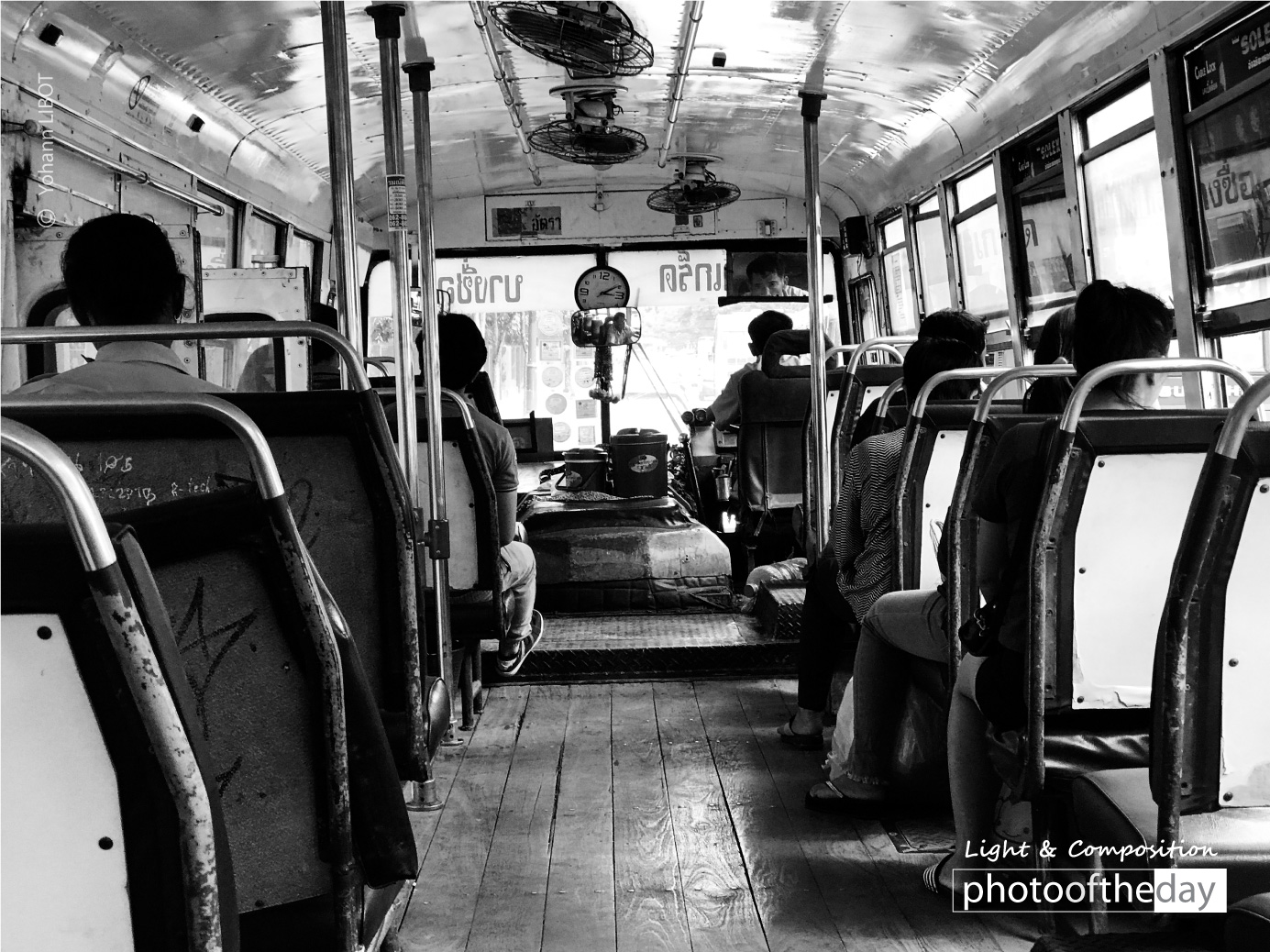
Yohann Libot
Born in France, Yohann Libot is an internationally published photographer known for his nomadic, free-spirited approach to documenting global culture and lifestyle. After transitioning from a career in fashion marketing, he became a self-taught professional in 2010, developing a signature dream-like aesthetic that has appeared in diverse commercial and editorial outlets worldwide. Now based in Paris, he continues to travel extensively, capturing the unique essence of the people and places he encounters through a lens that is both raw and deeply personal.
Resonance Score Breakdown
Transparency Note: The resonance score (9.2/20) is calculated based on social engagement metrics collected before the award announcement.
Expert Photography Reviews · 5
The Hum of the Transit
The smell of damp vinyl and stale city air clings to the back of my throat, a metallic tang that tastes like exhaust and humidity. My palms press against the cool, vibrating glass of a window, feeling the rhythmic shudder of the engine beneath the floorboards.
Read the reflection →The Stillness of Transit
There is a particular quality to the light in a moving vehicle when the sky outside is heavy with moisture, a flat, diffused grey that strips away the sharp edges of the world.
Read the reflection →Reviews & Comments
Share your thoughts about this award-winning photograph. Your reviews contribute to the community engagement score.
The frame functions as a rigid grid, anchored by the vertical mullions that slice the composition into precise, rhythmic intervals. I’m struck by the tension between the static window frames and the blurred, diagonal motion of the city beyond. It’s a perfect 1:1:1 division of space that stabilizes the chaos. The geometry here isn’t just structural; it’s a relief. Honestly, I find the way the negative space balances the transit blur incredibly satisfying to map out.
Most street photography in Bangkok is just noise, a frantic attempt to capture chaos. What separates this from the pack is the restraint. By pinning the frame to the bus interior, Libot forces us to watch the city through a glass barrier. It’s a quiet, lonely perspective that I’ve rarely seen done this well. It’ll endure because it captures the isolation of transit, not just the commute. Honestly, it makes me miss the silence of travel.
Bangkok moves like a fever, but Libot found the eye of the storm. That bus window acts as a frame within a frame, isolating a quiet stillness I rarely see in the city. It’s a clean, sharp slice of life. One tenth of a second later and the light would’ve shifted, the composition collapsing into chaos. I’d kill to have been on that bus. He caught the rhythm perfectly. It’s honest, raw, and absolutely decisive.
Bangkok usually screams. Here, it breathes. The bus window frames a sliver of gray transit. A single figure sits, anchored in the blur. It’s quiet. I’ve spent years looking for this stillness in the noise. The negative space isn’t just an absence of detail. It’s a deliberate exhale. Nothing here is accidental. The empty corner is not empty. It’s the weight of the pause. I feel my own pulse slow down just watching it.
The frame’s geometry dictates the stillness. Libot’s placement of the window frame creates a rigid, rectangular cage that isolates the subject from Bangkok’s kinetic blur. It’s a disciplined exclusion of noise. The negative space surrounding the passenger provides the necessary structural anchor. I’ve rarely seen such precise containment of urban chaos. The composition doesn’t just suggest order; it enforces it. It’s a cold, calculated success. The visual architecture holds, and frankly, it’s quite satisfying to witness.