Expedition Overview
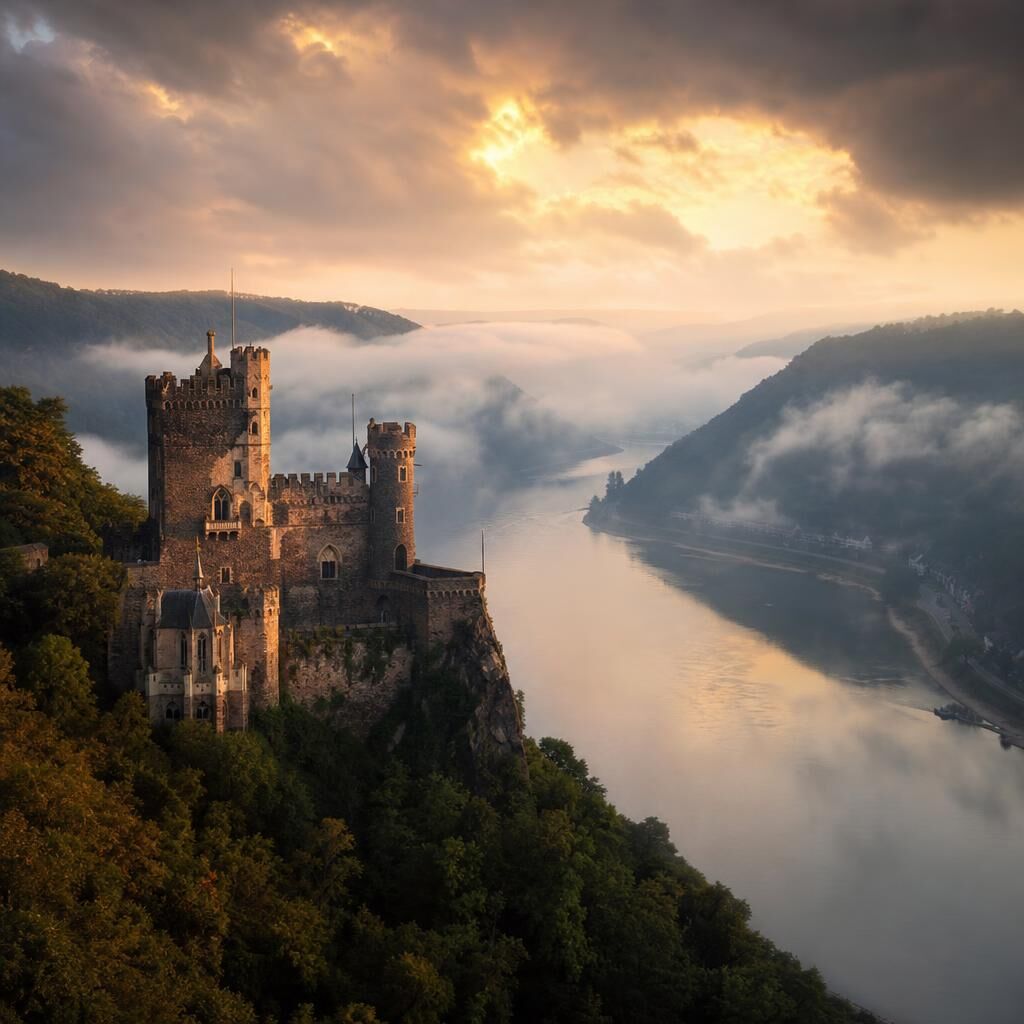
The 65-kilometre Rhine Gorge between Bingen and Koblenz contains 40 medieval castles — the highest concentration in the world — and the river that built their strategic value is also the source of the fog that makes them disappear each morning. Cold water meets warmer air at dawn and a mist layer fills the valley from the Rhine's surface to 30 or 50 metres above it, leaving only the upper castle towers and forest canopy visible above a white floor. The castles emerge in sequence as the sun rises: Bacharach from 6:30am, Marksburg from 7, the Loreley from 7:30 — a sequence determined by the valley's orientation and the angle of the light. By 10am the mist is gone and the same landscapes have become postcard scenery; the photographic window is the two hours in between.
Kirsten Bruning approaches the Rhine Valley without treating its castles as monuments to be positioned against an empty sky — the standard elevated shot that flattens ruins into icons. This expedition reads the valley as a system: the relationship between river mist, morning light direction, the angle of approach from the water, and the specific positions on the valley slopes that turn these medieval structures into three-dimensional objects embedded in a working landscape.
Expedition Itinerary
Day 1: Bacharach — Town and Mist Layer at Dawn
Bacharach's 14th-century walls still encircle the town intact, and the valley's fog behaviour at this section is reliable: the mist layer settles above the roofline and the towers of Stahleck Castle appear first, floating above white. Pre-dawn positions on the slope above the town catch the sequence from total fog to clearing in a 90-minute window; the light enters from the east and catches the red slate roofs before touching the cobblestones below. We work from elevation first, then descend to river level as the mist burns off, photographing the town's relationship with the Rhine embankment and the vine terraces climbing the opposite slope.
The Goal of the Day: Medieval townscape and mist-layer emergence photography; architecture appearing through fog as the light rises.
Day 2: Loreley Rock — The River's Narrowest Point
The Loreley slate rock rises 132 metres above the Rhine's narrowest and fastest section — the point where commercial shipping must reduce to single-lane traffic and where the current produces standing waves visible from the bank. Pre-dawn on the plateau above gives a direct view into the valley as the fog builds below; the light at the bend creates a different condition: the water's surface and the opposite cliff face catch the same beam at different intensities, producing a tonal range that shifts every five minutes. We photograph the river from the plateau, then descend to the bank where the passing barge traffic creates foreground movement against the cliff.
The Goal of the Day: River gorge and fog-layer landscape photography; dynamic range in a confined valley with moving and static elements.
Day 3: Marksburg Castle — The Unruined Fortress
Marksburg is the only castle on the Middle Rhine never destroyed or significantly rebuilt — its kitchens, great hall, armaments, and tower rooms are intact and accessible in the early morning before the first tour groups arrive. The interior light comes through slit windows and falls on stone floors and ironwork in a way that changes hour by hour with the valley's orientation. The exterior, photographed from the Rhine bank 80 metres below, shows the castle's relationship with the river, the vine terraces between them, and the opposite valley wall — a compressed vertical landscape available only from water level.
The Goal of the Day: Intact medieval interior photography in window light; exterior castle-and-river landscape from a low-angle river-bank position.
Book Your Expedition
Note: Final price may vary based on specific expedition details and customizations.
Expedition Leaders
Kirsten Bruning is a distinguished L&C Faculty Expedition Leader and Art Marketing Specialist based in the vibrant city of Cologne, Germany. Since joining Light & Composition University in 2019, Kirsten has dedicated her expertise to guiding aspiring photographers and promoting the art of visual storytelling. Her photographic work is characterized by a profound appreciation for the subtle beauty found in nature and a unique ability to capture the emotional narratives embedded within everyday moments. Her approach encourages participants to look beyond the obvious, fostering a deeper connection with their surroundings and their craft.
Kirsten's journey into photography began at an early age, sparked by her father's introduction to the timeless art of analogue photography. This foundational experience instilled in her a meticulous eye and a deep respect for the photographic process, influences that are evident in her diverse range of specialties. She masterfully navigates various genres, including Street, Architecture, Portrait, Landscape, Nature, Long Exposure, Travel, and Documentary photography. Whether she's exploring urban environments or serene natural landscapes, Kirsten consistently seeks to uncover and highlight the often-overlooked details that tell a compelling story.
As an experienced Expedition Leader, Kirsten leads immersive photographic journeys across a rich tapestry of European locations, including Germany, Belgium, the Netherlands, Luxembourg, and France. Her expeditions are more than just photo walks; they are carefully curated experiences designed to inspire creativity, enhance technical skills, and provide participants with unforgettable cultural and visual encounters. Through her warm guidance and extensive knowledge, Kirsten empowers photographers of all levels to refine their vision and capture the world with authenticity and artistic flair, embodying the spirit of discovery and artistic expression.
Travel Information
Local Logistics
Expect daily travel by regional train and local ferry services to navigate between towns like Bacharach and Boppard, and for prime views of Lorelei Rock. Pack layers of clothing suitable for variable weather, as misty conditions can be damp and cooler, and bring a sturdy tripod and lens cleaning supplies for optimal photography. Ensure your camera batteries are fully charged each evening, as power outlets may be limited during daytime excursions.
Health and Safety
Be mindful of uneven terrain and slippery surfaces around castle ruins and riverside paths, especially in misty or damp conditions; wear appropriate sturdy footwear. Carry a small first-aid kit for minor scrapes and stay hydrated throughout the day. Keep personal belongings secure, particularly in crowded areas or on public transport, to prevent theft.
Cultural Guidelines for Photographers
Always be respectful of local residents and their privacy; avoid photographing individuals without explicit permission. When exploring castle grounds, adhere to any posted rules regarding photography, especially in private or restricted areas. Maintain a low profile and avoid blocking public pathways or entrances with your equipment.
What to Bring
A 3-day moderate photography expedition to the Rhine Gorge, Lorelei Rock, Bacharach, and Boppard in Germany requires careful packing to ensure you're prepared for varied weather, extensive walking, and diverse photographic opportunities. This list focuses on landscape, documentary, and travel photography in a Western European context.---Packing List: Rhine Gorge Photography Expedition (3 Days)1. Photography Equipment- Main Camera Body (Mirrorless or DSLR)- Secondary/Backup Camera Body (optional, but recommended for documentary/travel)- Wide-Angle Zoom Lens (e.g.,