Expedition Overview
Amsterdam's 165 canals create a city that can only be fully read from the water — the canal houses, bridges, and moored boats produce layers of depth that no single street-level position can resolve. The Jordaan quarter's 17th-century architecture is intact and inhabited: the gabled rooflines, the hoisting beams still protruding from attic facades, and the narrow house fronts that compress each street into a corridor where light arrives from specific directions at specific hours. The Albert Cuyp Market runs every weekday morning and is the largest street market in the Netherlands — by 9am it is a full-volume working market with no concession to tourism: the vendors are local, the buyers are local, and the 300-metre stall run is entirely oriented toward the neighbourhood it serves.
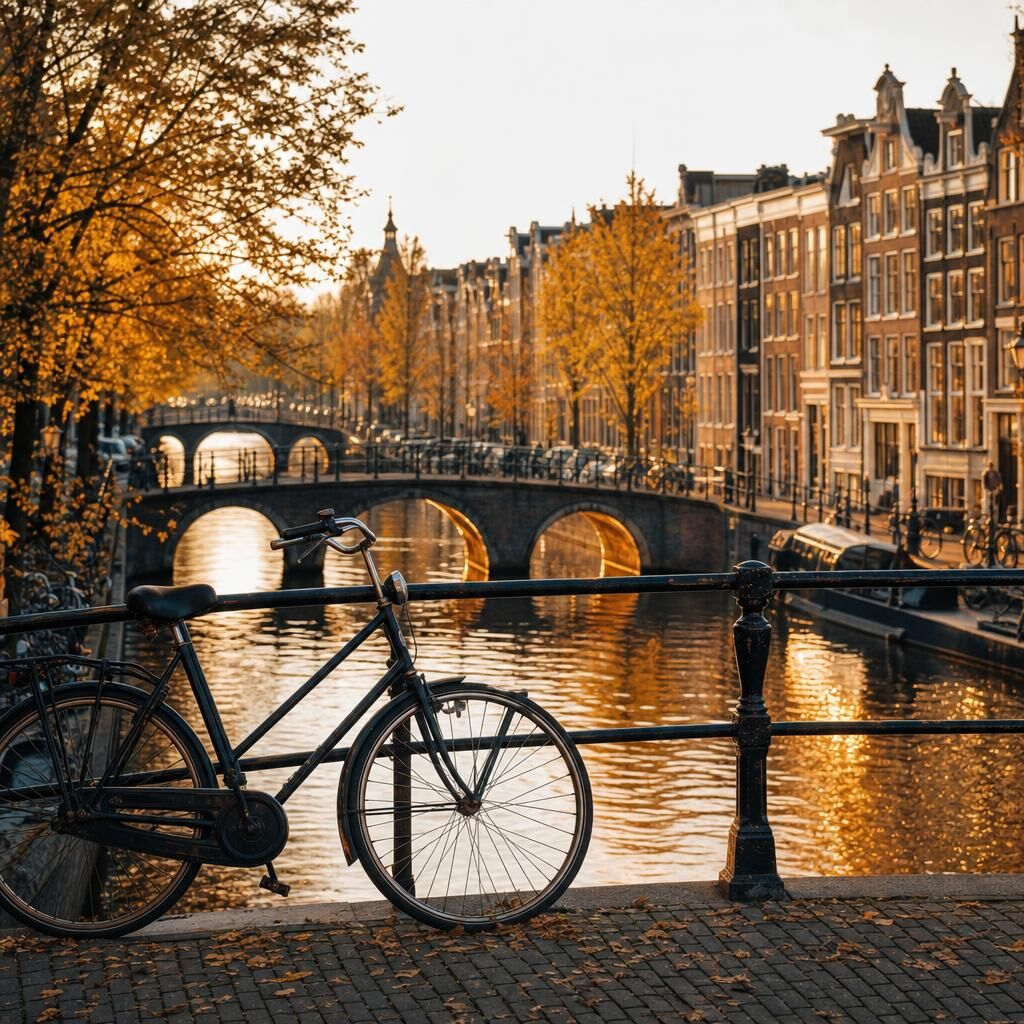
Kirsten Bruning approaches Amsterdam without the canal house photograph from the arched bridge — the image that every camera in the city produces in identical form. The expedition reads the canals as a three-dimensional space: the water surface, the reflected facades, the depth of bridges receding behind each other, and the specific morning light that travels along the east-west canals and bypasses the north-south ones entirely.
Expedition Itinerary
Day 1: Jordaan — 17th-Century Amsterdam Before the Day Begins
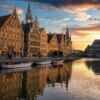
The Jordaan's east-west streets receive direct morning light at different times depending on their precise orientation: Keizersgracht at 7:30am, Prinsengracht at 7:45, the parallel connecting lanes remaining in shade until afternoon. We begin on the Keizersgracht's south bank working west — the canal house facades in warm early light, the hoisting beams above the attic windows catching the first sun, the moored houseboats reflecting the gabled rooflines below. From 8am the Negen Straatjes market lanes open and the 9 small streets between the major canals fill with the specific domestic commerce of a neighbourhood that has operated this way since the 1620s.
The Goal of the Day: 17th-century canal house architecture in low-angle morning light; the Jordaan before tourist movement and the canal's mirror conditions before boat traffic.
Day 2: Keizersgracht — The Layered Canal View
The Keizersgracht is Amsterdam's widest canal at 100 metres and has bridges at regular intervals — which means photographed from one bridge, the subsequent spans recede into the distance in diminishing scale, each one slightly darker and less in focus than the last. The morning light enters from the east along the canal corridor and catches the first bridge's ironwork directly while the further bridges diminish in both light and contrast, producing natural depth without any deliberate technique. The Albert Cuyp Market opens at 9am; the hour from 9 to 10am is its operational peak before the lunch slowdown — fish stalls, fabric, raw herring, stroopwafels, and vegetables in a working-market density.
The Goal of the Day: Bridge-layer perspective photography in canal morning light; working market documentary at the full-volume morning peak.
Day 3: Canal Ring — Blue Hour and the Seven Bridges
Amsterdam's canal ring is most complex at blue hour — the 20 minutes after sunset when the sky holds blue-purple colour and the bridge lanterns are already lit, and the canal surfaces reflect both simultaneously. The Reguliersgracht's Seven Bridges view is the city's canonical dusk image: photographed from the south looking north, the seven bridges stack behind each other in a perspective that requires a 24mm equivalent lens and a tripod at water level on the bank. The condition is available for precisely 18 minutes after civil twilight; before that the sky is too bright, after that the bridge lights are too dominant.
The Goal of the Day: Bridge-stack perspective photography in the 18-minute blue-hour window; simultaneous ambient sky and artificial bridge light on a canal mirror surface.
Book Your Expedition
Note: Final price may vary based on specific expedition details and customizations.
Expedition Leaders
Kirsten Bruning is a distinguished L&C Faculty Expedition Leader and Art Marketing Specialist based in the vibrant city of Cologne, Germany. Since joining Light & Composition University in 2019, Kirsten has dedicated her expertise to guiding aspiring photographers and promoting the art of visual storytelling. Her photographic work is characterized by a profound appreciation for the subtle beauty found in nature and a unique ability to capture the emotional narratives embedded within everyday moments. Her approach encourages participants to look beyond the obvious, fostering a deeper connection with their surroundings and their craft.
Kirsten's journey into photography began at an early age, sparked by her father's introduction to the timeless art of analogue photography. This foundational experience instilled in her a meticulous eye and a deep respect for the photographic process, influences that are evident in her diverse range of specialties. She masterfully navigates various genres, including Street, Architecture, Portrait, Landscape, Nature, Long Exposure, Travel, and Documentary photography. Whether she's exploring urban environments or serene natural landscapes, Kirsten consistently seeks to uncover and highlight the often-overlooked details that tell a compelling story.
As an experienced Expedition Leader, Kirsten leads immersive photographic journeys across a rich tapestry of European locations, including Germany, Belgium, the Netherlands, Luxembourg, and France. Her expeditions are more than just photo walks; they are carefully curated experiences designed to inspire creativity, enhance technical skills, and provide participants with unforgettable cultural and visual encounters. Through her warm guidance and extensive knowledge, Kirsten empowers photographers of all levels to refine their vision and capture the world with authenticity and artistic flair, embodying the spirit of discovery and artistic expression.
Travel Information
Local Logistics
Amsterdam is highly walkable, making it easy to reach Jordaan and Keizersgracht on foot with your camera gear. Utilize the extensive tram and metro network to efficiently travel between Museumplein and Albert Cuyp Market. Consider purchasing a multi-day GVB public transport ticket for unlimited rides, simplifying your daily movements. Plan your photography sessions for early mornings to capture iconic canals and markets with fewer crowds.
Health and Safety
Be mindful of bicycle traffic; Amsterdam has dedicated bike lanes and cyclists often have right-of-way. Keep your photography equipment secure and be aware of your surroundings, especially in crowded areas like Albert Cuyp Market, to prevent pickpocketing. Watch your step near canals, particularly when focusing on your camera, to avoid accidental falls. Carry a portable power bank for your phone and camera batteries, ensuring you stay connected and powered throughout your day.
Cultural Guidelines for Photographers
Always ask for permission before taking close-up photos of individuals, especially children, in public spaces. Be respectful of residents' privacy when photographing houses and boats in the Jordaan District and along Keizersgracht. Inside museums at Museumplein, check for specific photography restrictions; flash photography is usually prohibited. Avoid blocking pathways or entrances with your equipment, particularly in busy areas like the Albert Cuyp Market.
What to Bring
Here's a packing list tailored for a 3-day easy photography expedition to Amsterdam's iconic districts, focusing on street, architecture, and long exposure photography.---Introduction:Amsterdam's Jordaan District, Keizersgracht, Albert Cuyp Market, and Museumplein offer incredible photographic opportunities. This list prioritizes versatility, comfort, and preparedness for varying Western European weather,