Shadows by Fidan Nazim Qizi
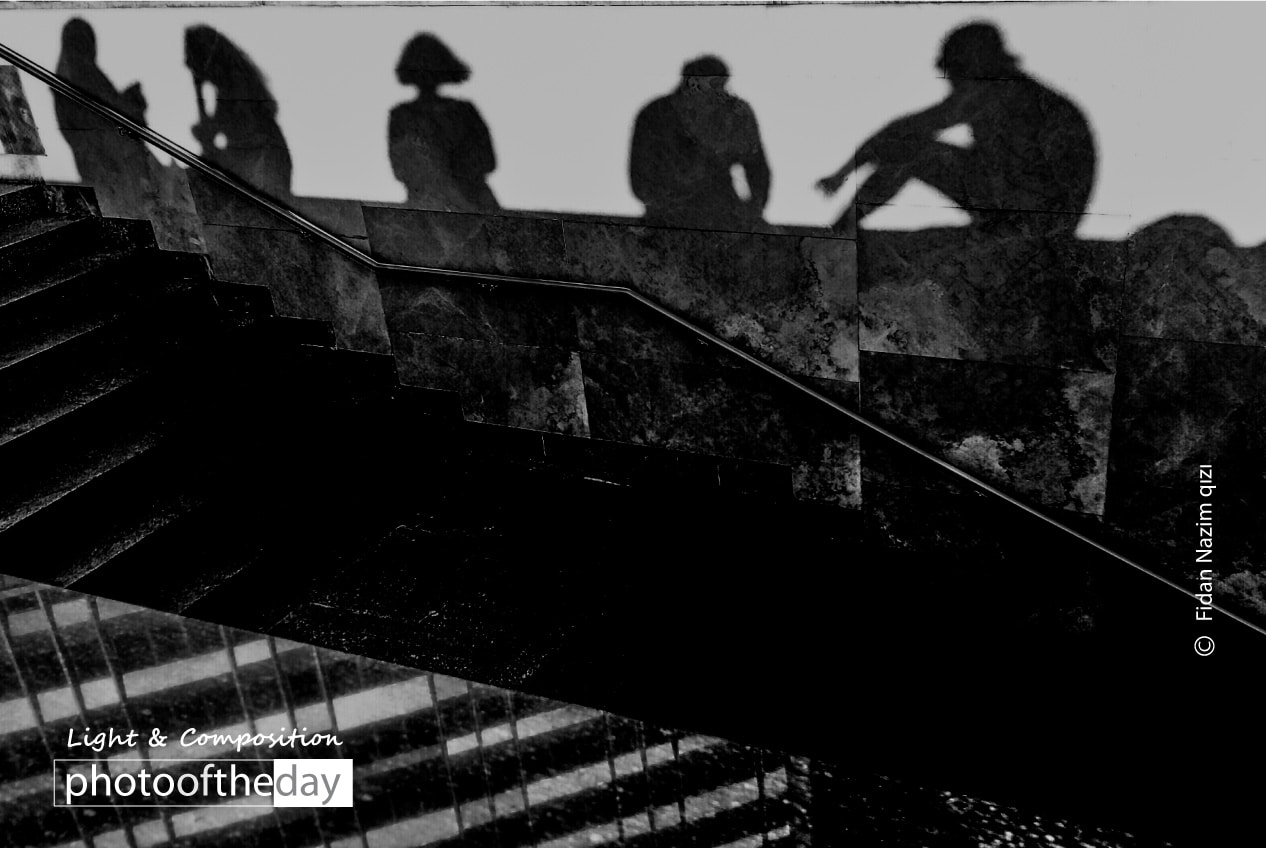
In 'Shadows', Fidan Nazim Qizi explores the interplay between light and form, capturing the essence of a silhouette as it occupies the three-dimensional space behind an object. By focusing on the reverse projection of light, the photographer transforms a simple physical phenomenon into a compelling artistic study. The image is award-worthy for its minimalist approach and its ability to elevate a common visual experience into a profound meditation on presence and absence. Through careful framing, the photographer highlights the stark contrast and geometric beauty inherent in the dance between illumination and darkness.
Fidan Nazim Qizi
Born and based in Baku, Azerbaijan, Fidan Nazim Qizi is a dedicated photographer whose work is deeply inspired by the evocative power of black and white imagery. Influenced by the legacy of Vivian Maier, she specializes in capturing the raw energy and emotional resonance of her subjects, often drawing from her passion for hiking and the natural world. Her artistic practice is driven by a belief that photography serves as a vital source of inspiration, allowing her to translate the feelings and experiences of life into timeless, monochromatic compositions.
Resonance Score Breakdown
Transparency Note: The resonance score (9.1/20) is calculated based on social engagement metrics collected before the award announcement.
Expert Photography Reviews · 8
The Weight of What Remains
It is 3:14 am. The house has stopped settling, and the silence is heavy enough to touch. I am thinking about the things we leave behind when we walk away—not the physical clutter, but the shapes we carve into the air.
Read the reflection →The Weight of a Silhouette
I keep a small, tarnished silver thimble in my desk drawer, a relic from a grandmother I only knew through the stories told in hushed tones.
Read the reflection →Reviews & Comments
Share your thoughts about this award-winning photograph. Your reviews contribute to the community engagement score.

Before the eye identifies the silhouette, something in the chest tightens. It’s a sudden, quiet suspension of breath. The way those shadows stretch across the stone feels like a memory I haven’t lived yet, a phantom weight pressing against my ribs. Returning to it, the darkness seems to deepen, pulling at my own edges. I’ve felt that specific, hollow ache before—the strange, lonely comfort of being defined entirely by what isn’t there.
The composition relies on a sharp vertical axis, bisecting the frame into a precise 1:2 ratio of light to shadow. The silhouette’s vector pulls the eye toward the negative quadrant, creating a perfect tension between mass and void. I’m genuinely thrilled by how the geometry resolves here; it’s a clean, elegant equation of absence. By anchoring the form against that stark, illuminated plane, the photographer’s solved a spatial problem that feels both inevitable and mathematically sound.
The ochre of Baku’s sun-drenched stone bleeds into shadows the colour of bruised plums, a chromatic tension that’s frankly intoxicating. It’s a Morandi-esque study where the light doesn’t merely illuminate; it carves. One feels the weight of that silence, the way the darkness isn’t an absence but a heavy, velvet pigment pressing against the frame. I’ve rarely seen such a delicate, bruised harmony, and honestly, it’s enough to make one hold their breath in pure, quiet rapture.
Most minimalist work I review this year feels hollow, a mere exercise in negative space. Fidan’s work succeeds because the silhouette isn’t just a shape; it’s a haunting anchor. The way the shadow bleeds into the texture of the wall creates a tension that feels almost tactile. I’ve stared at this for twenty minutes, and honestly, it still makes me shiver. It’s a rare, quiet permanence that will absolutely matter thirty years from now.
Shadows often feel like the absence of light, but here, they’re just photons interrupted on their journey. Fidan Nazim Qizi captures this geometric dance with a clarity that makes me ache for the stillness of a dark site. While my sensors usually fight thermal noise at high ISOs, she’s found a quiet, terrestrial cosmic scale. It’s a profound meditation on presence. I’m struck by how she’s turned a simple Baku afternoon into a celestial alignment.
You’ve captured a quiet geometry here, but I’m looking for the pulse. It’s technically sharp, sure, but where’s the person? I feel the coldness of the architecture, yet I’m missing the human weight that makes a shadow meaningful. And that’s the rub. You’ve framed the light beautifully, but it feels detached. I need to feel that you were breathing in that space. Don’t just photograph the shape; find the life hiding inside it.
It’s a clean study of light, but I find myself searching for a pulse. In my field, we wait for the flicker of an eye or the tension in a wing; here, there’s only the cold geometry of a silhouette. It’s technically precise, sure, but it feels extracted from a vacuum. I’d trade all this minimalist polish for one genuine, messy encounter with a living creature. It’s just too quiet for my taste.
We look at these shadows and we’re forced to wonder: who stood here to cast them? Fidan Nazim Qizi hasn’t just captured light; she’s captured a ghost of a conversation. It’s a haunting, silent echo of a person who’s already left the room. I find myself leaning in, searching for the warmth of a human pulse in that cold, geometric dark. It’s a photograph that asks to be returned to, again and again.