Netherlands Wind by Jeremy Negron
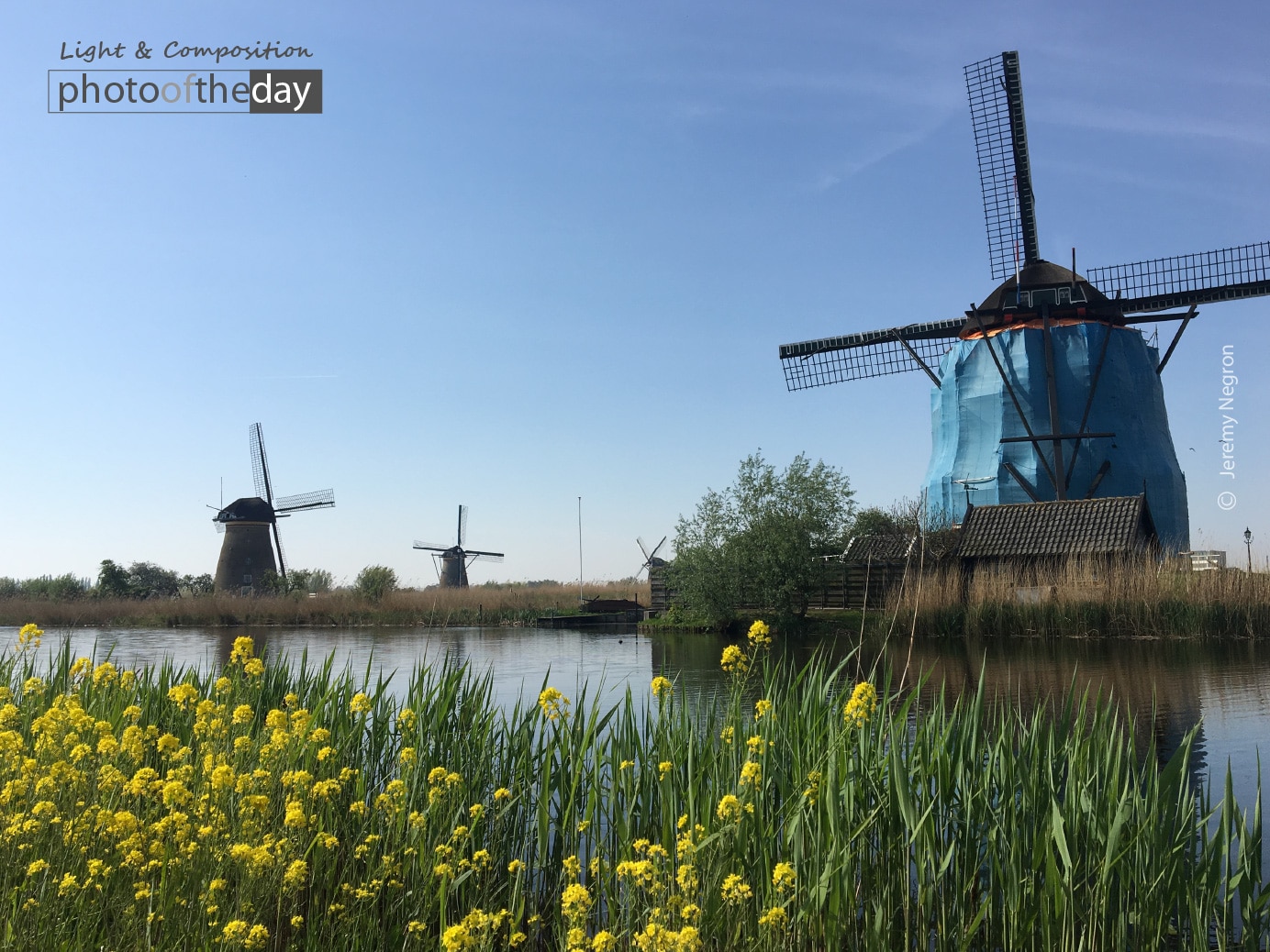
Captured in April 2019, this evocative photograph showcases the iconic windmills of Kinderdijk, Netherlands. The photographer chose to document the site from the water, utilizing a boat to gain a unique perspective on these historic structures. The image captures the serene harmony between the Dutch landscape and its architectural heritage, reflecting a moment of quiet exploration. Its award-worthy quality lies in the masterful composition, which balances the rhythmic placement of the mills against the expansive sky and water, inviting viewers to experience the tranquil atmosphere of this timeless destination.
Jeremy Negron
Born in France and currently based in Paris, Jeremy Negron draws significant creative inspiration from his urban environment to curate his expansive photographic gallery. His work is defined by a deep-seated passion for global travel, where he seeks to document diverse life conditions and the raw beauty of natural landscapes. Through his lens, Negron strives to foster a sense of harmony with the environment, aiming to share intimate and profound glimpses of the world with an international audience.
Resonance Score Breakdown
Transparency Note: The resonance score (10.0/20) is calculated based on social engagement metrics collected before the award announcement.
Expert Photography Reviews · 8
The Weight of Still Air
There is a specific, heavy stillness that arrives just before the wind shifts, when the air loses its transparency and begins to hold the grey of the clouds like a physical weight.
Read the reflection →The Architecture of Breath
Willows along a riverbank do not fight the current; they lean into it, their roots anchoring deep into the silt while their branches sway in rhythmic submission to the wind.
Read the reflection →Reviews & Comments
Share your thoughts about this award-winning photograph. Your reviews contribute to the community engagement score.
The sky’s bruised violet, bleeding into the pale, melancholic ochre of the reeds, evokes a Morandi still life adrift on a canal. It’s a chromatic ache, really; I’ve found myself breathless before the way that slate-grey water mirrors the mills’ weathered timber. One feels the damp chill of the Dutch spring in these muted, desaturated tones, where the light doesn’t just illuminate the landscape—it breathes a quiet, rhythmic sorrow into the very air.
Kinderdijk from a boat? That’s a bold angle. I’m looking for the pulse of the street, but here, it’s all about the stillness. The rhythmic repetition of those mills against the water is hypnotic. It’s calm, sure, but is it decisive? One tenth of a second later and the light on those sails shifts, the balance breaks. I’d have loved a human element to anchor the scene. It’s beautiful, but does it breathe?
Kinderdijk’s windmills have been documented to death, yet Negron finds a refreshing stillness here. By dropping to the water line, he echoes the low-slung horizons of 17th-century Dutch masters, though the rhythmic repetition of the sails feels more akin to the geometric precision of Bernd and Hilla Becher. It’s a quiet, disciplined study. I’ve seen these mills a thousand times, but the way he captures the light reflecting off the canal actually made me catch my breath.
The light’s interaction with the water’s surface creates a micro-contrast that’s truly breathtaking. Negron’s choice of aperture keeps the focal plane sharp across the mill blades, avoiding the diffraction limit that often plagues such expansive landscapes. I’m genuinely moved by how the lens resolves the subtle texture of the reeds against the sky. It’s a rare moment where the glass doesn’t just record the scene; it elevates the physics of the Dutch atmosphere into something ethereal.
The water’s surface ripples like brushed silk, mirroring the rhythmic geometry of the Kinderdijk mills. It’s a quiet, Dutch dialogue between human ingenuity and the relentless sky. I’m struck by how the architecture anchors the horizon, turning the landscape into a living, breathing portrait of history. The mills aren’t just structures; they’re the subjects, defining the space they inhabit. It’s hauntingly beautiful. I feel as though I’m drifting right alongside them, lost in that timeless, watery stillness.
Kinderdijk’s windmills are usually rendered with a suffocating, postcard-perfect clarity that I find utterly exhausting. Negron’s choice to shoot from a moving boat introduces a subtle, rhythmic instability that finally breathes life into these static relics. It’s closer to Hiroshi Sugimoto’s long-exposure theatres than conventional landscape practice. Why resolve the blades so sharply when the water’s motion tells a truer story? I’m genuinely relieved he didn’t stop the shutter; he’s finally let the wind actually exist.
Kinderdijk’s windmills are beautiful, but they’re silent stone and wood. I’ve spent my life looking for the pulse of a person, and here, there’s nobody home. It’s a technically clean shot, sure, but it feels like a postcard bought at a gift shop. I miss the messy, complicated humanity of a real encounter. Where’s the person behind the lens? I’m left staring at empty blades when I’m starving for a soul to talk to.
Before the eye identifies the windmills, something in the chest softens. The water’s stillness triggers a rhythmic, almost hypnotic, slowing of my own pulse. It’s a quietude that lingers, pulling the viewer into that low, Dutch horizon. When I return to it, I still feel the damp chill of the canal against my skin. It doesn’t just document a landscape; it anchors a fleeting, breathless sense of solitude deep within the nervous system.