Fast food, Anyone.. by Andisiwe Boya
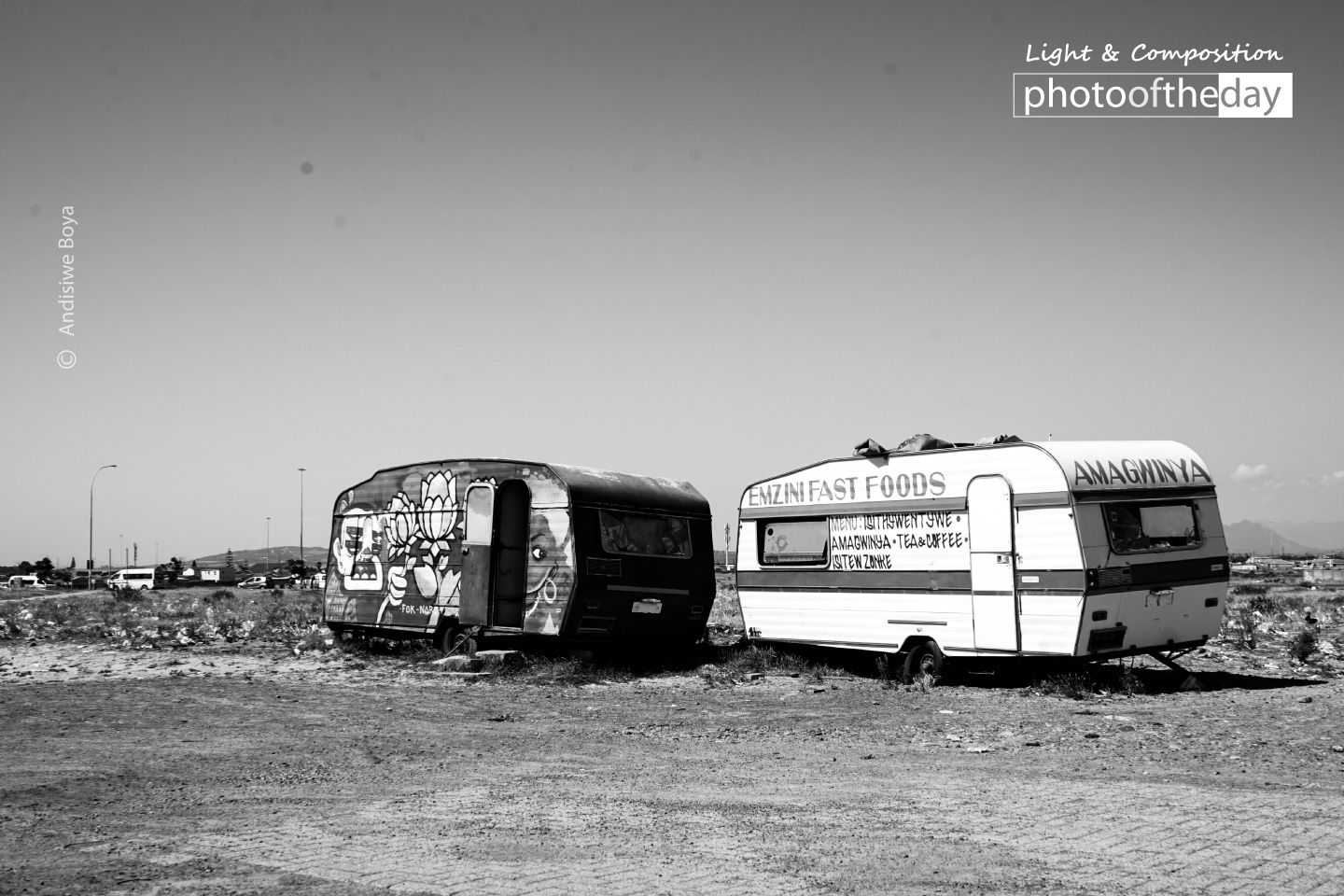
Captured in the vibrant township of Khayelitsha, South Africa, this photograph serves as a poignant documentary study of local fast-food culture. By focusing on the everyday reality of a space historically shaped by apartheid, the photographer highlights the enduring cultural identity of the region. The image is award-worthy for its raw, authentic perspective, transforming a mundane street scene into a significant visual record of social history. Through a thoughtful lens, the photographer captures the intersection of past and present, inviting viewers to reflect on the resilience and unique character of South African township life.
Andisiwe Boya
Based in Johannesburg, South Africa, Andisiwe Boya is a 26-year-old photographer dedicated to the art of visual storytelling. Specializing in documentary-style photography, portraiture, and event coverage, Boya utilizes a keen eye to document the nuances of local culture and human experience. Through a commitment to capturing authentic narratives, Boya continues to build a compelling body of work that reflects the evolving social landscape of South Africa.
Resonance Score Breakdown
Transparency Note: The resonance score (10.9/20) is calculated based on social engagement metrics collected before the award announcement.
Expert Photography Reviews · 7
The Hunger That Remains
It is 3:14 am. The house is quiet, but my mind is loud with the things we consume just to feel full. We spend our days chasing small, immediate satisfactions—the quick bite, the fleeting distraction, the temporary fix for a hollow space that never quite closes.
Read the reflection →The Architecture of Necessity
We often mistake the city for its skyline, for the glass towers and the planned boulevards that signal economic arrival.
Read the reflection →Reviews & Comments
Share your thoughts about this award-winning photograph. Your reviews contribute to the community engagement score.
Most street photography from Khayelitsha relies on poverty-porn tropes, but this frame avoids that trap. By focusing on the grease-stained paper and the specific, weary posture of the vendor, Boya captures a quiet dignity that feels rare. It’s the way the light catches the oil on the food that actually made me stop and breathe. In thirty years, this won’t just be a snack; it’ll be a vital, unvarnished record of how a community feeds itself.
The shutter clicked a fraction too late. The subject’s hand is already receding from the food, the kinetic energy of the exchange lost to the blur of a closing frame. I’ve spent my life chasing that singular, explosive millisecond where intent meets action, and this misses the mark. It’s a shame, really, because I can feel the heat of that street. If the shutter had fired when the fingers first touched the meal, it would’ve been perfect.
There’s a distance here that bothers me. The subject is framed by the stall, but they don’t seem to be in conversation with the lens. It’s a scene observed rather than shared. I’m looking for that spark of recognition, that moment where the subject invites us in, but it’s missing. I feel a strange, hollow ache looking at their hands; they’re busy, but they aren’t telling me their story. It’s a missed connection, not a gift.
In Khayelitsha, we don’t just see a street vendor; we hear the rhythm of a life lived in the open. Andisiwe Boya didn’t just look at this scene; she listened to the hum of the township. There’s a quiet dignity in how she frames the steam rising against the grit. It’s a portrait of resilience that hits me right in the chest. I find myself lingering on those eyes, wondering what stories they’ve held today. It’s beautiful.
The frame divides into a rigorous 1:2 ratio, anchoring the heavy foreground structure against the receding depth of the township. Those vertical corrugated lines create a rhythmic, parallel vector that pulls the eye toward the vanishing point. It’s a beautifully solved spatial equation. I’m genuinely struck by how the stark contrast between the foreground mass and the negative space balances the composition. It’s not just a street scene; it’s a perfectly calibrated geometric tension that holds everything together.
It’s a scene that demands more than a drive-by shutter click. One wonders if the photographer spent a week on that corner or merely an afternoon. The composition holds a certain grit, but I’m left wanting the texture of a longer commitment. It’s honest work, yet it lacks the weary soul of someone who’s truly waited for the light to settle. I’ve spent enough damp mornings in the field to know when a frame hasn’t been fully earned.
The corrugated iron walls and weathered signage create a harsh, rhythmic geometry that defines this space. It’s a gritty, honest stage. The light catches the texture of the metal, grounding the subject in the relentless reality of Khayelitsha. When I look at the man’s posture, I don’t just see a person; I see someone carved from this very architecture. It’s haunting. The environment doesn’t just frame him—it explains the weight of his daily existence entirely.