Departures and Arrivals by Nicole Pandolfo
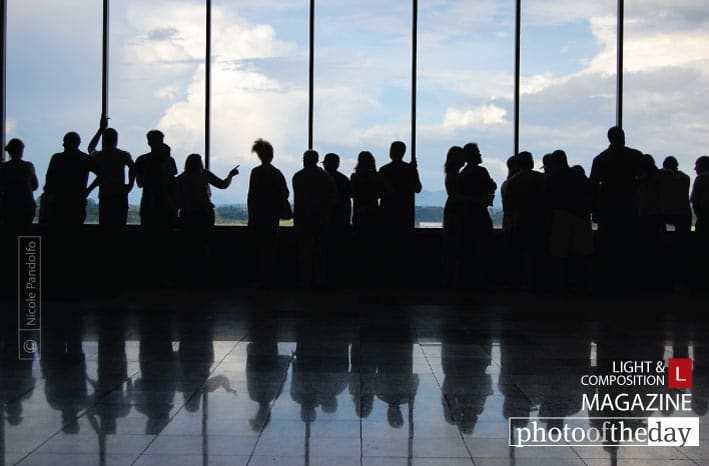
Captured at the Afonso Pena International Airport in Curitiba, this photograph explores the quiet anticipation of travel. The photographer utilized the dramatic interplay of natural light and moody, blue-toned clouds to frame the scene, creating a striking contrast against the terminal's large windows. By focusing on the candid postures and gestures of travelers watching the aircraft, the image transforms a mundane transit moment into a poignant narrative of departures and arrivals. This work is award-worthy for its masterful use of ambient light and the photographer's keen ability to find profound human connection within the transient atmosphere of an airport.
Nicole Pandolfo
Born in the small city of Guaporé, Brazil, Nicole Pandolfo relocated to Porto Alegre to pursue her academic and professional ambitions. A journalism student at the Pontifícia Universidade Católica do Rio Grande do Sul, she discovered her enduring passion for photography during her initial photojournalism coursework. Currently balancing her final academic projects with work at the university's Multimedia Production Centre, Pandolfo specializes in photo documentary work, consistently documenting the human experience with a sharp, journalistic eye.
Resonance Score Breakdown
Transparency Note: The resonance score (13.3/20) is calculated based on social engagement metrics collected before the award announcement.
Expert Photography Reviews · 6
The Architecture of In-Between
We are a species defined by the threshold. From the moment we first stepped out of the cave, we have been obsessed with the space between here and there—the liminal, the waiting, the suspended breath before the engine turns over. There is a specific, hollow ache to a terminal.
Read the reflection →The Salt of Transit
The air in a terminal tastes of ozone and recycled breath, a metallic tang that clings to the back of the throat. It is a dry, sterile flavor, stripped of the damp earth or blooming jasmine that anchors a person to a home.
Read the reflection →Reviews & Comments
Share your thoughts about this award-winning photograph. Your reviews contribute to the community engagement score.

The bruised, slate-grey light clinging to the Curitiba terminal evokes the melancholic stillness of a Morandi study, where the blue of shallow tidal water at dusk bleeds into the glass. It’s a haunting chromatic ache that makes my own heart stutter, capturing that precise, liminal temperature where anticipation dissolves into sorrow. One finds the shadows aren’t merely absent light, but a deliberate, cool-toned velvet that cradles these travelers, turning their mundane transit into a profound, painterly suspension.
The frame’s geometry is compromised. While the terminal windows offer a rigid grid, the figures lack the necessary spatial tension to anchor the composition. It’s a collection of disparate masses drifting toward the edge. The blue-toned light doesn’t compensate for the lack of structural discipline. I’ve grown weary of such loose arrangements. The eye is refused a clear fulcrum, leaving the viewer to wander aimlessly across a plane that simply doesn’t hold. It’s structurally hollow.
The blue-toned clouds pressing against the glass don’t merely frame the terminal; they suffocate the space between the travelers and their machines. It’s a heavy, cold silence. I’ve spent hours in such transit zones, and I’m struck by how Pandolfo forces us to confront the void. She doesn’t fear the dark corners here. By letting the shadows swallow the details, she reveals that travel isn’t about movement, but the terrifying weight of being left behind.
Most travel photography is just visual noise, but here, the blue-toned light bleeding through the terminal glass anchors the scene in a specific, melancholic reality. I’ve seen thousands of airport shots, yet this one lingers because of the way the subjects’ posture mirrors the static machinery outside. It’s the quiet tension between the glass and the sky that gets me. Thirty years from now, we’ll still recognize that particular ache of waiting for a life to begin.
The blue-toned clouds press against the glass, turning the terminal into a quiet cathedral of transit. She stood there, waiting for the light to soften the harshness of the departure gate. I’ve felt that same ache, watching the sky shift while the world moves on without us. It’s a lonely, beautiful stillness. She didn’t just capture travelers; she listened to the atmosphere until the glass held the weight of their longing. It’s truly haunting.
One suspects Pandolfo spent more than a fleeting afternoon in that terminal. It’s easy to snap a shutter at a window, but capturing that specific, melancholic blue of a Curitiba dusk requires a stubborn refusal to leave. I’ve spent enough hours in drafty transit halls to recognize the ache of waiting for the light to finally align with the mood. It’s a quiet, earned piece of work. I find myself wanting to sit there with them.