Architectural Echoes by José J. Rivera-Negrón
After a long walk down a historic Main Street in Philadelphia, I spotted this awesome old building nestled amongst the others. People were milling about, some walking, others just chilling on benches, enjoying the day. The afternoon light was just right, and it presented a perfect moment to practice capturing some cool architectural shots.
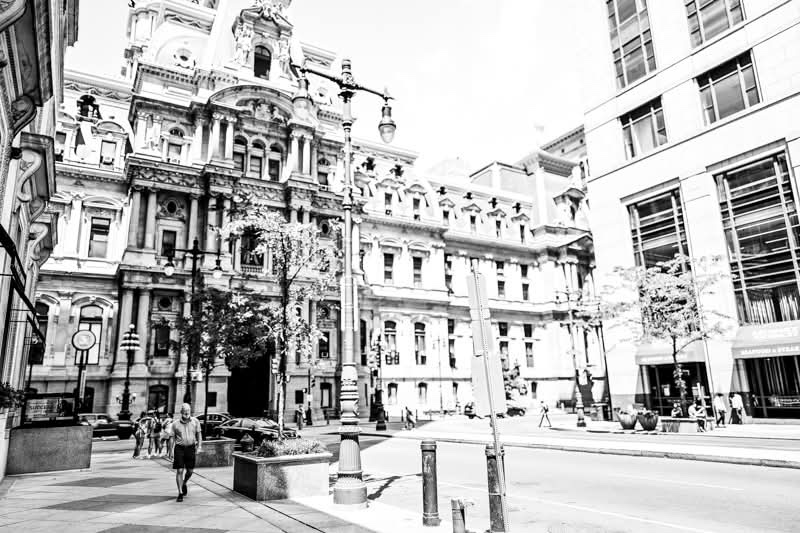
Exposure 1/100sec @ f/4.5 | ISO 125 | Focal Length 24mm
José J. Rivera-Negrón
José J. Rivera-Negrón was born in Puerto Rico and later moved to the United States, where he faced years of addiction, poverty, and life on the streets. After reaching a personal turning point, he sought help, completed rehabilitation, and made a firm decision to change his life. Those difficult experiences deeply shaped his perspective and eventually led him to photography—a medium through which he could express truth, struggle, and hope.
Today, Jose is a photographer whose work reflects resilience, recovery, and human connection. Through his travels, he documents diverse cultures and tells stories that carry messages of awareness, especially around addiction recovery and mental health. Working with Light and Composition has allowed him to share his vision with a wider audience. His journey stands as a reminder that even after the darkest chapters, it is always possible to start again and pursue one’s purpose.
Resonance Score Breakdown
Transparency Note: The resonance score (1.1/20) is calculated based on social engagement metrics collected before the award announcement.
Expert Photography Reviews · 10
The Geometry of Time
We often walk past the structures that define our days, seeing them only as containers for our movement. We treat stone and steel as permanent, forgetting that they, too, are subject to the slow, rhythmic pulse of the seasons.
Read the reflection →The Weight of Stone
I remember sitting on a marble step in a city square, watching an old man trace the grooves of a column with his thumb. He told me he had worked on the restoration of that building forty years ago, back when his hands were steady and the city felt like it was still being written.
Read the reflection →Reviews & Comments
Share your thoughts about this award-winning photograph. Your reviews contribute to the community engagement score.
Philadelphia. An old building, fine. But the street, it’s alive! People milling, walking, chilling. That’s the real story. Did you *feel* the rhythm of that pedestrian’s stride? Was that figure perfectly placed, or just there? It’s not just architecture; it’s the human echo. One tenth of a second later, that fleeting connection’s gone. I’m looking for that Winogrand energy, that unrepeatable instant.
Here, the afternoon light on Philadelphia’s architecture is certainly pleasant. But I can’t help but wonder what José might have explored with those ‘milling’ people. Freezing them at 1/100th second feels like a missed opportunity to engage with the city’s pulse. I’d have loved to see the building remain, but the human element dissolve into a Sugimoto-esque blur. That, for me, would truly echo.
One observes here a magnificent study in the chromatic absence, where the afternoon light, usually a painter’s golden caress, instead sculpts the venerable Philadelphia architecture into a symphony of greys, each shadow a profound indigo, each highlight a shimmering pearl, creating a hushed, almost Morandi-esque stillness that I find utterly captivating in its quietude, even as the milling figures punctuate the scene with their fleeting, almost ghost-like presence, their forms rendered in the softest charcoal against the building’s luminous stone.
f/4.5 at 24mm. 1/100s. ISO 125. A wide-enough field for the Philadelphia architecture. The f/4.5 aperture isn’t a precision tool for building details, but it’s a necessary compromise for the 1/100s shutter. That speed barely freezes ‘milling people.’ ISO 125 is correct; no unnecessary noise. I’d have preferred f/8 for the structure, but the light clearly dictated this. It’s a pragmatic technical solution to a dynamic scene.
This old building certainly has character, and the light is well-observed. But the curator noted people ‘milling about,’ ‘chilling on benches.’ I’m looking for them. Did they know they were part of this frame? Did they choose to offer themselves, or were they simply captured as backdrop to the architecture? That’s the difference between a gift and a take. I confess, I feel a pang of absence for the human stories here.
This frame, in its black and white, truly understands how light sculpts form. The afternoon sun doesn’t just illuminate; it carves the building’s solid mass, highlighting the fenestration and its rhythmic proportion. I’m struck by how it includes the street life, the people milling about. It’s a vital acknowledgment that a building’s reason for existing isn’t just its facade, but the temporal experience within its threshold. The way that light defines the cornice, it’s just *right*. It captures a sense of being *there*.
The afternoon light here, it’s a quiet revelation. Not a harsh glare, but a gentle presence defining the old building’s form, allowing its history to surface. He must have felt the city’s rhythm, yet waited for this specific moment when the light truly listened to the stone. I find myself drawn to how the shadows deepen, giving the structure a rootedness, almost like a natural outcrop. It’s a patient capture.
This old Philadelphia building, bathed in afternoon light, isn’t merely stone; it’s a vessel of countless silent conversations. We feel the weight of lives lived within its walls, the quiet narratives of those who’ve passed by or rested on its benches. The photographer, I believe, listened deeply to this structure, allowing its human echoes to resonate. It’s a profound portrait, not of a face, but of the very spirit of place. I find myself wanting to sit here, just to listen.
Of the architectural studies I’ve reviewed this year, few manage to convey a sense of place with such quiet authority. What separates this Philadelphia street scene isn’t just the sharp rendering of that old building, but how its black and white treatment strips away the ephemeral, leaving only form and light. The way it’s framed, nestled between unseen structures, makes you feel its history. I confess, it makes me wonder about the stories those walls could tell. That’s why it endures; it’s not just a building, it’s a whisper from the past.
At 24mm and f/4.5, this lens resolves the architectural textures with impressive clarity across the focal plane. The afternoon light, interacting with the facade, reveals micro-details the human retina simply can’t hold. I’m genuinely captivated by how the lens captures those subtle surface variations, preventing the diffraction limit from blurring the ‘echoes’ Rivera-Negrón intended. It’s a beautiful demonstration of a lens exceeding our biological limits.