A Walking Girl by Ryszard Wierzbicki
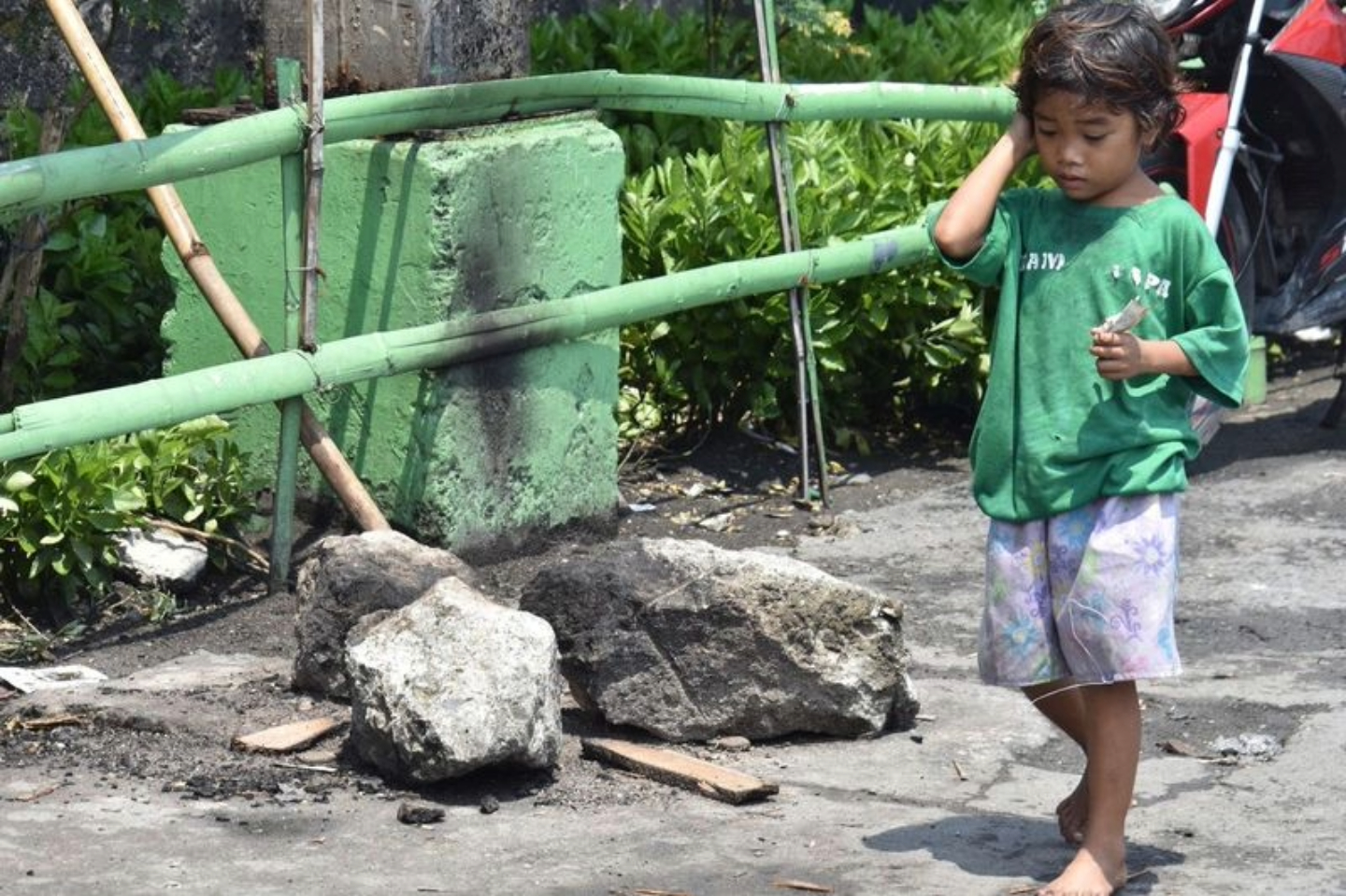
In the slums surrounding Manila’s Smokey Mountain, the photographer encountered a poignant scene on a Friday morning—a time when children should have been in classrooms, yet were instead wandering the streets. This image captures a young girl amidst the stark reality of her environment, highlighting the absence of educational opportunity for the youth in this impoverished area. The photograph is award-worthy for its raw, observational power, transforming a quiet, everyday moment into a compelling social commentary on the lives of children living on the margins of society.
Exposure 1/1000sec @ f/8 | ISO | Focal Length 300mm
Ryszard Wierzbicki
Born in 1963, Ryszard Wierzbicki is a multifaceted professional who holds a Master's degree in Social Sciences from the University of Gdańsk. After a diverse career spanning child care, dentistry, and IT, he transitioned into the world of travel and photography, eventually establishing the forums Instant Travelling and World Around. Now based in Swindon, United Kingdom, he balances his work as a marketing advisor and tour organizer with extensive travels through Southeast Asia, where he dedicates his time to volunteering with orphan charities and documenting the human condition.
Resonance Score Breakdown
Transparency Note: The resonance score (6.5/20) is calculated based on social engagement metrics collected before the award announcement.
Expert Photography Reviews · 5
The Weight of Unread Pages
It is 3:15 am, and the silence in this room feels heavy, like a debt that has finally come due. I am thinking about the things we decide children are ready for. We tell them the world is a place of steady progress, a ladder where each rung leads to a safer height.
Read the reflection →The Weight of Unspoken Maps
Dear reader, I have been thinking about the paths we are forced to walk before we even know how to choose our own direction. There is a specific kind of silence that follows a child who moves through a world not built for their comfort, but for their endurance.
Read the reflection →Reviews & Comments
Share your thoughts about this award-winning photograph. Your reviews contribute to the community engagement score.
The frame holds. It’s a long lens compression, flattening the Manila heat into a suffocating, blurred backdrop. She’s walking, caught in that precise micro-second where gravity shifts. I’ve seen this rhythm in neorealist cinema; it’s the silence before the dialogue drops. It breaks my heart how she occupies the space, completely unaware of the lens. The cut would have been a mistake. This is the frame the editor keeps, the one that tells the whole story.
The corrugated metal textures and jagged, rusted edges of the Manila slums create a harsh, rhythmic geometry that traps the girl in her own reality. It’s a suffocating frame. The light here doesn’t offer warmth; it exposes the debris of a lost childhood. When I look at her small, solitary figure, my heart truly aches. She isn’t just walking; she’s navigating a landscape that has already decided her future. The environment dictates her entire narrative.
The vertical axis here is anchored by the girl’s stride, creating a sharp vector that cuts through the chaotic horizontal debris. It’s a precise 1:3 ratio of subject mass to the surrounding urban decay. I’m struck by how the negative space in the upper quadrant forces the eye back to her movement. It’s a perfectly solved spatial equation; the geometry of her isolation is mathematically devastating. I’ve rarely seen such brutal structural clarity in a street frame.
Shadows here don’t merely fall; they colonize the frame, swallowing the periphery of Manila’s margins. It’s a brutal, honest geometry. I’ve stared at the girl’s silhouette, and I’m struck by how the darkness refuses to offer her sanctuary. It’s a heavy, suffocating weight that forces her into the light’s cruel exposure. Tarkovsky understood that time is the artist’s only material, but here, Wierzbicki proves that light is the only morality. It’s a haunting, necessary silence.
The ochre dust of Manila’s margins clings to the girl’s skin, a palette reminiscent of Morandi’s muted, melancholic earth tones, yet it’s the searing, bruised violet of the shadows that truly haunts one’s gaze. It’s a chromatic ache, really; I’ve felt my heart stutter at how the light doesn’t merely illuminate her, but rather bruises the air around her, turning poverty into a visceral, suffocating symphony of desaturated gold and dying, industrial light.