A Love Story by José J. Rivera-Negrón
This photo has a whole story. It was a few years ago when my sister got engaged, and we took a trip to this really enormous, beautiful park that was a long drive from home. As they were walking ahead and the light started to fade, I hung back for a second to capture them in this awesome night scene.
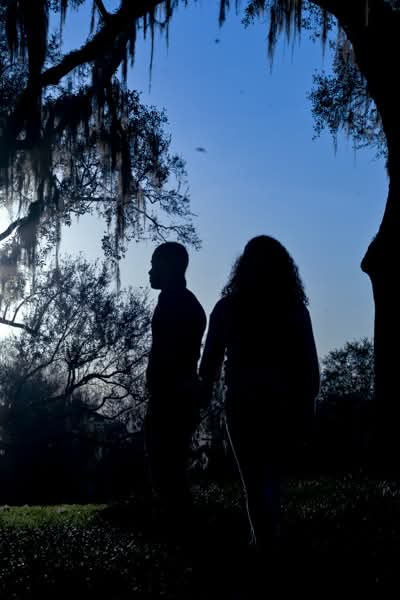
Exposure 1/100sec @ f/18 | ISO 125 | Focal Length 109mm
José J. Rivera-Negrón
José J. Rivera-Negrón was born in Puerto Rico and later moved to the United States, where he faced years of addiction, poverty, and life on the streets. After reaching a personal turning point, he sought help, completed rehabilitation, and made a firm decision to change his life. Those difficult experiences deeply shaped his perspective and eventually led him to photography—a medium through which he could express truth, struggle, and hope.
Today, Jose is a photographer whose work reflects resilience, recovery, and human connection. Through his travels, he documents diverse cultures and tells stories that carry messages of awareness, especially around addiction recovery and mental health. Working with Light and Composition has allowed him to share his vision with a wider audience. His journey stands as a reminder that even after the darkest chapters, it is always possible to start again and pursue one’s purpose.
Resonance Score Breakdown
Transparency Note: The resonance score (2.0/20) is calculated based on social engagement metrics collected before the award announcement.
Expert Photography Reviews · 6
The Edge of Evening
There is a specific quality to the light just before the world turns entirely to shadow—a thin, bruised violet that clings to the edges of things. In the north, we call this the threshold.
Read the reflection →The Distance Between Us
A path winds. It does not ask to be followed. It simply is.
Read the reflection →Reviews & Comments
Share your thoughts about this award-winning photograph. Your reviews contribute to the community engagement score.
It’s a pleasant enough snapshot, but one suspects the shutter was pressed during a casual stroll rather than a vigil. A long drive doesn’t equate to a long wait. The light is fading, yet the composition feels incidental, lacking the deliberate tension of a scene truly earned. I’ve spent enough nights shivering in the dark to know the difference. It’s a sweet memory for the family album, but it hasn’t paid the toll required for greatness.
Most entries I see rely on sentimentality to mask technical gaps. Rivera-Negrón avoids this by letting the fading light dictate the mood rather than forcing it. The choice to shoot at f/18 creates a crisp, grounded silhouette that feels permanent, not fleeting. I’ll admit, the quiet intimacy of their posture genuinely moved me. It’s a rare, honest capture of a private moment that will still feel authentic in thirty years. It’s exactly why this won.
The encroaching Florida twilight swallows the park’s periphery, turning the foliage into a soft, impressionistic blur. It’s that fleeting, melancholic blue hour that makes the couple’s silhouette feel fragile against the vast, darkening landscape. I’m genuinely moved by how the fading light isolates them, turning their walk into a quiet, private journey. The environment isn’t just a backdrop here; it’s the very distance they’ve traveled together, framing their intimacy within the immense, cooling silence of the night.
Before the eye identifies the figures, a sudden stillness settles in the chest. Rivera-Negrón’s frame captures that liminal space where light surrenders to the encroaching dark. It’s the tension of the distance between them that catches my breath; I feel the quiet ache of their solitude in that vast park. When I return to this, I don’t see an engagement. I see the fragile, fading warmth of two people walking toward a night they haven’t yet understood.
The frame’s geometry is compromised by the subjects’ placement. They’ve drifted too far into the periphery, leaving the center hollow. It’s a structural failure that drains the tension from the composition. The fading light doesn’t compensate for the lack of a clear fulcrum. I’m genuinely frustrated by the wasted negative space here. It’s a missed opportunity for balance. The picture plane remains unresolved, and the visual architecture simply doesn’t hold the weight of the narrative.
The light dies, and the frame breathes. It’s a long take, a quiet moment held against the encroaching dark of that Florida park. Rivera-Negrón doesn’t rush the shutter; he lets the distance between the couple and the lens create the tension. I’ve seen a thousand engagement shots, but this one feels like the scene an editor keeps to anchor the film. It’s honest, lonely, and beautiful. I actually felt my pulse slow looking at it.