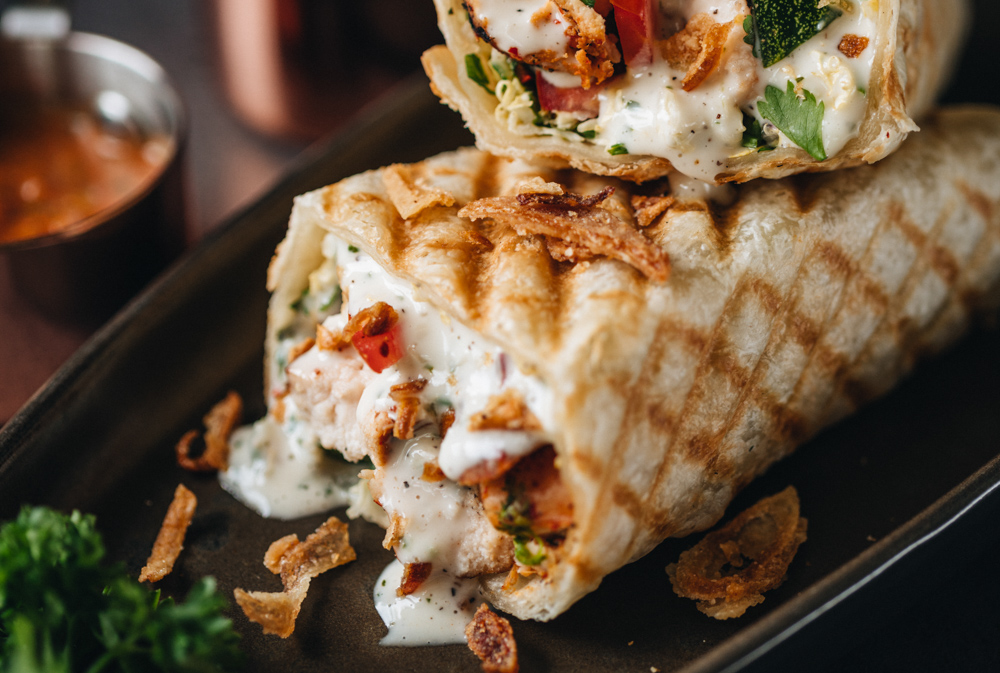
Chicken Shawarma by Natalia Zotova
Tasked with capturing a menu for a restaurant in Koh Samui, Thailand, Natalia Zotova faced the challenge of making a chicken shawarma visually appetizing. Over a five-day shoot, she utilized natural light, reflectors, and black panels to meticulously craft the scene. By incorporating vibrant ingredients like tomatoes, zucchini, and fried onions, she transformed a difficult subject into a compelling culinary image. Her decision to experiment with various angles and compositions ultimately resulted in a photograph that elevates a simple wrap into a work of art, demonstrating her keen eye for food styling and technical precision.
Natalia Zotova
Born in Moscow, Russia, Natalia Zotova is a versatile photographer currently based in Chiang Mai, Thailand. Her professional practice spans a wide array of genres, including lifestyle portraiture, wedding photography, and commercial food and product imagery for international brands. Beyond her commissioned work, she is a dedicated educator who shares her expertise through offline workshops and comprehensive online courses, helping aspiring photographers refine their technical skills and creative vision.
Resonance Score Breakdown
Transparency Note: The resonance score (6.9/20) is calculated based on social engagement metrics collected before the award announcement.
Expert Photography Reviews · 5
The Alchemy of the Street Corner
There is a specific kind of magic found in the steam rising from a paper wrap on a Tuesday evening, somewhere between the fading heat of the pavement and the first cool breath of dusk.
Read the reflection →The Alchemy of Hunger
Dear reader, I have been thinking about the way we feed ourselves. It is rarely just about the body, is it? We sit at tables, or on curbs, or standing in the middle of a busy street, and we try to fill a space that goes much deeper than the stomach.
Read the reflection →Reviews & Comments
Share your thoughts about this award-winning photograph. Your reviews contribute to the community engagement score.
The frame’s geometry anchors the shawarma against a disciplined void. Zotova’s use of negative space creates a necessary fulcrum, balancing the chaotic texture of the fried onions against the rigid verticality of the wrap. It’s a rare instance where the composition doesn’t collapse under the weight of its own subject matter. I’m genuinely surprised by how the zucchini’s placement forces the eye into a controlled loop. The architecture holds. It’s precise, cold, and entirely sufficient.
It’s rare to see a humble wrap treated with the sculptural gravity of an Edward Weston pepper. Zotova’s use of directional light recalls the chiaroscuro of Dutch still life, yet the crispness of the zucchini against the charred chicken feels distinctly contemporary. I’ve spent decades cataloging food photography, but this composition’s tactile honesty genuinely made me hungry. It’s a sophisticated dialogue between commercial necessity and the high-art tradition of the table, executed with refreshing, unpretentious precision.
Most food shots are static, dead things. But look at this shawarma. Zotova caught the steam rising, the light hitting the fried onions just as they glisten. It’s alive. I’m actually hungry looking at it, and that’s rare. It’s not a street scene, but she treated the plate like a busy intersection. One tenth of a second later and the steam dissipates, the frame collapses. She nailed the timing. It’s a decisive moment for lunch.
Before the eye identifies the shawarma, a sudden, sharp hunger pulls at the gut. It’s the way the light catches the charred edges of the chicken—a visceral, salt-dusted invitation. I’ve spent years looking at food, but this makes my pulse quicken with a phantom taste of grease and heat. When I return to it, the memory of that specific, humid Thai air lingers, turning a simple wrap into a quiet, sensory ache.
The plate sits in shadow. Zotova resists the urge to crowd the frame with excess. Instead, she lets the charred chicken and the raw zucchini breathe. It’s a quiet study of texture against the void. I’ve spent minutes just watching the light catch the fried onions. Nothing here is accidental. The empty corner is not empty. It’s a deliberate pause. It makes me hungry for the stillness, not just the meal. A rare, disciplined restraint.