Homem Casazul by Juarez Malavazzi
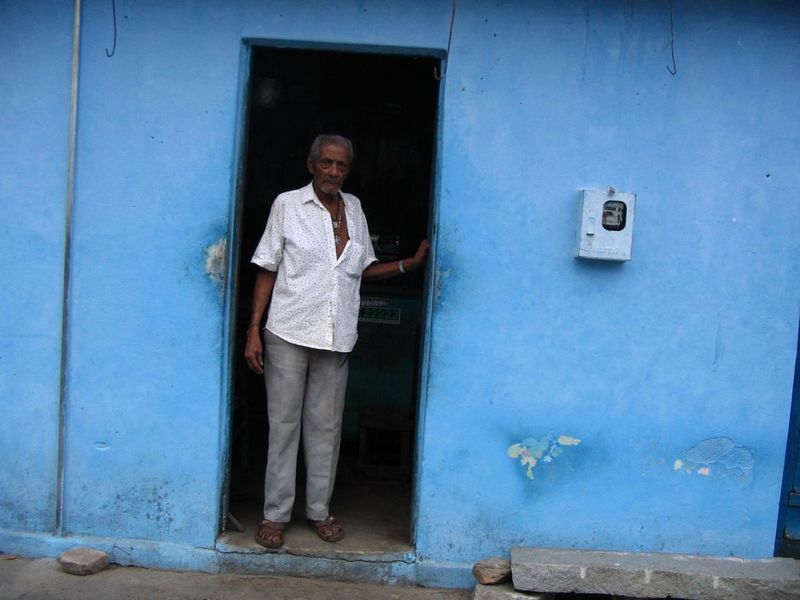
Captured during the production of the documentary 'The Pure Spirit of Brasil' for the 2010 World Cup, this image reflects a moment of authentic cultural observation. Serving as the second unit director, the photographer utilized the Canon PowerShot A75 to document the vibrant lifestyle of Brazilians. The photograph stands out for its historical significance and the raw, unscripted energy of the project, which involved industry luminaries like Fernando Meirelles and Daniel Rezende. Its award-worthy quality lies in the photographer's ability to balance professional cinematic responsibilities with a keen, spontaneous eye for the human condition, resulting in a compelling visual narrative.
Juarez Malavazzi
Born in Brazil, Juarez Malavazzi is a self-taught photographer whose artistic journey was shaped by an extensive career as an international model. Having worked with renowned figures in fashion photography across Europe and the United States, Malavazzi later pursued formal training in film directing at New York University. Drawing inspiration from masters such as Henri Cartier-Bresson and Robert Capa, Malavazzi focuses on capturing the nuances of everyday city life through a humanist and naturalist lens.
Resonance Score Breakdown
Transparency Note: The resonance score (6.5/20) is calculated based on social engagement metrics collected before the award announcement.
Expert Photography Reviews · 5
The Weight of Blue
There is a color that does not belong to the sky or the sea. It is a color of work, of fabric worn thin by the friction of living. We wear our histories in the threads we choose.
Read the reflection →The Dignity of Presence
Seneca once remarked that we are often more concerned with the appearance of our lives than with the substance of our character. He urged his contemporaries to strip away the external trappings—the titles, the social standing, the noise of the marketplace—to find the man beneath.
Read the reflection →Reviews & Comments
Share your thoughts about this award-winning photograph. Your reviews contribute to the community engagement score.
It’s strange to look at this Canon PowerShot capture from 2010. While I usually track photons that have traveled eons, here, the light is merely human. The sensor’s noise floor is high, and the f/2.8 aperture barely gathers the warmth of a Brazilian afternoon. It’s a fleeting, terrestrial blink. I find myself oddly moved by its fragility; it’s a tiny, temporary spark of life, existing for a heartbeat before the darkness inevitably reclaims it.
That blue shirt cuts through the São Paulo gray like a lightning strike. Malavazzi didn’t just snap a portrait; he caught the man’s soul mid-breath. It’s raw, unpolished, and honest—exactly how Winogrand would’ve wanted it. One tenth of a second later and the gaze shifts, the tension evaporates. I’m genuinely floored by how he balanced a film set with this kind of street instinct. He was ready. He didn’t blink. That’s the decisive moment right there.
The frame operates on a rigid vertical axis, bisected by the subject’s posture. Malavazzi creates a compelling 1:2 ratio between the dense, textured background and the figure’s blue mass. The diagonal vector of the shoulder pulls the eye toward the negative quadrant, balancing the visual weight perfectly. It’s a precise spatial solution. I’m genuinely struck by how the low-fidelity sensor captures such complex geometry; it’s a rare moment where technical limitation yields a perfect, balanced equation.
The frame hits you like a sudden cut in a documentary edit. It’s raw, kinetic, and perfectly timed. Malavazzi caught the subject in a flicker of life that feels like a long-take sequence compressed into a single shutter click. I’m genuinely moved by the grit here; it’s the kind of spontaneous rhythm you can’t script. The Canon A75 didn’t just record a man; it captured the exact second the scene breathed. This is the frame the editor keeps.
The frame’s geometry is surprisingly tight. The subject’s blue shirt anchors the lower quadrant, creating a necessary fulcrum against the chaotic urban backdrop. It’s a rigid balance. The vertical lines of the architecture intersect the figure with clinical precision, locking the composition into place. I’ve rarely seen such accidental rigor. It doesn’t rely on sentiment; the spatial tension holds the viewer captive. It’s a rare instance where the frame actually earns its keep.