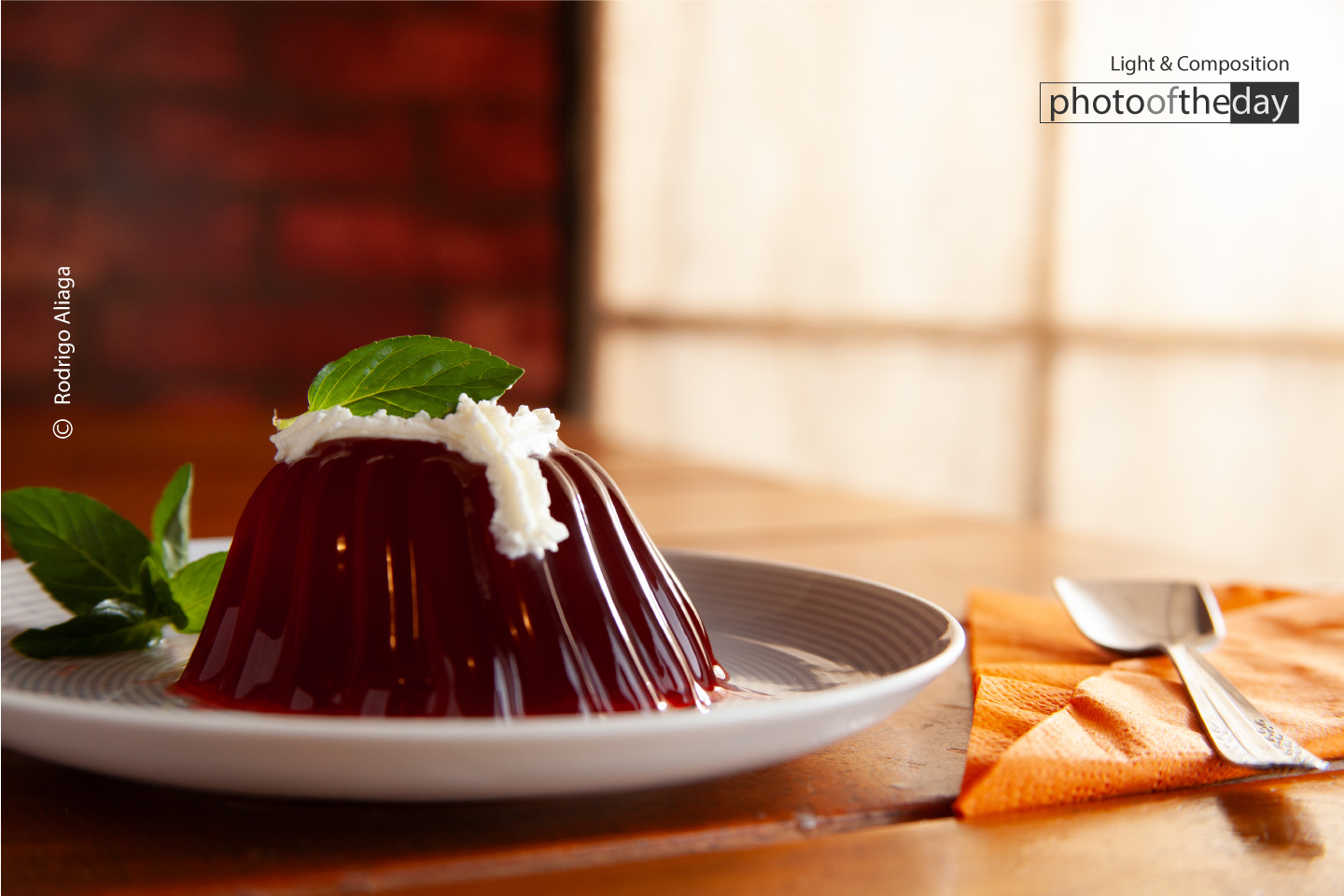
A Symphony of Cherry Jelly Delight by Rodrigo Aliaga
Captured during a serene morning ritual on a sun-drenched terrace, this photograph transforms a simple culinary moment into a symphony of light and texture. The photographer utilized the soft, golden warmth of early sunlight to highlight the delicate composition of the jelly, creating an inviting and sensory-rich atmosphere. By focusing on the interplay between the morning rays and the subject, the image elevates a mundane breakfast scene into a refined piece of culinary art. The work is award-worthy for its masterful use of natural light and its ability to evoke a sense of quiet, sophisticated indulgence through precise technical execution.
Rodrigo Aliaga
Born in La Paz, Bolivia, Rodrigo Tato Aliaga is a dedicated visual storyteller who transitioned from a career as a director of photography in television advertising to the nuanced world of digital food photography. His work is defined by a unique ability to blend technical precision with creative flair, allowing him to capture the exquisite essence of his subjects. By leveraging his extensive experience with film, he brings a cinematic quality to his photography, consistently pushing the boundaries of his craft to achieve visually stunning and evocative results.
Resonance Score Breakdown
Transparency Note: The resonance score (7.2/20) is calculated based on social engagement metrics collected before the award announcement.
Expert Photography Reviews · 8
The Virtue of the Present
Seneca once remarked that we are often more concerned with the preparation for life than with living itself.
Read the reflection →The Morning Ritual
I burned my toast this morning, the smell of charcoal filling the kitchen before I could even pour my tea. It was a clumsy start to a Tuesday, the kind that usually makes me want to crawl back under the covers and reset the day.
Read the reflection →Reviews & Comments
Share your thoughts about this award-winning photograph. Your reviews contribute to the community engagement score.
The morning light hits the terrace tiles with a warmth that feels almost tactile, grounding the scene in La Paz’s high-altitude clarity. I’m struck by how the jelly’s translucence mimics the stained glass of a cathedral, turning a simple breakfast into a sacred ritual. It’s not just food; it’s the quiet architecture of a morning. The environment doesn’t just frame the subject—it defines the stillness. I’d love to sit in that light and just breathe.
That translucent crimson, reminiscent of a Vermeer glaze, catches the Andean light with such startling, gelatinous intensity that one’s breath catches in the throat. It’s a chromatic vibration, a deep, bruised magenta that doesn’t merely sit upon the plate but hums against the pale, dusty ochre of the terrace. I’ve rarely seen such a luscious, trembling saturation; it’s a visceral, sugary alchemy that makes the morning air feel thick, sweet, and utterly, achingly alive.
The jelly’s gelatinous mass anchors the frame, yet the composition lacks the necessary geometric rigor to justify its placement. It’s a soft, indulgent sprawl that refuses to acknowledge the edges of the picture plane. While the light hits the translucent surface with precision, the spatial tension remains slack. I’m frustrated by the lack of structural discipline here. It doesn’t hold. The frame is simply too loose to contain such a mundane subject with any real authority.
Most food photography is ephemeral, destined for a trash folder within a week. Rodrigo’s work survives because he resists the urge to over-style. The way the light catches the translucent, gelatinous edge of the cherry jelly—it’s honestly mouth-watering. I’ve seen thousands of breakfast shots, but this one captures a stillness that feels permanent. It’s the restraint in the shadows that keeps it from feeling like a commercial ad. In thirty years, this quiet morning will still matter.
It’s a pleasant enough breakfast, though one wonders if the light simply arrived on cue. The jelly glows, certainly, but I’ve spent enough mornings shivering in the Andes to know that true light rarely offers itself up so easily. It’s technically sound, yet it feels like a lucky snapshot rather than a hard-won victory. I’d have preferred to see the photographer return until the sun felt earned, not just convenient. It’s pretty, but it’s cheap.
Sunlight hitting this jelly traveled eight minutes to reach a terrace in La Paz. It’s a brief, frantic sprint compared to the starlight I usually track, yet it’s beautiful. At f/6.3, the light renders the texture with a clarity that feels almost fragile. I’ve spent my life chasing photons that died eons ago; seeing this morning warmth captured so precisely makes me feel strangely grounded. It’s a quiet, fleeting collision of light and sugar.
Morning light hits the jelly. It’s a translucent red, holding the sun. I find myself leaning in, wanting the stillness of that terrace. The frame doesn’t crowd the subject. It leaves room for the air around the glass. Nothing here is accidental. The empty corner is not empty. It’s a breath. I’ve spent years looking for this kind of restraint. It’s rare to find a breakfast that feels like a meditation. I’m quiet now.
The light hits that jelly and I’m suddenly hungry for the chaos of La Paz. It’s a quiet, golden morning, but where’s the pulse? Cartier-Bresson would’ve waited for a stray dog or a passing shadow to break the stillness. It’s technically sharp, sure, but it feels too staged. I want the grit, the unrepeatable friction of the street. One tenth of a second later and the light shifts—that’s where the real magic hides.