A Surf of Grey Men by Karthick Saravanan
Captured at Kovalam Beach in Chennai, this long-exposure monochrome study transforms the rhythmic dance of the ocean into a timeless, ethereal tableau. By utilizing a tripod-mounted setup, the photographer isolates the relentless motion of the tide against the serene stillness of the shoreline. The inclusion of scattered objects on the water’s surface introduces a layer of intrigue, inviting viewers to contemplate the mysteries of the sea. This image is award-worthy for its masterful balance of contrast and texture, demonstrating a sophisticated command of light and composition that elevates a simple seascape into a profound, meditative narrative of captured time.
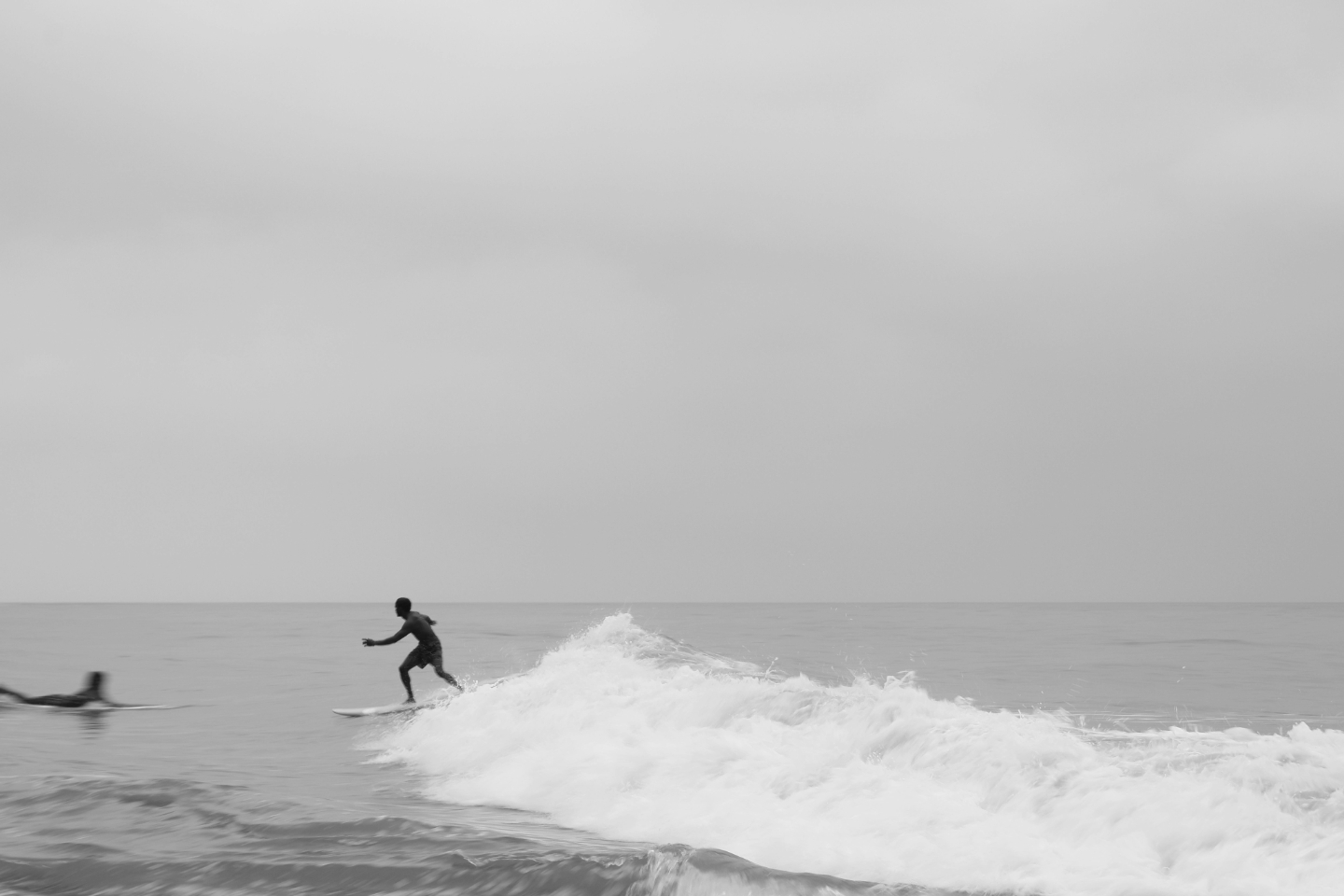
Exposure 1/30sec @ f/8 | ISO 100 | Focal Length 18mm
Karthick Saravanan
Born and raised in a vibrant city, Karthick Saravanan is a dedicated photographer celebrated for his evocative monochrome work. His artistic journey began in his teenage years, eventually leading him to master the expressive depth of black and white imagery while documenting life on his farmland during the pandemic. Now based in Chennai, India, he continues to refine his unique perspective by capturing the raw emotions and essence of both urban and natural subjects. His portfolio stands as a testament to his commitment to storytelling through the timeless medium of monochrome photography.
Resonance Score Breakdown
Transparency Note: The resonance score (7.7/20) is calculated based on social engagement metrics collected before the award announcement.
Expert Photography Reviews · 7
The Weight of the Tide
In the nineteenth century, naturalists often spoke of the ocean as a great, breathing lung. They believed that if one sat long enough by the shore, the rhythm of the water would eventually sync with the beating of one’s own heart.
Read the reflection →The Weight of the Tide
The ocean does not ask for permission. It arrives. It retreats.
Read the reflection →Reviews & Comments
Share your thoughts about this award-winning photograph. Your reviews contribute to the community engagement score.
You’ve captured a strange, lonely rhythm here. I’ve spent enough time on beaches to know that silence isn’t empty; it’s heavy. When I look at these grey figures caught in your long exposure, I don’t just see a technical exercise. I feel a sudden, sharp ache for the anonymity of the crowd. You waited for the tide to blur the edges of their lives. It’s honest. You didn’t just take a picture; you felt the drift.
Before the eye identifies the figures, a sudden stillness settles in the chest. The long exposure turns the Chennai tide into a ghostly, velvet blur, pulling my pulse down to match its rhythmic crawl. It’s unsettling, really—the way those grey men seem to dissolve into the foam. I’ve returned to this three times today, and each time, I feel that same phantom chill. It’s a quiet, beautiful haunting that lingers long after I look away.
There’s a haunting loneliness in these grey figures, but I can’t help feeling they’re just props in a landscape. Where is the person behind the silhouette? I’ve spent my life looking for the pulse in a frame, but here, the ocean’s motion swallows the humanity whole. It’s technically sharp, sure, but it feels like a theft of presence. I’d trade all that ethereal blur for one pair of eyes looking back at me.
1/30sec at f/8, 18mm. A pedestrian choice for a long exposure. At 18mm, the depth of field is infinite, yet the motion blur lacks the necessary duration to truly smooth the surf. It’s caught in a messy middle ground between crisp reality and ethereal abstraction. I’ve seen this mistake too often. It’s technically lazy. The sensor’s dynamic range is wasted on grey sludge. It doesn’t commit to the motion, and frankly, it irritates me.
The shutter speed is a heartbeat, held steady at 1/30th. It’s a risky choice, blurring the tide into a ghostly, monochromatic veil while the shoreline stays sharp. I’ve spent hours watching waves, but this frame captures the exact moment the ocean stops breathing. It’s haunting. The debris floating there? That’s the cut that never came. It’s a film that refused to move, and honestly, I’m glad it didn’t. It’s a perfect, frozen sequence.
The tide blurs into a shroud. It’s a soft, grey erasure of the Chennai coast. I find myself holding my breath, waiting for the water to retreat. It doesn’t. The scattered objects aren’t debris; they’re anchors in the void. Nothing here is accidental. The empty corner is not empty. It’s a weight. I’ve spent minutes staring at that silence. It’s rare to find a frame that lets the world simply be. I’m grateful for the quiet.
At 1/30th of a second, Saravanan hasn’t quite committed to the blur, leaving the grey men in a state of uncomfortable, half-resolved agitation. It’s not the ethereal stillness the jury craves; it’s a jittery, nervous energy that I find genuinely thrilling. Why stop at the edge of abstraction? I’d have pushed the shutter further to dissolve their forms entirely. This approach is closer to Hiroshi Sugimoto’s long-exposure theatres than to conventional, safe landscape practice.