A Life Is Not Balanced by Karthick Saravanan
In the heart of Kanyakumari, a poignant scene captures a young boy sifting through discarded remnants, accompanied by his loyal dog. The photographer masterfully utilizes the stark backdrop of a waste yard to highlight the profound inequalities of life, contrasting the boy's struggle with the quiet resilience in his gaze. By framing this juxtaposition of innocence and adversity, the image transcends its setting, serving as a powerful testament to the enduring human spirit. The technical precision of the shot, combined with the emotional weight of the subjects, creates a compelling narrative that invites the viewer to find hope and dignity amidst the most challenging circumstances.
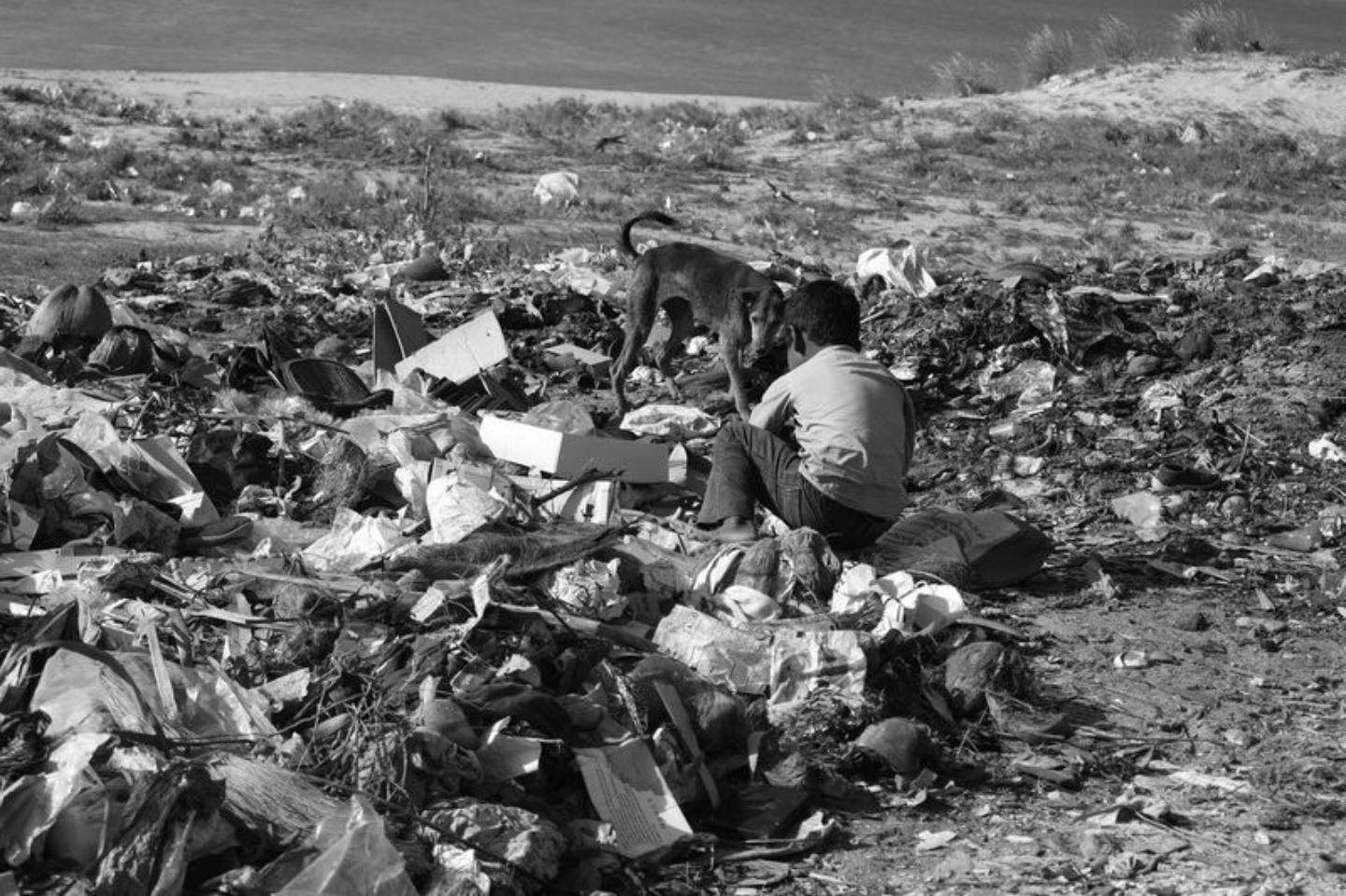
Exposure 1/500sec @ f/6.3 | ISO 100 | Focal Length 45mm
Karthick Saravanan
Based in Chennai, India, Karthick Saravanan is a dedicated photographer celebrated for his evocative monochrome work. His artistic journey, which began in his youth, evolved into a profound exploration of light and shadow, particularly during the Covid-19 pandemic when he documented life on his farmland. Now focusing his lens on the streets, he captures the raw emotions and essence of his subjects with a unique, timeless perspective. His work serves as a testament to the power of black and white photography to tell deeply human stories.
Resonance Score Breakdown
Transparency Note: The resonance score (7.7/20) is calculated based on social engagement metrics collected before the award announcement.
Expert Photography Reviews · 8
The Weight of What Remains
There is a specific silence that lives in the places we have discarded. It is not the silence of peace, but the silence of things that were once held, once useful, once loved, and then suddenly rendered obsolete.
Read the reflection →The Weight of Small Things
We are taught that childhood is a garden, a place of soft edges and unburdened light, yet some roots must find their nourishment in the cracks of the pavement. There is a quiet gravity to a small hand that knows the texture of discarded things better than the softness of a toy.
Read the reflection →Reviews & Comments
Share your thoughts about this award-winning photograph. Your reviews contribute to the community engagement score.
The boy’s posture is all wrong for the action. He’s mid-reach, but his center of gravity is stagnant, lacking the kinetic tension of a true search. I’ve spent my life watching bodies commit to a movement, and this feels like a pose, not a process. It’s a shame, because the dog’s gaze is perfect. I wanted to see the strain in his muscles, but the timing is just a heartbeat off. It’s a missed opportunity.
The jagged, discarded refuse creates a brutal geometry that presses in on the boy, turning the landscape into a cage of debris. It’s a harsh, monochromatic stage where the textures of waste define his reality more than his own silhouette. I’m truly heartbroken by how the dog’s posture mirrors his own weary vigilance. The environment doesn’t just surround him; it dictates his existence, forcing us to confront the heavy, silent weight of his world.
Before the eye identifies the waste, something in the chest tightens. It’s the boy’s stillness that catches me; he isn’t searching, he’s waiting. My pulse slows, mirroring his quiet resilience. When I return to this a year from now, I know I’ll still feel that phantom grit under my fingernails. It’s a heavy, visceral ache. I find myself wanting to reach into the frame, not to help, but just to be near that dog’s steady, grounding presence.
You didn’t just capture a boy in a waste yard; you captured the weight of his world. I’ve spent years in places like Kanyakumari, and it’s easy to look away. But you stayed. And that dog? It’s the anchor. Seeing them together, amidst the debris, made my chest tighten. You didn’t force the narrative; you just let the truth sit there. There’s something honest happening here. You waited for the gaze, and it paid off.
We look at this boy in Kanyakumari and we don’t just see a child in a yard; we hear the quiet rhythm of his survival. He’s sifting through the debris, yet his gaze holds a dignity that refuses to be discarded. Beside him, the dog is his only anchor. It’s a heavy, aching scene, but I find myself moved by the stillness in his eyes. He’s listening to the world, and it’s listening back.
1/500sec at f/6.3, 45mm, ISO 100. The shutter speed is overkill for a static subject, but it’s a safe choice. Stopping down to f/6.3 on that kit lens was necessary to sharpen the corners, though it’s still soft. I’ve seen enough waste yards to know the light was harsh, yet the exposure holds. It’s technically competent. Honestly, the lack of lens compression bothers me. It’s a flat, clinical record of a difficult life.
The grit here echoes the social realism of Bill Brandt, yet the boy’s gaze pulls me into a different century. It’s not just the waste yard; it’s the way the 45mm lens flattens the space, forcing a confrontation with the boy’s quiet dignity. I’ve spent decades cataloging such scenes, but the dog’s posture—a silent, weary anchor—genuinely broke my heart. It’s a rare, piercing honesty that makes me stop and truly look again.
At f/6.3, the 45mm focal plane renders the boy’s gaze with a sharpness that defies the chaotic texture of the waste yard. I’m genuinely moved by how the lens resolves the fine grit against his skin; it’s a brutal, honest interaction between sensor and subject. The diffraction across those discarded remnants creates a depth that feels almost tactile. It’s rare to see such optical clarity pull dignity from the debris. I’ve rarely felt such visceral, focused humanity.