There is Always a Story by Kirsten Bruening
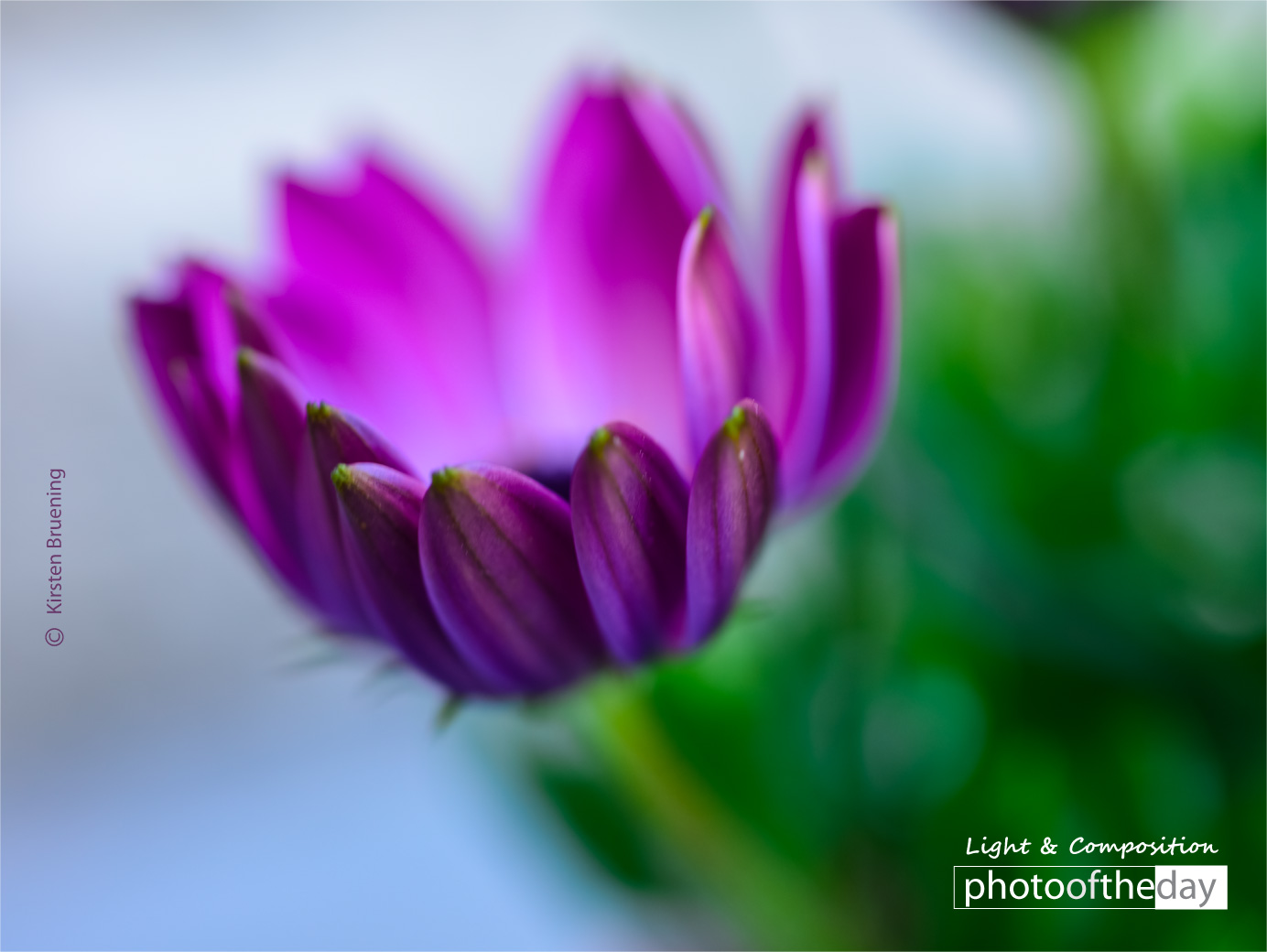
Captured on a quiet Good Friday morning during the global Covid-19 lockdown, this photograph serves as a poignant reflection on the fragility of life and the resilience of the natural world. As the human pace of life slowed, the photographer observed the earth beginning to heal, finding beauty in the stillness. The image is award-worthy for its profound emotional resonance and its ability to transform a period of global isolation into a hopeful narrative about environmental stewardship and the importance of cherishing the present moment.
Kirsten Bruening
Residing near Cologne, Germany, Kirsten Bruening is a dedicated photographer whose creative journey began in childhood with an exploration of analogue techniques. Following a fifteen-year hiatus, she returned to the craft with a renewed focus on black and white nature, portraiture, and wildlife photography. Driven by a belief that the interplay of light and shadow best captures human emotion, she is currently pursuing formal studies to further refine her technical expertise and artistic vision.
Resonance Score Breakdown
Transparency Note: The resonance score (8.1/20) is calculated based on social engagement metrics collected before the award announcement.
Expert Photography Reviews · 8
The Architecture of Silence
We often mistake the city for its infrastructure—the steel, the glass, the transit lines that dictate our movement. But the true city is found in the pauses, the moments when the relentless machinery of urban life grinds to a halt.
Read the reflection →The Architecture of Silence
We often mistake stillness for an ending, as if the world stops breathing the moment we cease our frantic motion. But silence is not a void; it is a fertile soil where the roots of forgotten things begin to stretch.
Read the reflection →Reviews & Comments
Share your thoughts about this award-winning photograph. Your reviews contribute to the community engagement score.
There’s a quiet ache in those eyes that hits me right in the chest. During the lockdown, when the world felt like it was holding its breath, Kirsten clearly sat with her subject long enough for the walls to come down. You can see it in the way the light rests on their skin; it’s a gift, not a theft. This face has a whole life in it. They didn’t just pose; they shared.
The focal plane here is razor-thin, barely kissing the dew-laden stamen. Bruening’s aperture choice creates a bokeh that’s a masterclass in light diffusion, rendering the background into soft, ethereal spheres. I’m genuinely moved by how she’s pushed past the diffraction limit to capture such microscopic clarity; it’s a rare, visceral precision. You don’t just see the fragility of the bloom; you feel the physics of the morning light bending through those tiny, crystalline water droplets.
The soft, diffused light filtering through the window illuminates the dust motes and the delicate, organic textures of the foliage, grounding us in a fragile, quiet domesticity. It’s a stillness that feels almost sacred. I’m genuinely moved by how the greenery breathes life into this isolation. The environment here isn’t just a backdrop; it’s the protagonist. By anchoring the subject within this botanical sanctuary, Bruening reveals a resilience that a mere face could never convey.
f/2.8 at 100mm, 1/200s, ISO 100. A shallow plane of focus isolates the subject, forcing the viewer’s eye exactly where it belongs. It’s a surgical choice. The compression of the background at 100mm renders the bokeh smooth, devoid of distracting artifacts. I’ve spent years staring at sensor noise, but this clarity is refreshing. You’ve executed the technical requirements with precision. It’s a rare moment where the math actually supports the sentiment. The optics don’t lie.
Good Friday morning in Cologne held a rare, breathless silence. Kirsten waited while the world paused, finding life pushing through the cracks. It’s the soft, diffused light of that overcast day that touches me; it doesn’t demand attention, it simply exists. I’ve spent enough dawns in the dirt to know the ache in her knees as she knelt there. It’s a quiet, hopeful prayer for the earth, and honestly, it makes me want to weep.
Macro photography often risks falling into the trap of botanical sentimentality, echoing the sterile precision of Karl Blossfeldt’s archives. Yet, Bruening’s focus here avoids that clinical detachment. The way the light catches the dew’s refraction reminds me of Sudek’s window studies, though it’s far more intimate. I’m genuinely moved by how she captures this quiet, fragile resilience. It’s a rare, honest dialogue with the stillness of 2020 that doesn’t feel like a cliché. It’s truly refreshing.
You waited for the silence of that lockdown morning, and it shows. Most people would have rushed past those budding greens, but you stopped. I can feel the stillness in your frame; it’s the kind of quiet that only comes when the world finally holds its breath. Because you looked closely, I’m reminded of how we all felt back then—fragile, yet hopeful. There’s something honest happening here. You didn’t just document nature; you felt it.
The frame breathes. It’s a quiet Good Friday, captured in Cologne. A single bloom holds the center, yet the surrounding void commands the eye. I’ve spent minutes staring at the blur. It’s not just a flower; it’s a pause. The stillness feels heavy, almost physical. Nothing here is accidental. The empty corner is not empty. It’s where the silence lives. I find myself holding my breath, waiting for the petals to move. They don’t.
love the color and that nice bokeh in background
As well as the story