Air Pollution and the Next Generation by Shovan Acharyya
In this poignant exploration of environmental health, the photographer captures the silent, pervasive threat of air pollution and its devastating impact on the next generation. By focusing on the vulnerability of newborns exposed to toxic environments, the image serves as a visual manifesto for urgent global action. The composition utilizes a tight focal length to isolate the subject, emphasizing the fragility of life against the backdrop of systemic industrial neglect. This award-worthy photograph transcends mere documentation, transforming a complex public health crisis into a deeply human narrative that demands immediate societal change and environmental stewardship.
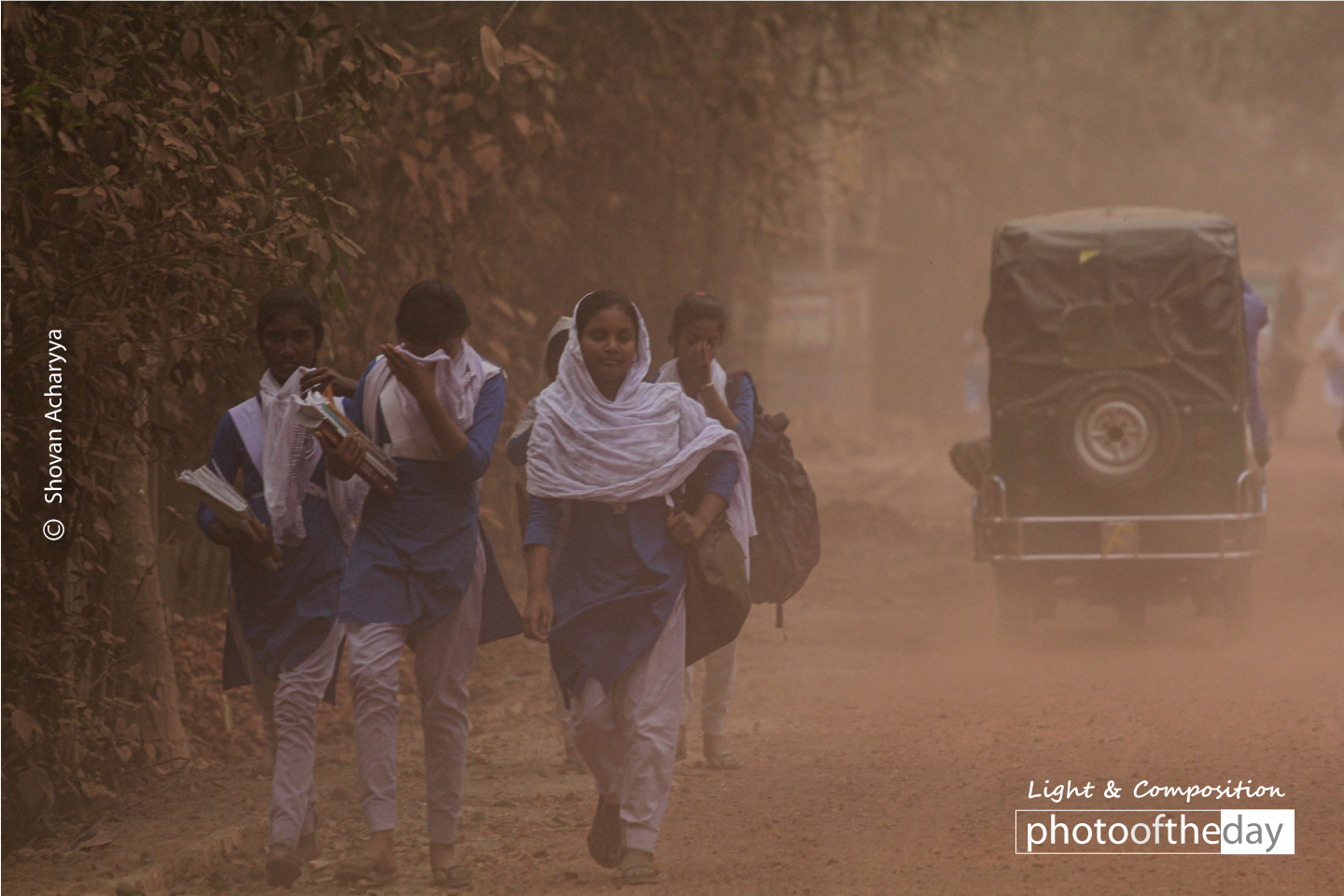
Shovan Acharyya
Born in the small town of Sunamgonj, Bangladesh, Shovan Acharyya is a dedicated photographer currently based in Dhaka. After completing a Master’s degree in Economics at the University of Chittagong, he pursued his passion for the lens through foundational training at Pathshala. Now working for a lifestyle and literature magazine, he balances his professional duties with a versatile artistic practice that spans landscape, lifestyle, and wildlife photography, all while striving toward a full-time career as a professional visual storyteller.
Resonance Score Breakdown
Transparency Note: The resonance score (8.6/20) is calculated based on social engagement metrics collected before the award announcement.
Expert Photography Reviews · 7
The Weight of the Air
I remember sitting on a porch in a small town outside of Delhi, watching a young mother wrap her infant in a thin cotton shawl. She did it with such practiced, rhythmic care, tucking the edges tight against the dust that hung heavy in the afternoon light.
Read the reflection →The Breath of the Canopy
Lichens are among the most patient organisms on earth, yet they are also the most sensitive, acting as living barometers that wither the moment the air turns sour with industrial soot.
Read the reflection →Reviews & Comments
Share your thoughts about this award-winning photograph. Your reviews contribute to the community engagement score.
The shutter speed hits like a heartbeat. At 200mm, the compression flattens the world into a suffocating, hazy stage where the child’s vulnerability isn’t just observed; it’s trapped. I’ve seen enough frames to know when a lens is gasping for air. It’s claustrophobic. It’s raw. That f/4.5 depth of field isolates the subject so sharply, the cut would’ve been a mistake. It’s the frame the editor keeps because it hurts to look away.
Does the infant’s vulnerability serve the child, or does it merely serve the photographer’s narrative of industrial tragedy? I find myself wincing at the aestheticization of such raw, systemic suffering. By isolating this newborn against a blurred backdrop, Acharyya strips away the context of the mother’s agency. Is this a call to action, or are we just consuming a child’s fragility for our own moral comfort? I’m left wondering who truly owns this pain.
The haze doesn’t just obscure. It defines. A child’s breath, shallow against the gray. I’ve looked at this for an hour, and it’s the blur that hurts. The background isn’t a backdrop; it’s a weight. Nothing here is accidental. The empty corner is not empty. It’s thick with what we’ve stolen from them. I feel a sudden, cold ache in my chest. Silence. It’s the only honest response to this much stolen air.
At 1/500sec, this shutter speed is a blink in the life of a star. I’m struck by the contrast; while I usually hunt for photons that have traveled eons to reach my sensor, here, the light is choked by the immediate, suffocating haze of Dhaka. It’s a heavy, terrestrial weight. Seeing this child’s fragility against such systemic neglect makes my chest ache. We’re losing the sky, and we’re losing our future, too.
Most entries in this category rely on shock value, but Shovan’s work hits harder because it’s quiet. The 200mm compression flattens the space, trapping the infant in a haze that feels suffocatingly real. It’s not just a documentary shot; it’s a haunting prophecy. I’ve looked at thousands of environmental portraits, and this one makes my chest tighten every time. It’ll endure because it doesn’t scream for attention—it simply forces you to confront the air we’re leaving behind.
It’s a haunting frame, but I can’t help but wonder about the child’s agency here. In my field, we learn that proximity without consent is just exploitation. While the composition highlights the smog’s weight, I’m left uneasy by the intrusion into such a vulnerable moment. Did the photographer wait for trust, or was this access simply grabbed? It’s technically sharp, but I’ve spent enough time in the field to know when a narrative feels forced.
One suspects the shutter clicked after hours of breathing the same acrid haze as the subject. It’s a grim, necessary sort of endurance. Using that 200mm lens to compress the distance between the child and the industrial rot shows a photographer who didn’t just pass through. I’ve spent enough time in stagnant air to know the weight of this frame. It’s not a pretty picture, but it’s a heavy one. He clearly stayed until it hurt.