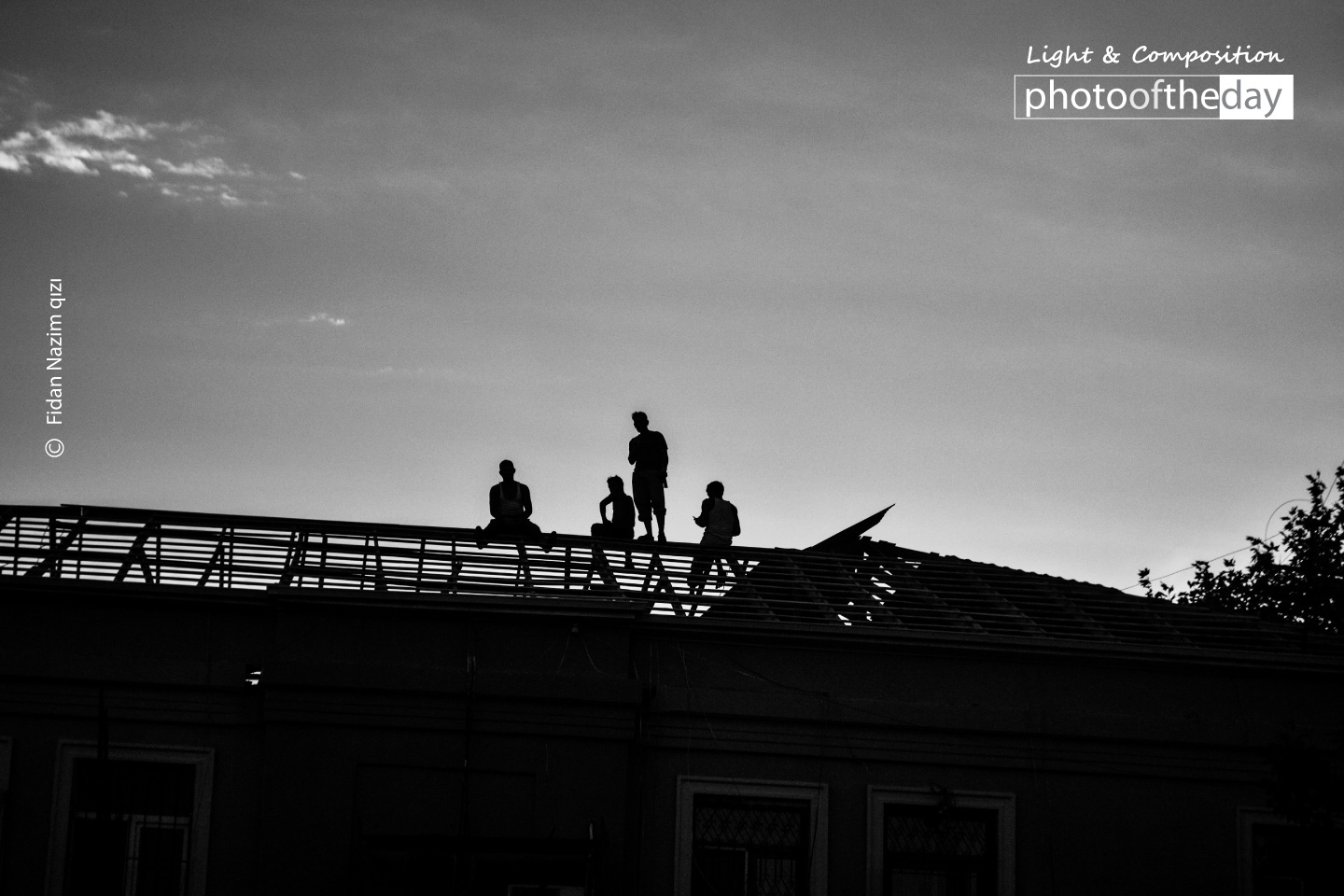
Workers by Fidan Nazim Qizi
In this poignant black and white study, the photographer captures the harsh realities faced by agricultural laborers who struggle without land ownership or formal protections. The image serves as a visual testament to the systemic challenges of the industry, highlighting the lack of safety, fair wages, and basic security for those who toil in the fields. Through a stark, monochromatic lens, the photographer draws attention to the human cost of these economic constraints. The work is award-worthy for its ability to transform a complex social issue into a compelling, empathetic narrative that resonates with the viewer's sense of justice and humanity.
Fidan Nazim Qizi
Born and based in Baku, Azerbaijan, Fidan Nazim Qizi is a dedicated photographer whose work is deeply influenced by the evocative black and white aesthetic of Vivian Maier. Her practice is driven by a profound love for nature and the rugged beauty of mountain landscapes, which she explores through frequent international travel and hiking. Believing that photography serves as a vital source of energy and inspiration, she utilizes the medium to document the human experience and translate complex emotions into powerful, lasting imagery.
Resonance Score Breakdown
Transparency Note: The resonance score (8.4/20) is calculated based on social engagement metrics collected before the award announcement.
Expert Photography Reviews · 4
The Weight of the Soil
When I was seven, I watched my uncle plant yams in the red earth behind our house. He did not speak much, but he moved with a rhythm that suggested he and the ground were having a long, quiet argument.
Read the reflection →The Weight of the Soil
I often find myself standing at the edge of the morning market in Lisbon, watching the crates of produce arrive. There is a specific rhythm to the hands that unload them—a heavy, rhythmic persistence that speaks of a life tethered to the earth.
Read the reflection →Reviews & Comments
Share your thoughts about this award-winning photograph. Your reviews contribute to the community engagement score.
Looking at these laborers, I’m struck by the absence of the fluid medium I usually navigate. There’s no backscatter to diffuse their silhouettes, no refractive index distorting their posture, and no light absorption stealing the warmth from their skin. It’s strange to see such clarity without the constant fight against water’s density. I find myself craving the blue, yet I’m moved by how these figures stand firm, unburdened by the physics that define my own world.
It’s a stark, haunting frame, but I can’t help but wonder about the distance maintained here. When I’m in the field, I know that true intimacy with a subject requires becoming part of the landscape, not just a spectator. Did the photographer earn this proximity, or was it merely taken? It’s a powerful composition, sure, but I feel a lingering unease. I’d trade that sharp contrast for a sense of genuine, unforced connection any day.
Most entries in this category rely on tired tropes of suffering, but Fidan’s work avoids the trap of pity. The way the dust hangs in the light here—it’s heavy, almost suffocating—makes me feel the grit in my own throat. What separates this from technically similar work is the refusal to romanticize the labor. It’s a brutal, honest document. In thirty years, we won’t just remember the struggle; we’ll remember the weight of that air.
The grit in these faces echoes the stark, unvarnished humanism of Dorothea Lange’s Depression-era portraits, yet the composition’s geometry feels distinctly modern. It’s a difficult balance. While the tonal range lacks the deep, velvety blacks of a classic silver gelatin print, the framing captures a weary dignity that’s hard to ignore. I’ve spent decades looking at labor, but the way these figures anchor the frame against that vast, empty horizon genuinely stopped me in my tracks.