The Crow by Fidan Nazim Qizi
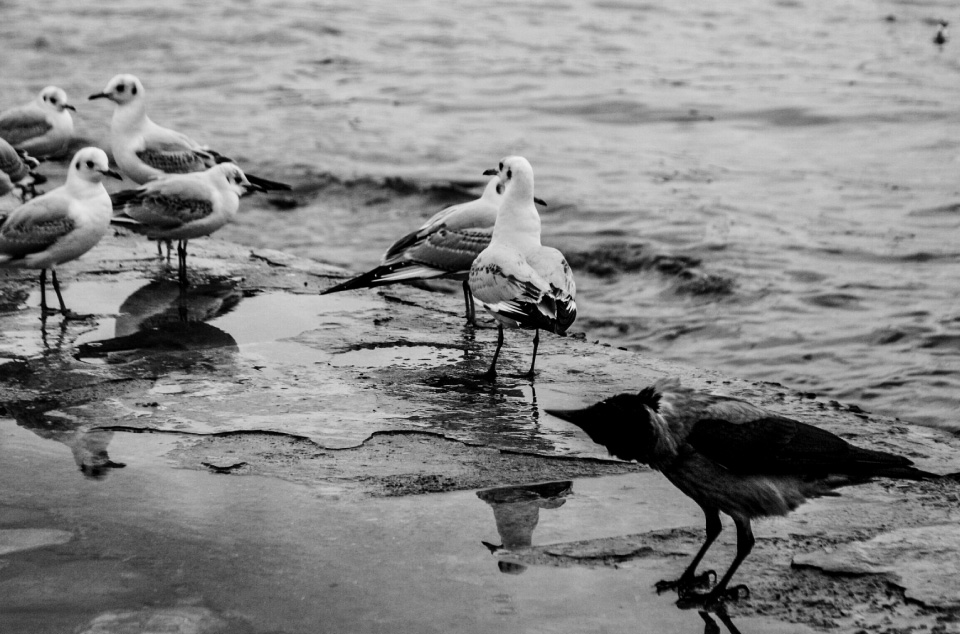
In this striking black and white portrait, the photographer captures the enigmatic essence of a crow, a creature renowned for its profound intelligence and complex social behaviors. By stripping away color, the image emphasizes the bird's sharp, inquisitive gaze and the intricate textures of its plumage. This photograph serves as a visual meditation on the crow's legendary problem-solving abilities and its uncanny capacity to recognize human faces. The composition is award-worthy for its ability to transform a common urban dweller into a subject of mystery and gravitas, inviting the viewer to contemplate the hidden depths of the natural world.
Fidan Nazim Qizi
Born and based in Baku, Azerbaijan, Fidan Nazim Qizi is a dedicated photographer whose work is deeply influenced by the evocative black and white aesthetic of Vivian Maier. Her passion for nature, mountains, and hiking informs her artistic vision, leading her to capture images that aim to provide energy and inspiration to the viewer. Through her lens, she explores the emotional resonance of the world, consistently seeking to translate the beauty of her surroundings into timeless, monochromatic narratives.
Resonance Score Breakdown
Transparency Note: The resonance score (8.6/20) is calculated based on social engagement metrics collected before the award announcement.
Expert Photography Reviews · 6
The Witness in the Wings
In the folklore of the North, there is a belief that birds are the keepers of secrets we have long since forgotten.
Read the reflection →The Unblinking Witness
My first instinct was to look away. We are conditioned to find meaning in the human face, to search for a reflection of our own anxieties in the eyes of another person.
Read the reflection →Reviews & Comments
Share your thoughts about this award-winning photograph. Your reviews contribute to the community engagement score.
Technically, it’s a standard portrait, but I find myself wishing Qizi had abandoned the obsession with feather detail. Why resolve every barb when the crow’s intelligence is inherently elusive? It’s a bit safe. I’d have preferred a long-exposure blur, something closer to Sugimoto’s ethereal ghosts than this sharp, static taxidermy. When we prioritize clarity, we lose the bird’s uncanny, shifting presence. It’s technically competent, sure, but it doesn’t dare to be truly wild.
f/5.6 at 1/500s, ISO 400, 200mm. A tight aperture choice for a bird portrait. It’s a gamble that pays off, keeping the plumage sharp while the background dissolves into manageable noise. I’ve seen enough soft avian shots to last a lifetime, but this one holds its own. The shutter speed is sufficient to freeze the movement, though it’s barely enough. It’s technically sound. I actually find myself respecting the restraint here. It’s precise.
That crow is staring right through the lens, and I love it. It’s a sharp, piercing gaze that feels like it’s judging my own street work. Most people miss the intelligence in those eyes, but Fidan caught it. One tenth of a second later and the bird turns, the tension vanishes, and the frame collapses. It’s a rare, quiet moment of urban connection. You didn’t hesitate. You were ready. That’s exactly how it’s done.
The focal plane sits perfectly across the crow’s nictitating membrane, resolving the keratin structure of the beak with clinical sharpness. I’m genuinely moved by how the lens handles the diffraction of light across those iridescent feathers; it’s a masterclass in micro-contrast. While the bokeh as a function of aperture softens the Baku background, it doesn’t distract. You’ve pushed the sensor’s resolution to its limit, capturing a gaze that feels almost uncomfortably sentient. It’s hauntingly precise.
Baku’s urban fabric is defined by its stone thresholds and heavy massing, yet here, the crow becomes the architecture. It’s a study in texture—the bird’s plumage mimics the rough-hewn masonry of the city’s historic facades. I’m struck by how the sharp, inquisitive eye acts as a focal point, grounding the composition like a well-placed datum. It doesn’t just capture a bird; it captures the feeling of being watched by the city itself. Truly haunting.
The rough, weathered stone behind the crow feels like a crumbling Baku wall, grounding this creature in a history as ancient as its gaze. The light rakes across the plumage, turning feathers into tactile, obsidian architecture. It’s haunting. I’ve always felt that birds carry the city’s secrets, and here, the environment isn’t just a backdrop; it’s the bird’s kingdom. The texture of the stone tells me more about its survival than the sharp beak ever could.