The Back Scene by Jose Juniel Rivera-Negron
While navigating the bustling crowds of Times Square, the photographer sought to shift the visual narrative away from the immediate foreground. By intentionally blurring the individual passing in front of the lens, the photographer successfully drew focus to the vibrant 'back scene' of the city. This creative decision required patience and precise timing amidst the constant motion of the urban environment. The resulting image is award-worthy for its masterful use of depth of field to transform a chaotic street scene into a deliberate, atmospheric composition that captures the hidden energy behind the city's primary subjects.
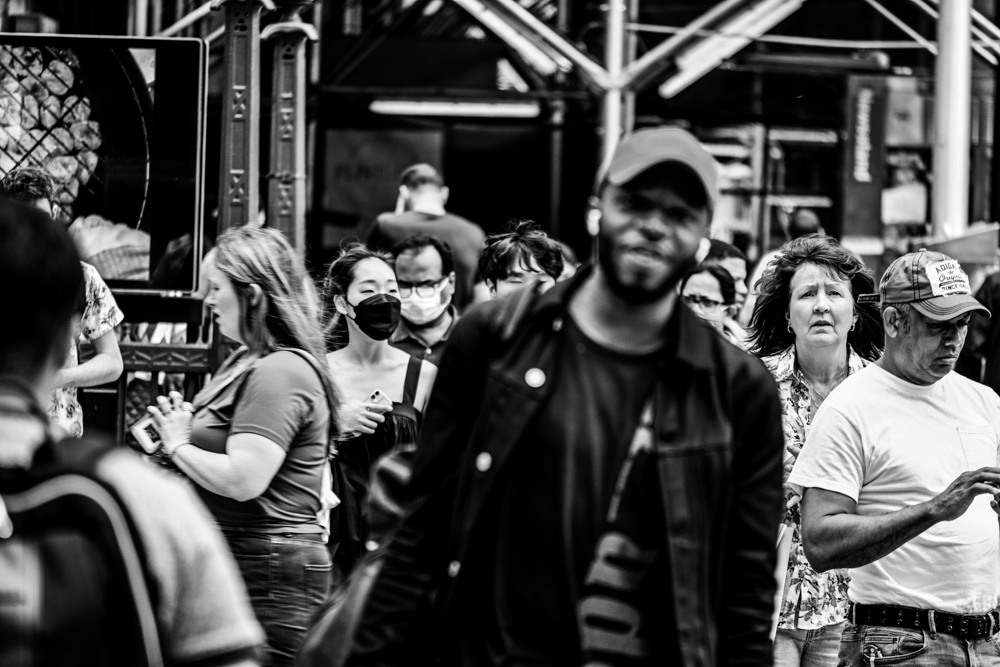
Exposure 1/100sec @ f/6.3 | ISO 125 | Focal Length 375mm
Jose Juniel Rivera-Negron
Born in Puerto Rico, Jose Juniel Rivera-Negron is a photographer whose work is deeply rooted in a personal journey of resilience and transformation. After overcoming significant personal adversity, he discovered photography as a powerful medium for storytelling and social advocacy. Today, he travels the globe capturing diverse cultures and human experiences, using his lens to promote messages of hope, recovery, and mental health awareness while inspiring others to pursue their dreams despite life's challenges.
Resonance Score Breakdown
Transparency Note: The resonance score (8.4/20) is calculated based on social engagement metrics collected before the award announcement.
Expert Photography Reviews · 8
The Architecture of Passing
In the deep forest, the mycelial network functions as a silent, subterranean highway, connecting the roots of trees that never touch the light.
Read the reflection →The Weight of What Follows
When I was seven, my mother took me to the train station in Enugu. I remember the platform was a blur of rushing legs and heavy suitcases, a chaotic tide of people moving toward somewhere else.
Read the reflection →Reviews & Comments
Share your thoughts about this award-winning photograph. Your reviews contribute to the community engagement score.
Times Square is a meat grinder for the impatient. Most people just snap the chaos, but Rivera-Negron waited for the blur. By letting that foreground figure smear into a ghost, he forces our eyes into the depth of the frame. It’s a gamble. One tenth of a second later and the shadow has moved, the frame has collapsed. I love the grit here. It’s not just a blur; it’s the city’s pulse finally caught in focus.
The shutter drags, turning a passerby into a ghost. It’s a deliberate blur, a smear of motion that forces the eye to push past the foreground. I love the way the city’s neon pulse bleeds into the frame; it’s like watching a film strip melt. The cut would have been a mistake. Rivera-Negron held the shot just long enough to trap the chaos. It’s the frame the editor keeps when the story needs atmosphere.
Blurring the foreground figure to prioritize the background feels like a convenient erasure. Why does the person in the frame exist only as a smudge, a mere obstacle to the city’s aesthetic? It’s frustrating. I’ve seen this impulse before, where the human element is sacrificed for the sake of a cleaner, more atmospheric composition. Does the subject know they’ve been reduced to a blur? Whose narrative are we actually elevating when we discard the individual?
The blur isn’t a mistake. It’s a veil. A ghost passing through the neon hum of Times Square. I’ve spent minutes watching that smear of color. It’s quiet. The sharp architecture behind it holds the weight of the city, yet the frame feels light. It’s a breath held in a crowded room. Nothing here is accidental. The empty corner isn’t empty. It’s where the noise finally stops. I feel a sudden, strange peace.
Times Square is usually a frantic, shallow place, but here, the city’s pulse slows. By letting the foreground blur into a ghost, the photographer finally lets the architecture breathe. I’ve spent enough hours waiting for the light to settle to know he stood there, patient, listening to the hum of the neon. It’s a quiet, spiritual surrender to the backdrop. Looking at it, I feel a sudden, strange peace amidst the chaos of the urban sprawl.
Times Square is a hungry place, and here, the subject is just a ghost in the blur. I’ve spent years earning the right to see someone’s face, so it hurts to see this person treated like a mere obstacle to a background. They didn’t choose to be erased. It’s technically sharp, sure, but it’s a cold transaction. I don’t see a human life here; I just see a city that’s forgotten how to look.
It’s a clever trick, blurring the foreground to force a focus on the city’s pulse. But I’m left cold. In the wild, I’ve spent weeks waiting for a fox to trust my presence; here, the photographer just waits for a crowd to pass. It doesn’t feel earned. It’s an extraction of a moment, not a relationship. I’d trade all this technical precision for a single frame where the subject actually knew they were being seen.
1/100sec at f/6.3, 375mm equivalent. That’s a long reach for a street shot, and it’s risky. The motion blur on the foreground subject isn’t a mistake; it’s a calculated rejection of the subject. I’ve spent years hating shallow depth of field, but here, the compression actually works. It’s tight, controlled, and technically sound. I’m genuinely surprised by how much I like the way the city’s chaos is flattened into a coherent, atmospheric smear. It’s precise.