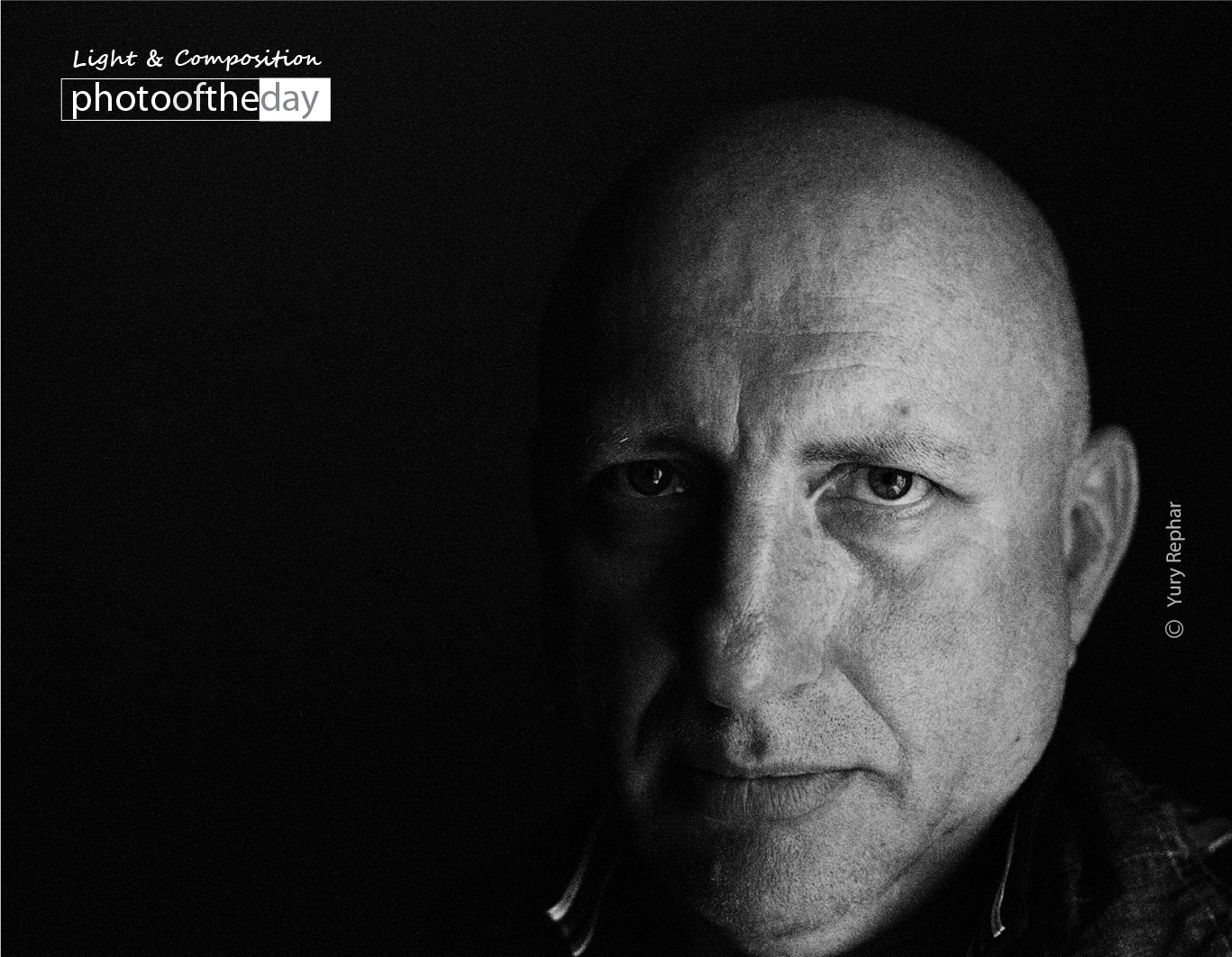
Goog Man by Yury Rephar
Captured using a multi-exposure film technique, this portrait reflects the photographer’s fascination with layering images to create depth and narrative complexity. By performing two exposures per frame, the photographer blends the subject’s presence with an ethereal quality, while a secondary clean shot ensures the portrait remains grounded. Bathed in soft, natural light from a nearby window, the image features a work colleague, highlighting the beauty found in everyday professional connections. This photograph is award-worthy for its masterful use of analog experimentation, demonstrating a sophisticated balance between technical precision and the intimate, candid nature of the subject.
Yury Rephar
Born in Belarus in 1967, Yury Rephar spent his youth traveling extensively across the Soviet Union before settling in Saint Petersburg in 2002. A graduate of Saint Petersburg Polytechnic University, he balances a professional career in information technology with a deep-seated passion for photography. His work, which he pursues both as a professional endeavor and a creative outlet for the soul, is informed by his diverse life experiences and his dedication to capturing the human spirit through the lens.
Resonance Score Breakdown
Transparency Note: The resonance score (8.6/20) is calculated based on social engagement metrics collected before the award announcement.
Expert Photography Reviews · 3
The Ghost in the Machine
Seneca once remarked that we are all, in a sense, living two lives at once: the one we inhabit in the eyes of others, and the one we carry in the quiet chambers of our own minds.
Read the reflection →The Ghost in the Office
I often find myself thinking about the people we pass in the corridors of our lives—those who exist in the periphery of our daily routines, like the quiet coworker whose desk is just beyond the reach of the afternoon sun.
Read the reflection →Reviews & Comments
Share your thoughts about this award-winning photograph. Your reviews contribute to the community engagement score.
Double exposure on 35mm film: a gamble with light density. You’ve layered a sharp portrait over a ghosted silhouette, but the lack of precise frame registration creates muddy highlights. It’s technically sloppy. I’ve spent years analyzing film grain, and this overlap feels like an accident rather than a calculated choice. The light from that window was wasted on imprecise alignment. It’s frustrating. When you play with analog physics, you don’t get to blame the medium for your misalignment.
The light here doesn’t just fall; it breathes against the glass. Yury’s double exposure feels like a long, quiet exhale in a Saint Petersburg office. I’ve spent enough hours waiting for the sun to soften to recognize that stillness. It’s not about the technique, but the patience required to let the soul of the subject bleed into the frame. I find myself wanting to sit in that chair, just to feel that gentle, window-filtered peace.
The vertical axis is anchored by the subject’s gaze, yet the double exposure fractures the frame into a complex geometric superposition. I’m fascinated by how the secondary layer shifts the visual gravity, creating a 1:1 ratio between the solid form and its ethereal ghost. It’s a spatial equation where the negative space isn’t empty, but a calculated variable. I’ve rarely seen such a precise collision of analog layering and structural balance. It’s a beautiful, solved problem.