The Lying Smile by Jabbar Jamil
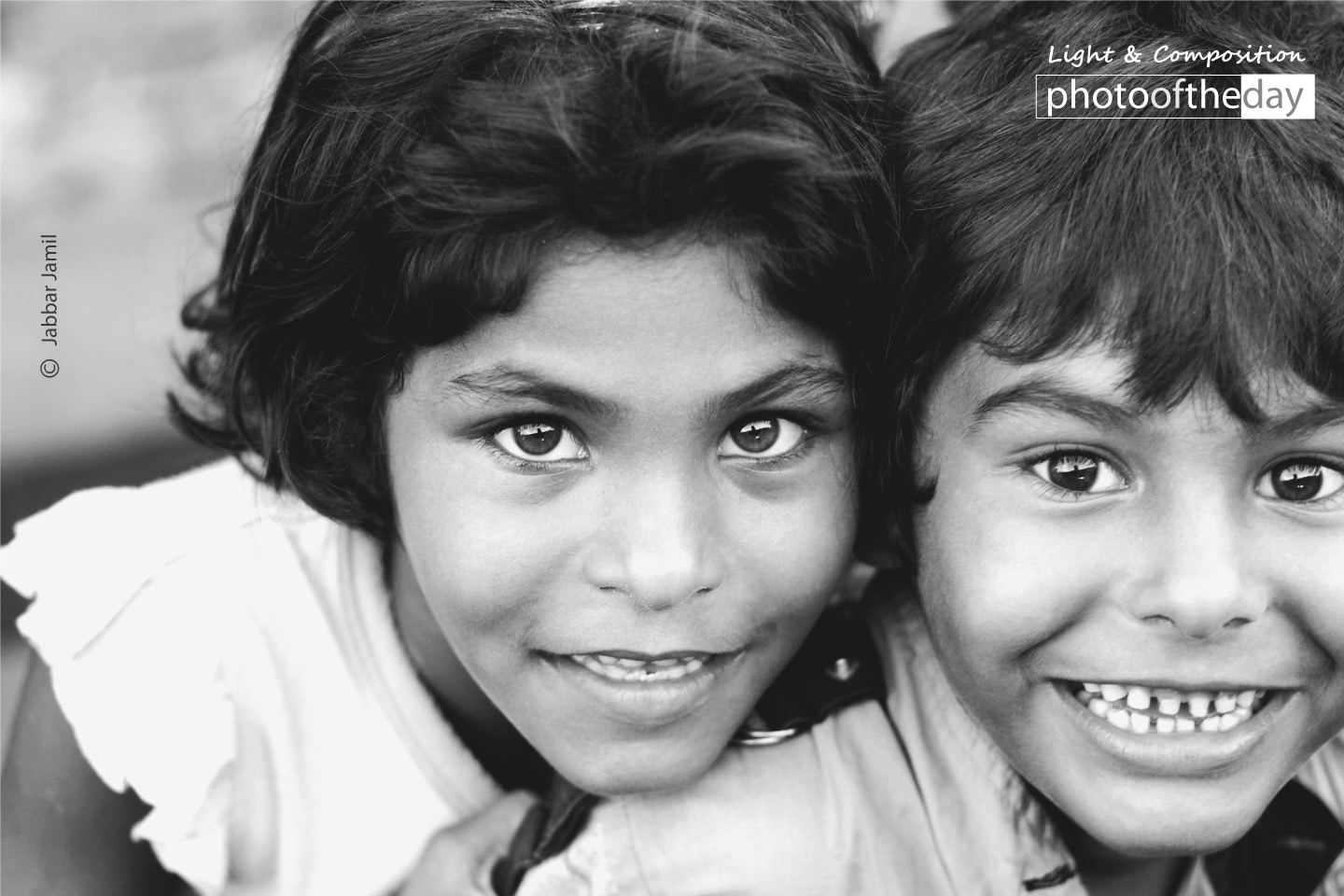
The Lying Smile captures a poignant moment of resilience amidst the stark realities of life in a Sialkot slum. The photographer focuses on the children who, despite facing hardships far beyond those of their peers in more fortunate circumstances, maintain a facade of joy. This image is award-worthy for its raw emotional honesty and the photographer's ability to find a profound, albeit complex, humanity in a challenging environment. By documenting this contrast between external struggle and internal spirit, the work transcends simple portraiture to become a powerful social commentary on the endurance of the human spirit.
Jabbar Jamil
Based in Sialkot, Pakistan, Jabbar Jamil is a dedicated street photographer who views his craft as a vital bridge to the outside world. He utilizes photography as both a creative outlet and a therapeutic practice, often venturing beyond his comfort zone to document the unfiltered realities of life. His work is characterized by a commitment to capturing the world exactly as he sees it, finding significance in subjects that are not always traditionally beautiful.
Resonance Score Breakdown
Transparency Note: The resonance score (8.3/20) is calculated based on social engagement metrics collected before the award announcement.
Expert Photography Reviews · 3
The Weight of a Secret
When I was seven, my mother told me that if I swallowed a watermelon seed, a vine would grow inside my stomach. I spent the entire afternoon sitting perfectly still on the porch, terrified that if I moved too quickly, I would feel the leaves unfurling against my ribs.
Read the reflection →The Weight of a Mask
We learn early that the face is a wall. It is built to keep the cold out, or perhaps to keep the truth in. A child understands this better than most.
Read the reflection →Reviews & Comments
Share your thoughts about this award-winning photograph. Your reviews contribute to the community engagement score.
The frame’s geometry is tight, almost claustrophobic. Jamil’s placement of the subject’s grin against the decaying brickwork creates a jarring spatial tension. It’s a calculated collision of textures. The negative space doesn’t offer relief; it traps the viewer. I’ve rarely seen such a brutal refusal of sentimentality. The composition holds its own weight, forcing the eye to acknowledge the architecture of poverty. It’s cold, it’s precise, and frankly, it’s the only way to look at this.
The tension in these eyes recalls the unsettling gaze found in Dorothea Lange’s Migrant Mother, yet Jamil’s Sialkot subject possesses a defiant, modern sharpness. It’s a haunting subversion of the Victorian portrait’s staged artifice. While the composition echoes the stark, high-contrast grit of early social documentary, the child’s forced grin feels painfully contemporary. I’ve spent decades cataloging such resilience, but this specific, jagged irony genuinely unsettled me. It’s a rare, piercing addition to the canon of human endurance.
The shutter snaps, and the frame holds its breath. That forced grin in Sialkot isn’t just a pose; it’s a performance for a camera that doesn’t blink. I’ve seen this tension in a thousand dailies, but here, the rhythm is brutal. The cut would’ve been a mistake. It’s the frame the editor keeps because it hurts to look away. Honestly, it makes my chest tighten. Jamil caught the exact second the mask slips.