Abandoned by Yohann Libot
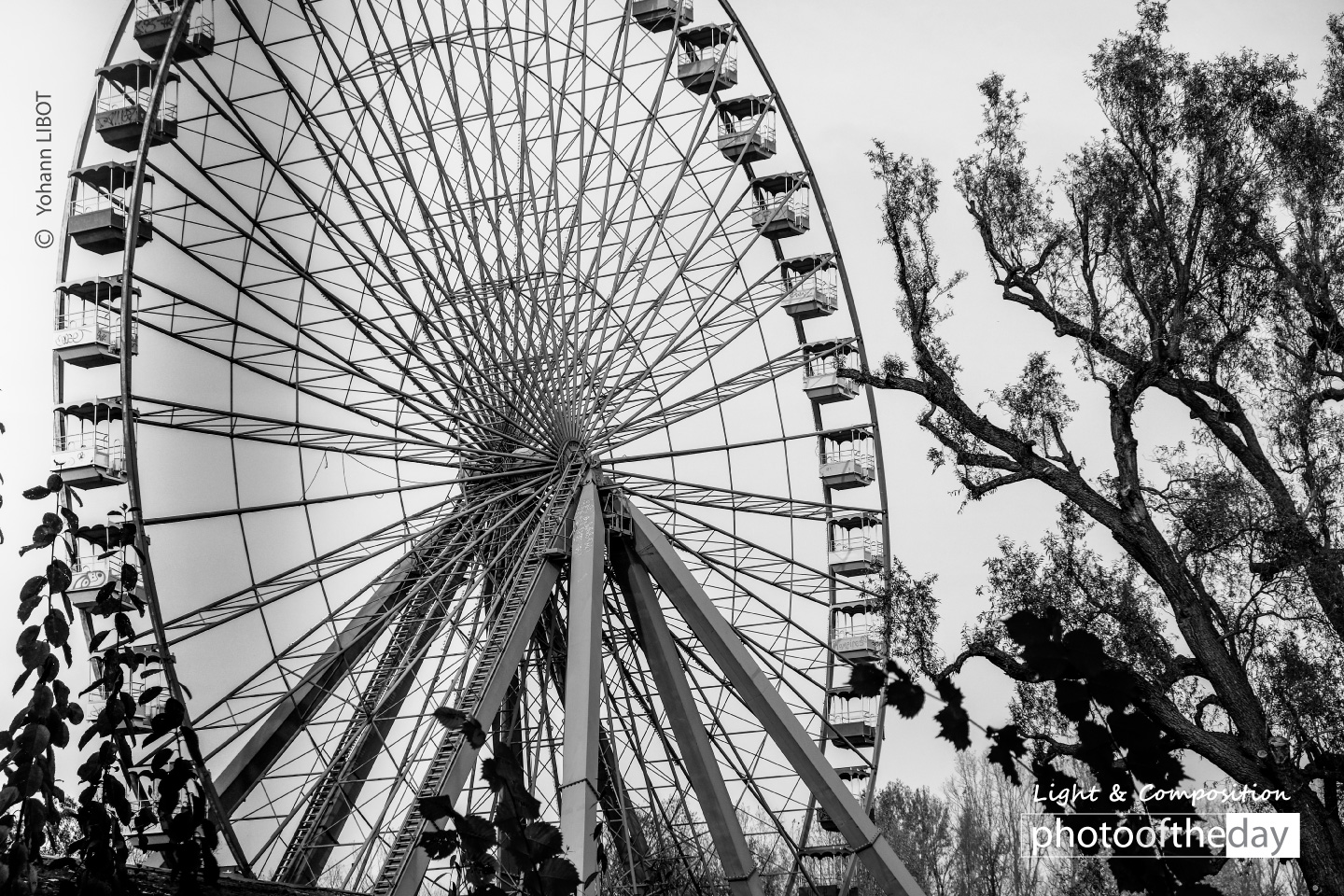
While exploring an abandoned theme park in Berlin, the photographer discovered a striking perspective of a solitary, decaying Ferris wheel. Navigating the site with caution to avoid security, the photographer captured the scene with urgency, resulting in a hauntingly still composition. The image stands out for its ability to transform a relic of urban decay into a poignant, dream-like narrative. By isolating the structure against the environment, the photographer emphasizes the quiet melancholy of the abandoned site, showcasing a keen eye for finding beauty in forgotten places and the technical precision to execute the shot under pressure.
Yohann Libot
Born in France, Yohann Libot is an internationally published photographer who travels the globe documenting the unique cultures and lifestyles of the countries he visits. After transitioning from a career in fashion marketing, he became a professional photographer in 2010, developing a distinct, dream-like aesthetic that has appeared in numerous commercial and editorial publications. Often referred to as the “Gypsy Photographer,” Libot is a self-taught artist known for his free-spirited approach and his ability to capture the essence of his subjects through a deeply personal and evocative lens.
Resonance Score Breakdown
Transparency Note: The resonance score (9.0/20) is calculated based on social engagement metrics collected before the award announcement.
Expert Photography Reviews · 7
The Weight of Stillness
There is a specific quality to the light in mid-autumn when the clouds hang low and heavy, turning the world into a study of charcoal and slate. It is a flat, honest light that refuses to hide the edges of things.
Read the reflection →The Weight of Quiet
There is a particular dignity in things that have finished their work. When the laughter fades and the machinery stops, the world does not become empty; it simply changes its rhythm.
Read the reflection →Reviews & Comments
Share your thoughts about this award-winning photograph. Your reviews contribute to the community engagement score.
Most urban decay shots are just visual noise, but this Ferris wheel feels different. I’ve seen thousands of abandoned sites, yet the way Libot framed this iron skeleton against the void creates a genuine, chilling silence. It’s not just a ruin; it’s a ghost. I’ll admit, the composition made me hold my breath. It’s the restraint that wins here—he didn’t over-process the decay, he let the emptiness do the heavy lifting. That’s why it endures.
There’s a heavy, breathless stillness here. Standing before this skeletal wheel, I feel the cold iron biting into the damp Berlin air. It’s not just decay; it’s a quiet surrender to time. He must have held his breath, listening for footsteps, yet the frame remains perfectly composed. I find myself shivering, not from the chill, but from the weight of all that forgotten joy. It’s a haunting, beautiful ghost of a place, captured in the grey, hushed light.
Berlin’s decay doesn’t wait for permission. Libot caught this Ferris wheel right as the light hit the rusted steel, turning a relic into a ghost. It’s haunting. I’ve spent years chasing these fleeting urban echoes, and this frame holds that stillness perfectly. One tenth of a second later and the atmosphere would’ve dissolved into just another pile of junk. It’s a sharp, lonely slice of time. I felt a genuine chill looking at it.
Rusting iron against a bruised sky doesn’t just decay; it interrogates our own transience. Libot’s Ferris wheel isn’t a relic, but a cage for ghosts. I’ve stared at these spokes until my eyes ached, feeling the cold weight of Berlin’s silence pressing against my chest. It’s a brutal, necessary darkness. Most photographers fear this void, but here, the shadows finally speak. They don’t invite us in. They demand we acknowledge that everything we build eventually belongs to the night.
Before the eye identifies the rusted skeleton of the Ferris wheel, a sudden, cold stillness settles in the chest. It’s the physiological weight of obsolescence. I feel a phantom ache in my own joints looking at those jagged, frozen spokes. When I return to this, I don’t see a park; I see the architecture of my own forgotten intentions. It’s a quiet, haunting anchor that pulls the breath right out of the room.
Sneaking past security to snap a Ferris wheel isn’t exactly the same as waiting three days in a gale for the light to break, is it? It’s a frantic grab, not a slow communion. I’ve spent enough nights shivering in the dirt to know when someone’s rushing. Still, the isolation of that rusted iron against the grey sky is genuinely unsettling. It’s a decent shot, but one wonders what might have happened had he stayed.
There’s a coldness here that I can’t shake. While the Ferris wheel’s skeletal frame is technically sharp, it’s a hollow victory. The photographer was sneaking around, rushing to avoid security, and that urgency shows. It’s a capture, not a conversation. I don’t feel a life lived; I just feel the photographer’s anxiety. It’s technically precise, sure, but it lacks the soul that comes when you actually stop to look someone—or something—in the eye. It’s lonely, but not human.
I love the combination of the ferris wheel and the trees on the right side of the image.