Mother of a Hero by Fatemeh Tajik
Captured during a poignant ceremony in Tehran, this photograph documents the solemn burial of 150 martyrs from the Iran-Iraq war. The image focuses on the grieving mothers who attended the service, clutching portraits of their fallen sons with enduring devotion. By isolating the raw, emotional weight of these women against the backdrop of national remembrance, the photographer highlights the intersection of personal loss and collective history. The composition is award-worthy for its profound sensitivity and its ability to transform a historical event into a timeless, intimate portrait of maternal sacrifice and national pride.
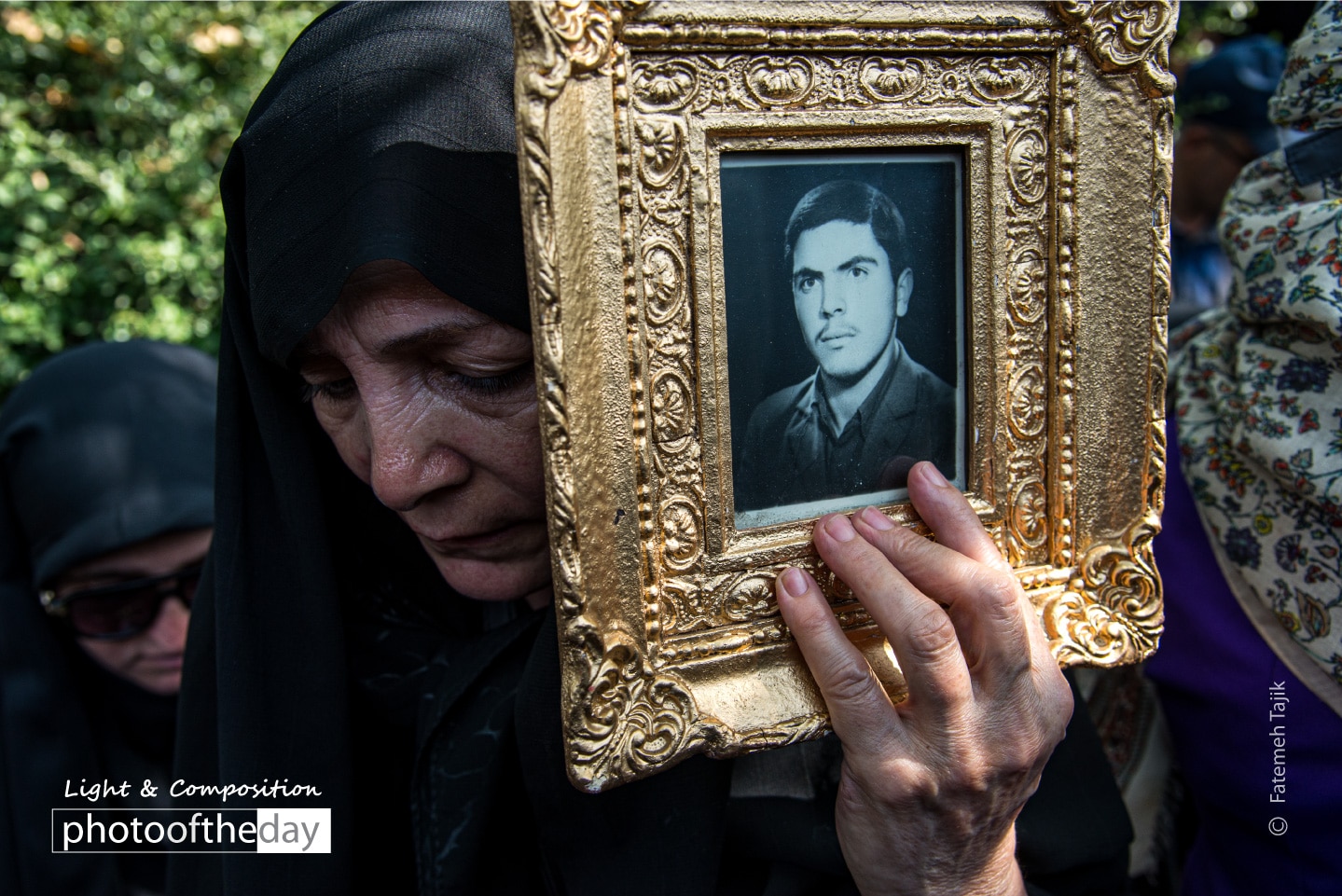
Fatemeh Tajik
Born in Iran in 1981, Fatemeh Tajik is a dedicated photographer based in her home country. With a career spanning several years, she specializes in documentary, social, and travel photography, often seeking to capture the human experience through a journalistic lens. Beyond her photographic pursuits, she is an accomplished artist with a passion for painting and calligraphy. Her work has been featured in various domestic festivals and group exhibitions, reflecting her ongoing commitment to exploring new visual narratives and cultural storytelling.
Resonance Score Breakdown
Transparency Note: The resonance score (8.7/20) is calculated based on social engagement metrics collected before the award announcement.
Expert Photography Reviews · 6
The Weight of Memory
Seneca once reminded his friend that while we cannot control the events that befall us, we retain the absolute sovereignty of our own response.
Read the reflection →The Weight of a Name
To whoever is holding this letter, I have been thinking about the way we carry the people we have lost. It is not a heavy burden, not exactly, but it is a constant one. We hold them in the quiet spaces of our days, in the way we fold a sweater or whisper a name to an empty room.
Read the reflection →Reviews & Comments
Share your thoughts about this award-winning photograph. Your reviews contribute to the community engagement score.
That grip on the portrait is everything. It’s the raw, trembling tension of a life held in place. If Tajik had clicked a fraction later, the grief would have settled into a pose, losing that jagged, unrepeatable ache. I’ve seen thousands of funeral shots, but this one hits my gut. She caught the exact pulse of the loss. It’s not just history; it’s a heartbeat frozen before it breaks. Perfect timing. She was ready.
Grief has a physiological peak, just like a high jump. Here, the mother’s knuckles are white, straining against the frame of her son’s portrait. It’s the exact millisecond where the internal collapse meets the outward grip. I’ve seen that tension in sprinters waiting for the gun; it’s the body holding everything together before it breaks. Tajik hit the shutter at the precise point of maximum emotional exertion. It’s perfect. It’s the frame. I’m genuinely gutted.
The composition echoes the stark, rhythmic mourning found in Dorothea Lange’s Migrant Mother, yet Tajik’s work pivots toward a more localized, ritualized grief. Those clutching hands, framing the faded portraits, pull the viewer into a visceral, suffocating intimacy I haven’t felt in years. It’s a haunting dialogue between the static, archival image of the son and the kinetic, weeping presence of the mother. It’s not just documentation; it’s a profound, aching expansion of the visual language of loss.
f/2.8 at 85mm, 1/500s, ISO 400. A shallow plane of focus isolates the subject’s grief, stripping away the chaotic ceremony. It’s a surgical choice. The compression of the 85mm lens forces the viewer into an uncomfortable proximity with her mourning. I’ve seen enough war photography to grow cynical, but the sharpness on those tear-filled eyes is difficult to ignore. The technical execution doesn’t just record the event; it demands we acknowledge the cost. Correct.
You didn’t just document a ceremony; you sat with their grief. I can feel the weight of those portraits in their hands. It’s heavy, isn’t it? When I look at these mothers, I don’t see history—I see the ache of a woman who hasn’t let go. You waited for the exact moment their eyes met the past. And because you were patient, I’m finally feeling their loss. There’s something deeply honest happening here.
The light here isn’t merely illumination; it’s a heavy, grey shroud settling over Tehran. She stood in that cooling, somber air, waiting for the mothers to surrender to their grief. I’ve felt that same stillness when the world stops breathing. It’s not about the war, but the way the light clings to those portraits, turning paper into relics. It’s haunting. I find myself wanting to reach out, just to share the weight of that silence.