Snow’s Effect on Climate by Fidan Nazim Qizi
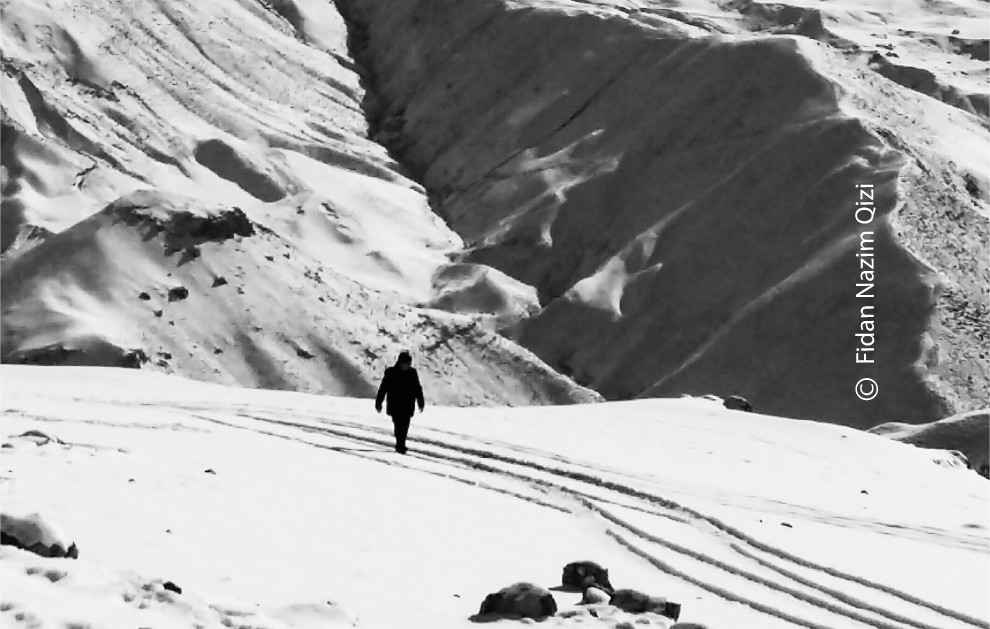
In this evocative capture, the photographer explores the profound relationship between seasonal snowfall and the Earth's climate system. By focusing on the pristine, snow-covered landscapes of Quba, the image highlights the critical role snow plays in regulating surface temperatures and maintaining the planet's energy balance. The composition emphasizes the stark, rhythmic textures of the frozen terrain, transforming a scientific observation into a visual narrative. This photograph is award-worthy for its ability to marry environmental significance with artistic clarity, reminding viewers of the delicate, life-sustaining cycles that define our natural world.
Fidan Nazim Qizi
Born in Baku, Azerbaijan, Fidan Nazim Qizi maintains a deep connection to her homeland while frequently traveling to document the world's diverse landscapes. An avid hiker and nature enthusiast, she draws significant creative inspiration from the black-and-white aesthetic of Vivian Maier, which informs her own monochromatic approach to photography. Fidan views the medium as a vital source of energy and inspiration, consistently seeking to capture the profound feelings inherent in the natural environment through her lens.
Resonance Score Breakdown
Transparency Note: The resonance score (9.8/20) is calculated based on social engagement metrics collected before the award announcement.
Expert Photography Reviews · 7
The Blanket of Dormancy
When the first heavy frost settles, the soil does not die; it enters a state of profound metabolic slowing, a biological dormancy that protects the delicate root systems from the harshness of the coming freeze.
Read the reflection →The Quiet Weight of Winter
There is a profound humility in the way the earth accepts the snow. It does not resist the cold or the sudden, heavy silence that follows the first flurry. Instead, it offers itself as a canvas, allowing the white blanket to soften the sharp edges of the world.
Read the reflection →Reviews & Comments
Share your thoughts about this award-winning photograph. Your reviews contribute to the community engagement score.
Before the eye identifies the Quba landscape, a sudden chill settles in the chest. It’s a physiological bracing against the stark, rhythmic white. I feel my pulse slow, matching the stillness of the frozen terrain. When I return to this, I’m not looking at climate science; I’m remembering the silence of a first snowfall. It’s a quiet, heavy ache that follows me into sleep, reminding me how fragile our warmth really is.
1/1000sec at f/2, ISO 50, 3.69mm. A mobile sensor pushed to its physical limit. The f/2 aperture on a tiny sensor creates a shallow depth of field that doesn’t belong in a landscape. It’s a technical mismatch. I’m frustrated by the soft edges where the focus falls off prematurely. The exposure is clean, but the optics are fighting the intent. It’s sharp enough to see the failure, yet I can’t stop looking at the snow.
Quba’s snow reflects the sun’s radiation back into the void, a terrestrial mirror to the stars I usually track. While the Samsung’s tiny sensor at ISO 50 lacks the deep-space sensitivity I’m used to, it captures the albedo effect with startling clarity. I’ve spent my life chasing photons that traveled eons to reach me, yet looking at this frozen landscape, I feel a sudden, quiet shiver. It’s a fragile, cold beauty that keeps our world spinning.
In Quba, the earth has gone quiet, wrapped in a heavy, white silence. We look at these frozen ridges and we don’t just see climate; we see a landscape holding its breath, waiting for a thaw that feels miles away. It’s a portrait of the land itself, stripped bare and shivering. I find myself wanting to reach out and touch the cold, rhythmic textures. It’s a photograph that asks to be returned to, again and again.
The silence in Quba must have been absolute. I’ve stood in that biting cold, where the air feels thin and the light loses its warmth, turning everything into a study of stillness. She didn’t rush; she waited for the snow to settle into those rhythmic, frozen folds. It’s a quiet, shivering beauty. Looking at it, I feel a sudden, sharp ache for the mountains. It’s not just climate; it’s the earth holding its breath.
Quba’s frozen textures look pristine, but I’m left cold by the framing. Why does the curator insist this phone snapshot explains global climate systems? It’s a pretty view, sure, but it ignores the human cost of Quba’s changing winters. Does the lens capture the earth’s energy balance, or just a tourist’s detachment? I feel a strange, sharp irritation here. We’re romanticizing a landscape while ignoring the people who actually live within its shifting, fragile borders.
Quba’s frozen expanse doesn’t merely reflect light; it interrogates the void. Fidan’s lens captures a silence so absolute it feels heavy, a reminder that snow is the earth’s shroud, not its blanket. I’ve stared at these textures until my own pulse slowed, feeling the cold seep through the screen. It’s a brutal, honest geometry. When light dies in these deep, jagged crevices, it’s not an absence—it’s where the landscape finally begins to think.