The Award Award Showcase The Gallery Publications Gears University Expeditions Dev-Lab About Us Career Learning & AI Future Curriculum Curiosity & Consciousness Sign In Submit Your Work →

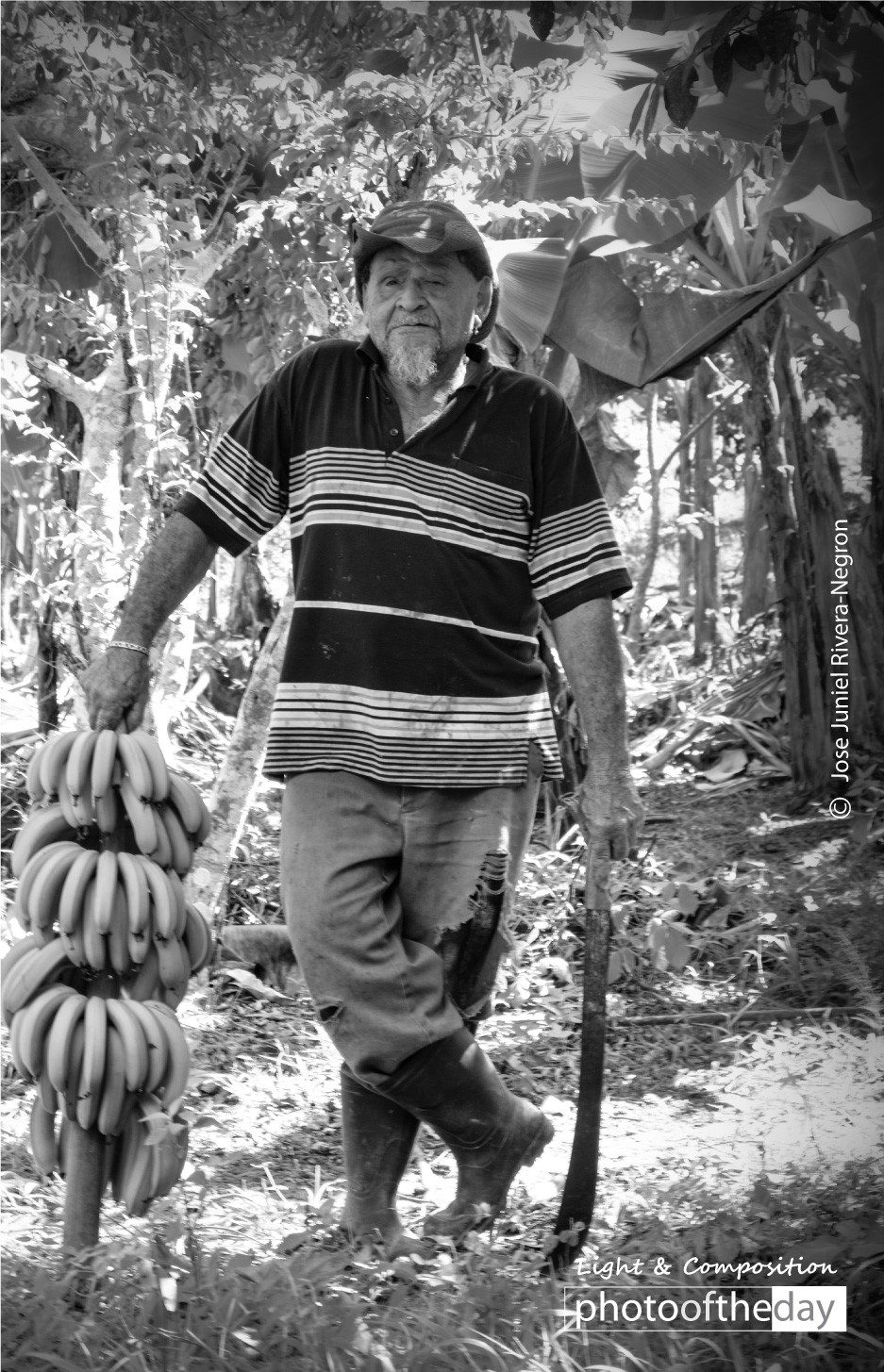
I am Jibaro Borinqueno by Jose Juniel Rivera-Negron

Captured in the familiar fields of his grandmother’s farm in Camuy, Puerto Rico, this portrait serves as a poignant homage to the photographer's heritage. The image features his uncle posed traditionally with a machete and a branch of green bananas, embodying the spirit of the 'Jíbaro'—the quintessential Puerto Rican farmer. By returning to the landscape of his childhood, the photographer creates a deeply personal connection between the subject and the land. The photograph is award-worthy for its authentic cultural storytelling and the evocative, natural light that highlights the dignity and resilience inherent in this traditional way of life.

I am Jibaro Borinqueno by Jose Juniel Rivera-Negron
Nikon Z 50 with Nikon Z DX 16-50mm f/3.5-6.3 VR
Exposure 1/30sec @ f/6.3 | ISO 100 | Focal Length 50mm
Light & Composition Photo of the Day

Jose Juniel Rivera-Negron

REGISTERED PHOTOGRAPHER

Born on the tropical island of Puerto Rico, Jose Juniel Rivera-Negron is a photographer whose work is deeply rooted in his personal journey of transformation and resilience. After overcoming significant life challenges following his relocation to the United States, he turned to photography as a powerful medium for self-expression and social commentary. Now based in Tampa, Florida, Rivera-Negron uses his lens to document the beauty of his heritage and the human experience, proving that it is never too late to pursue one's creative dreams and share a unique perspective with the world.

9.9/20
RESONANCE
SCORE
140/500
SHARE
SUBMISSION
Award Reach | Reviews
7,585 views | 16 Reviews
Award Winner Photo of the Day
Award Date July 3, 2021
Value 11.0
Clarity 11.0
Composition 16.0
Style 12.0
Skill 11.0
Photograph Location
Camuy, Puerto Rico, the United States

Resonance Score Breakdown

Transparency in Award Scoring

Transparency Note: The resonance score (9.5/20) is calculated based on social engagement metrics collected before the award announcement.

Social Shares
2.7/5 points
540/1,000 Social Share
Page Views
5.0/5 points
7,585/2,500 Page View
Reviews
0.4/5 points
8/100 Review
Submissions
1.4/5 points
140/500 Submission
Jury Score: 61.0/80
Resonance Score: 9.5/20
Total Award Score: 70.5/100

Expert Photography Reviews · 8

Reflections on this Photograph
By Clara Menezes

The Soil Beneath the Fingernails

We often speak of heritage as if it were a ghost, something that haunts the hallways of our memories or hides in the dusty pages of an old ledger.

Read the reflection →
By Priya Kapoor

The Weight of the Soil

The smell of damp earth after a long drought is a heavy, metallic sweetness that clings to the back of the throat. It is the scent of things waking up, of roots stretching through cool, dark pockets of clay.

Read the reflection →

Reviews & Comments

Share your thoughts about this award-winning photograph. Your reviews contribute to the community engagement score.

16 responses to “I am Jibaro Borinqueno by Jose Juniel Rivera-Negron”

  1. The machete rests. The bananas hang. It’s a quiet weight. I’ve spent minutes watching the way the light touches the skin of his hands. It’s not just a portrait of a farmer. It’s the stillness of the soil itself. The frame doesn’t crowd him. It lets him breathe. I feel a sudden, sharp ache for my own home. Nothing here is accidental. The empty corner is not empty. It holds the history of the land.

  2. The machete and the bananas aren’t just props; they’re the weight of history. Rivera-Negron caught his uncle in that quiet, steady gaze that defines the Jíbaro. It’s a portrait, sure, but it breathes like a street shot. I feel the humidity of that Camuy farm just looking at it. One tenth of a second later and the light shifts, the dignity fades. He nailed the timing. It’s honest, raw, and absolutely unrepeatable. That’s the real deal.

  3. You didn’t just photograph a farmer; you captured a lineage. When I look at your uncle holding those bananas, I don’t see a prop. I see the weight of the land in his hands. It’s quiet, but it’s heavy with history. I felt a sudden, sharp ache for my own grandfather’s garden when I saw his expression. You waited for the right moment to let his dignity speak. That’s the truth I’m looking for.

  4. It’s refreshing to see a portrait where the light isn’t being strangled by the water column. Up here in Camuy, the sun doesn’t lose its warmth to the selective absorption of red wavelengths. I’m so used to fighting backscatter and the refractive index that seeing these crisp, natural greens feels like a luxury. You’ve captured the Jíbaro’s dignity perfectly; it’s a sharp, honest clarity that we simply can’t achieve once we submerge. I’m genuinely moved by it.

  5. Most portraits of heritage feel like museum reenactments, but this one breathes. The machete isn’t a prop; it’s an extension of his calloused hand, grounding the frame in the reality of the Camuy soil. I’ve seen thousands of cultural portraits, yet this one sticks because the subject’s gaze doesn’t ask for approval. It’s a quiet, fierce defiance. It makes me miss a home I’ve never known. In thirty years, this dignity will still command the room.

  6. The machete and bananas feel like props in a museum exhibit rather than tools of a living trade. Why does the Jíbaro identity require these specific symbols to be legible? I’m struck by a sudden, sharp sadness here. It’s a performance of heritage for a camera lens, not a moment of labor. Does the photographer’s gaze honor his uncle, or does it merely curate a nostalgic version of Puerto Rico for an external audience to consume?

  7. The vertical axis is anchored by the machete’s blade, creating a sharp counterpoint to the organic, chaotic geometry of the banana leaves. It’s a precise 1:2 ratio of subject mass to negative space that keeps the composition from collapsing. I’m genuinely moved by how the diagonal of the branch resolves the tension between the man’s posture and the horizon. It’s a perfectly solved spatial equation where heritage isn’t just felt; it’s mathematically balanced within the frame.

  8. There’s a quiet gravity in the way his uncle holds that machete. It’s not a prop; it’s a limb. One suspects Rivera-Negron didn’t just wander into the field for a quick snap. He’s clearly spent hours under that Camuy sun, waiting for the light to settle into something honest. I’ve spent enough time in the dirt to recognize the scent of a long, patient afternoon. It’s a rare, earned dignity. I rather like it.

  9. I like how you have chose to do this picture in black and white it brings it nostalgia was that the reason?

Leave a Reply

Your email address will not be published. Required fields are marked *