Through Her Eyes by Zara Otaifah
The photographer captured this intimate portrait during a quiet afternoon of babysitting, drawn to the intense focus of a child captivated by a screen. By observing the subject's intelligent and sharp gaze, the photographer sought to freeze a fleeting moment of pure engagement. This image stands out for its ability to transform a simple, everyday domestic scene into a compelling character study. The composition emphasizes the depth and clarity of the child's eyes, reflecting a sense of wonder and motivation that highlights the photographer's keen eye for authentic human connection and spontaneous emotion.
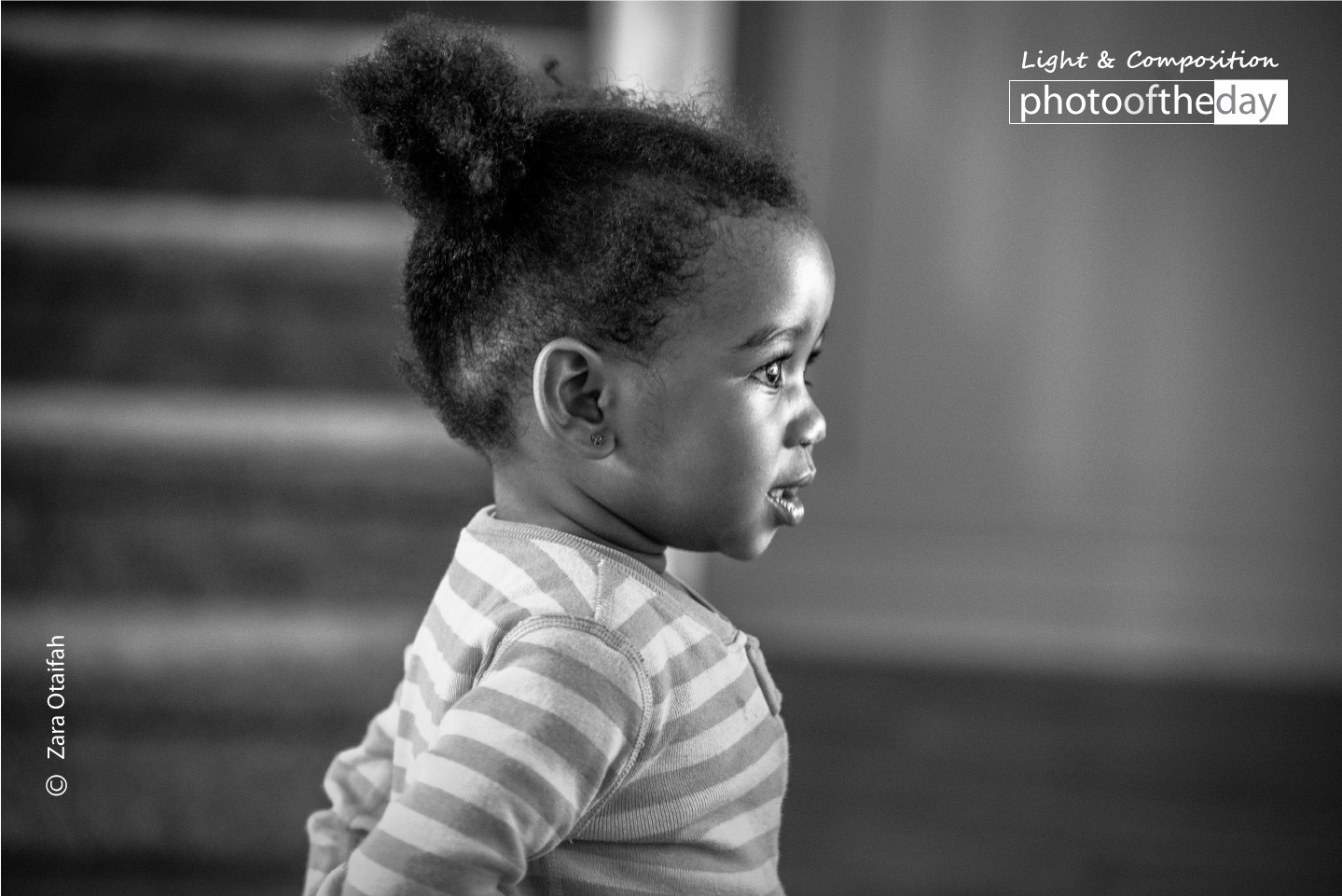
Zara Otaifah
Based in Denver, Colorado, Zara Otaifah is a versatile photographer with five years of experience specializing in portrait and event photography. Her diverse portfolio spans travel, landscape, architecture, and food photography, often driven by a deep commitment to storytelling. Otaifah has gained recognition for impactful projects such as 'Autism Mom Behind The Camera' and 'Dear Younger Me Here,' which have been exhibited at prominent venues including the Colorado Photographic Art Center and the Denver Month of Photography. She defines her artistic practice by an unwavering passion for her craft.
Resonance Score Breakdown
Transparency Note: The resonance score (10.0/20) is calculated based on social engagement metrics collected before the award announcement.
Expert Photography Reviews · 6
The World Behind the Glass
I was sitting on the floor this morning, trying to fold laundry, when I caught my nephew staring at a tablet. He was completely still. His mouth was slightly open, and his eyes were wide, reflecting a blue light that seemed to pull him entirely out of the room.
Read the reflection →The Mirror of Wonder
There is a particular stillness in the way a child observes the world, a state of being where the self dissolves into the object of attention. It is a quiet surrender.
Read the reflection →Reviews & Comments
Share your thoughts about this award-winning photograph. Your reviews contribute to the community engagement score.
The light here isn’t just illumination; it’s a quiet, artificial glow reflecting the internal landscape of a child. She stood in that domestic stillness, waiting for the screen’s luminescence to map the geography of her curiosity. I’ve spent hours watching shadows shift on mountains, but this gaze feels just as vast. It’s a rare, sacred intimacy. I find myself holding my breath, caught by the sheer weight of her focus. It’s a beautiful, silent communion.
Obsessing over the child’s sharp gaze feels like a missed opportunity. It’s technically competent, sure, but it’s safe. I’d rather see the screen’s glow bleed into the child’s skin, dissolving the edges of her face into the domestic chaos. Why resolve the background so clearly? This approach is closer to Hiroshi Sugimoto’s long-exposure theatres than to conventional portraiture. I’m bored by the clarity; I want to see what happens when the light actually breaks.
That gaze is electric. It’s the kind of focus that makes you hold your breath. I’ve seen that look in Winogrand’s work—the total surrender to the subject. Zara caught the exact millisecond before the child blinked or shifted. One tenth of a second later and the intensity would’ve dissolved into just another kid watching TV. It’s raw, it’s honest, and honestly? It made me miss my own childhood. She was ready. That’s everything.
f/2.8 at 50mm, 1/125s, ISO 800. The aperture choice is correct; it isolates the subject from the domestic clutter. Yet, the shutter speed is borderline for a restless child. I’ve seen too many portraits ruined by this kind of motion blur. It’s frustrating. The focus on the iris is sharp, but the noise at ISO 800 suggests a missed opportunity for better lighting. It’s technically competent, but it’s playing it safe. I wanted more precision.
We look at this child and see the world reflected in her pupils. Zara didn’t just snap a picture; she sat in the quiet, listening to the hum of that screen until the girl’s focus became the story itself. It’s a rare, honest stillness. I’ve spent hours staring into those eyes, and honestly, they make me feel like I’m finally seeing the future. It’s a photograph that asks to be returned to, again and again.
Most portraits of children glued to screens are forgettable, but this one sticks. It’s the reflection in her pupils—that tiny, flickering glow of digital light—that anchors the piece. I’ve seen thousands of domestic shots, yet this one avoids the trap of sentimentality by focusing on the cold, sharp intelligence in her gaze. It’s haunting. Thirty years from now, we’ll look back at this and recognize the exact moment our world shifted into the screen.