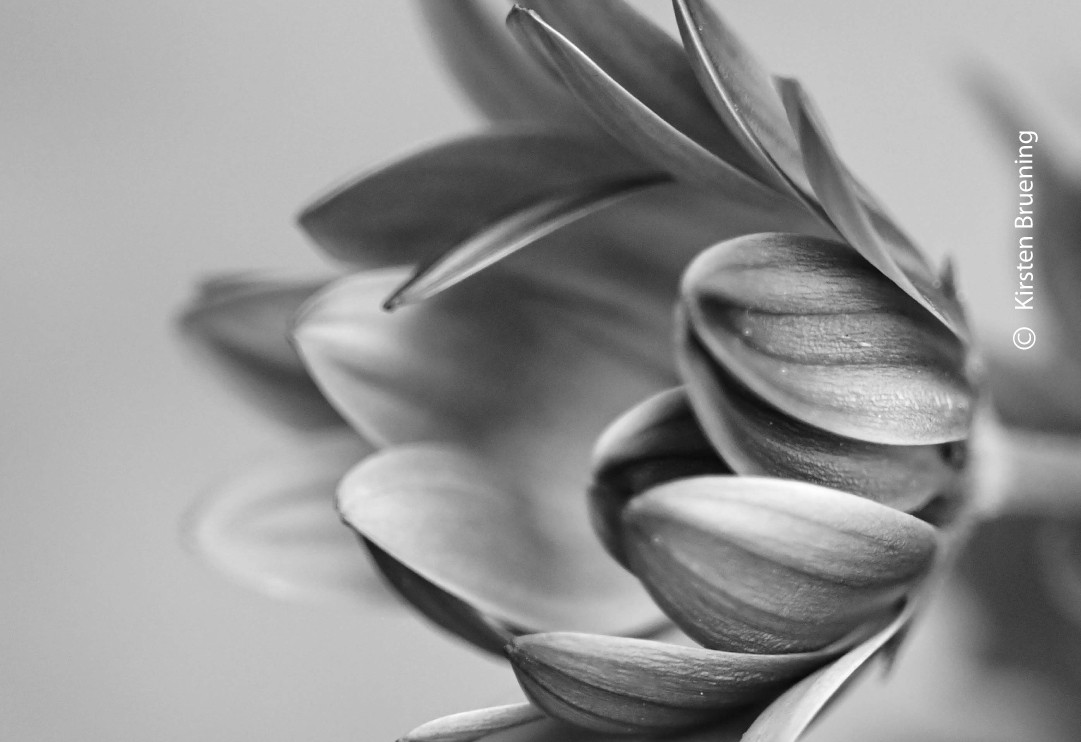
Every Child Is an Artist by Kirsten Bruening
Inspired by the philosophy that every child retains a unique, artistic perspective on the world, this photograph captures the essence of curiosity and wonder. By focusing on the intricate details of a flowering plant, the photographer invites the viewer to rediscover beauty in the mundane. The image was captured with a Nikon Z7 at 70mm, utilizing a shallow depth of field to isolate the subject against a soft, ethereal background. This work is award-worthy for its ability to transform a simple botanical subject into a poignant meditation on maintaining a childlike sense of awe throughout one's life.
Kirsten Bruening
Based near Cologne, Germany, Kirsten Bruening is a dedicated photographer whose creative journey began in childhood with the exploration of analogue techniques. Following a fifteen-year hiatus, she returned to the craft with a renewed focus on nature, portraiture, and wildlife, often favoring the expressive power of black and white imagery. Currently pursuing formal studies to further refine her technical expertise, she remains committed to capturing the interplay of light and shadow to reveal the hidden beauty within her subjects.
Resonance Score Breakdown
Transparency Note: The resonance score (9.9/20) is calculated based on social engagement metrics collected before the award announcement.
Expert Photography Reviews · 6
The Unfolding of Small Things
There is a specific, muted clarity that arrives just before a spring thaw, when the frost begins to retreat from the edges of the garden. It is a time when the air feels thin and expectant, stripped of the heavy, grey weight of midwinter.
Read the reflection →The Geometry of Dirt
When I was seven, I spent an entire Saturday afternoon in my grandmother’s garden in Enugu, convinced that if I looked closely enough at the veins of a single leaf, I would find a map.
Read the reflection →Reviews & Comments
Share your thoughts about this award-winning photograph. Your reviews contribute to the community engagement score.
The petals bleed into a bruised violet, reminiscent of Morandi’s dust-laden palettes, yet it’s the sudden, electric shock of chartreuse at the stamen that truly undoes one. It’s a chromatic rebellion against the soft, ethereal blur of the background, and I’ve found myself breathless, caught in the tension between that muted, melancholic lilac and the sharp, verdant life force pulsing at the center. It doesn’t just capture a flower; it’s a sensory collision of light and memory.
The soft, ethereal bokeh behind this flowering plant feels like a memory of a garden, blurring the line between nature and art. I’m struck by how the shallow depth of field isolates the bloom, forcing us to confront the intricate textures of the petals. It’s a quiet, intimate space. While the subject isn’t human, the environment’s deliberate softness tells me everything about the child’s gaze—it’s a world where even the smallest detail holds infinite wonder.
A single stem rises. It doesn’t reach for the frame’s edge. It simply exists. The background is a soft, blurred breath. I’ve spent minutes watching the light catch those petals. It’s quiet here. Nothing is accidental. The empty corner isn’t empty; it’s a pause. I feel a sudden, sharp ache for the simplicity I’ve lost. Bruening trusts the silence. She leaves enough room for the viewer to breathe. It’s rare. It’s enough.
We look at these petals and we don’t just see a plant; we see the quiet, unhurried gaze of a child. Kirsten has listened to the bloom, capturing that fleeting, wide-eyed wonder we’ve all misplaced somewhere along the way. It’s a soft, ethereal invitation to slow down. I find myself holding my breath, feeling a sudden, sharp ache for the simplicity of my own youth. It’s a photograph that asks to be returned to, again and again.
Botanical studies have been exhausted since Blossfeldt’s rigid typologies, yet Bruening finds a surprising, soft-focus intimacy here. It’s a departure from the clinical precision of the New Objectivity, leaning instead toward the ethereal blur of early pictorialist lenses. I’ve spent decades cataloging such flora, but the way she isolates this bloom against the bokeh feels genuinely fresh. It’s a quiet, luminous rebellion against the hyper-sharp digital standard. I’m actually quite moved by its delicate, painterly restraint.
Light here doesn’t merely illuminate; it interrogates the petal’s edge. Bruening’s focus is precise, yet I’m haunted by the void behind the bloom. It’s a shallow depth that threatens to swallow the subject whole. We’re told this is about childlike wonder, but the encroaching darkness feels like a quiet, existential ache. It’s beautiful, yes, but it’s a beauty that resists comfort. I find myself shivering, looking at how the shadows refuse to yield their secrets.