The Entry by Kirsten Bruening
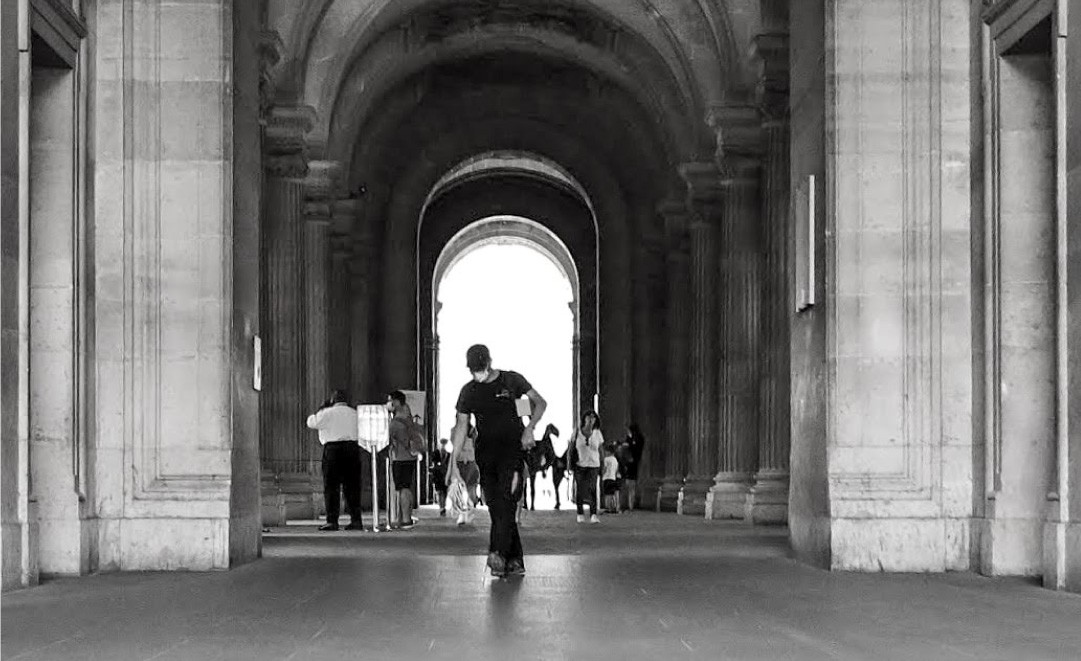
Captured with a wide 14mm perspective, this photograph serves as a poignant meditation on the beauty of transitions and the spirit of exploration. By framing architectural elements through a lens of curiosity, the photographer invites the viewer to experience the quiet wonder of a new destination. The image excels through its deliberate composition and the technical precision required to balance the ambient light of the scene. It stands as an award-worthy testament to the joy of discovery, freezing a fleeting moment of travel in a way that allows the viewer to return to that sense of wonder indefinitely.
Kirsten Bruening
Based near Cologne, Germany, Kirsten Bruening is a dedicated photographer whose creative journey began in childhood with the tactile discipline of analogue film. Following a fifteen-year hiatus, she returned to the craft with a renewed focus on the evocative power of light and shadow, particularly within nature, portraiture, and wildlife genres. Currently pursuing formal studies to further refine her technical expertise, Bruening continues to explore the emotional depth of monochromatic imagery while documenting her travels across the globe.
Resonance Score Breakdown
Transparency Note: The resonance score (10.4/20) is calculated based on social engagement metrics collected before the award announcement.
Expert Photography Reviews · 6
The Threshold of Elsewhere
There is a specific weight to the threshold of a house you no longer inhabit. It is not the wood or the iron that stays with you, but the way the light used to fall across the floorboards at four in the afternoon, illuminating dust motes that have long since settled into silence.
Read the reflection →The Threshold of Becoming
There is a sacred weight to the act of crossing a threshold. We often think of doorways as mere functional gaps, simple points of transit from one room to the next, or from the known into the unknown.
Read the reflection →Reviews & Comments
Share your thoughts about this award-winning photograph. Your reviews contribute to the community engagement score.
The stone archway pulls the eye inward, a threshold between the known and the infinite. I’ve stood in such Parisian shadows, waiting for the light to soften against the cold masonry. Kirsten didn’t rush; she let the 14mm lens breathe, capturing that fragile silence before the city wakes. It’s a quiet ache, really—that feeling of being small before a doorway that has seen centuries pass. She listened to the stone, and it finally spoke back.
Before the eye identifies the Parisian stone, something in the chest tightens. It’s the sudden, sharp intake of breath that comes with crossing a threshold. The 14mm distortion pulls the architecture into a curve that feels like a memory I haven’t lived yet. I’ve returned to this frame three times today, and each time, the shadows at the edges pull my pulse a little slower. It’s a quiet, heavy invitation to disappear into the light.
Architecture doesn’t move, but the light does. At 1/200sec, Bruening caught the transition of shadow across the stone perfectly. It’s the exact millisecond where the light hits the threshold, not a fraction before the glow fades or after it dulls. I’ve spent my life chasing that precise physiological alignment, and seeing it here in static stone actually makes my pulse jump. It’s the frame. Not the one before. Not the one after. This one.
The 14mm distortion pulls the frame into a rigid, converging geometry. It’s a calculated trap. The architectural lines force the eye toward the threshold, where the spatial tension finally resolves. It’s cold, yes, but the structural discipline is undeniable. I’ve rarely seen such aggressive use of negative space to anchor a composition. It doesn’t rely on sentiment; it relies on the frame’s own weight. It’s a brutal, necessary architecture. I find the sheer precision of it exhilarating.
It’s a clean, geometric study of Paris, yet I find myself craving the unpredictable mess of a living subject. There’s no tension here, no breath held in the shadows. When I look at that 14mm perspective, I don’t see a moment earned through stillness; I see a tourist’s convenience. It’s technically precise, sure, but it feels hollow. I’d trade all that architectural symmetry for just one frame where the photographer had to wait for life.
Using a 14mm lens here is a gamble that pays off. By pushing the threshold to the frame’s edge, Bruening captures the tension between solid masonry and the void beyond. The light raking across the stone reveals a texture I’ve felt under my own fingertips in Paris. It’s a rare, honest sequence; I almost feel the cool air hitting my skin. It doesn’t just show a doorway; it captures the anticipation of entering.