The Golden Soup from Mum by Diep Tran
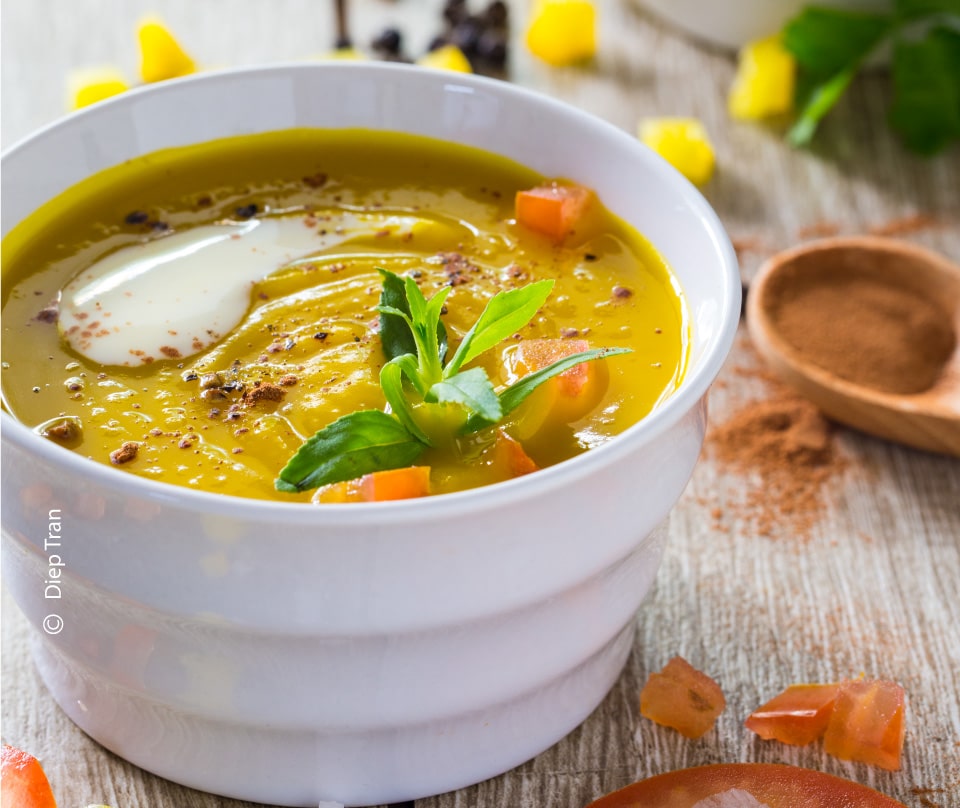
The Golden Soup from Mum captures a heartfelt culinary tradition, focusing on the vibrant, comforting essence of a homemade pumpkin soup. The photographer highlights the warmth and artistry inherent in her mother’s cooking, where experimentation with herbs and spices turns a simple meal into a golden masterpiece. By focusing on the rich textures and inviting colors of the dish, the image elevates a domestic moment into a celebration of love and nourishment. This photograph is award-worthy for its ability to transform a personal, everyday ritual into a visually evocative narrative that resonates with the universal appreciation for family and home-cooked food.
Diep Tran
Born in Vietnam and currently based in Brisbane, Australia, Diep Tran finds inspiration in the beauty of everyday objects and the intimate moments of domestic life. Her photographic practice is deeply influenced by a Buddhist upbringing, which fosters a profound appreciation for the natural world and the quality of life found in both simple and complex subjects. Through her exploration of light, shadow, and the nuances of timing, Tran creates work that reflects her global travels and a growing commitment to the art of pure photography.
Resonance Score Breakdown
Transparency Note: The resonance score (9.3/20) is calculated based on social engagement metrics collected before the award announcement.
Expert Photography Reviews · 7
The Alchemy of Memory
In the quiet hours of the afternoon, when the light begins to thicken and lean against the kitchen walls, one finds that the most profound histories are not written in books, but simmered in heavy pots.
Read the reflection →The Taste of Coming Home
I burned my toast this morning. It was a small, stupid mistake, but it left the kitchen smelling like charcoal and regret. I stood there for a moment, scraping the black edges into the sink, and suddenly I wasn't in my apartment anymore.
Read the reflection →Reviews & Comments
Share your thoughts about this award-winning photograph. Your reviews contribute to the community engagement score.
It’s easy to snap a bowl of soup before it cools, but capturing that specific, golden viscosity requires more than a hungry eye. One wonders if the steam was coaxed into place or if the photographer simply sat, spoon in hand, waiting for the light to hit the broth just so. It’s a quiet, domestic patience I rarely see in food work. Honestly, it makes me miss my own mother’s kitchen. Well earned.
The ochre viscosity of this broth, reminiscent of a Turner sunset dissolving into a bowl, hums with a warmth that’s almost tactile. It’s a symphony of turmeric and squash, vibrating against the cool, slate-grey shadows like a Morandi still life brought to life. I’m truly moved by how the light catches the steam; it’s not just soup, it’s a golden, liquid memory of home that makes one’s heart ache with a quiet, nourishing intensity.
Most food photography is just glossy marketing, but this feels like a memory I’ve lived. The way the light catches the steam against the deep, ochre tones of the broth isn’t just technical skill; it’s an invitation. I’ve seen thousands of bowls, yet this one makes me miss a kitchen I’ve never visited. It’s the humble, unpretentious texture of the pumpkin that anchors it. Thirty years from now, this warmth will still be worth remembering.
The kitchen’s threshold is defined here by the soup’s golden luminescence, acting as a datum for domestic intimacy. It’s a spatial enclosure where the bowl’s rim creates a solid-void relationship that anchors the frame. I’m struck by how the light catches the steam, suggesting a volume beyond the table’s edge. It doesn’t just document a meal; it captures the architecture of home. I’d give anything to be sitting in that chair, feeling that warmth.
Why obsess over the individual pumpkin fibers when you can capture the steam’s ghost? Diep Tran’s soup feels like a memory dissolving, closer to the ethereal blur of a Sugimoto seascape than a food magazine spread. I’m genuinely moved by the decision to let the edges bleed into the warmth. It’s not about resolution; it’s about the feeling of home. Why resolve the bowl when the atmosphere is what actually nourishes us? It’s beautifully imprecise.
Before the eye identifies the pumpkin, something in the chest softens. It’s the color—that specific, saturated gold that triggers a sudden, visceral hunger for a home I haven’t visited in years. The steam rising isn’t just vapor; it’s a phantom warmth against the skin. When I return to this, I don’t see a recipe. I see the quiet, repetitive labor of love. It’s a physical ache, really. It makes me miss my own mother’s kitchen.
Golden light pools in the bowl, but whose kitchen are we actually inhabiting? It’s a polished, curated domesticity that feels almost too tidy for the labor of cooking. Does this framing erase the steam, the sweat, and the mess of the actual process? I find myself craving the grit of the mother’s hands rather than just the aestheticized soup. Why must we sanitize the domestic to make it palatable for a global audience?