Making Beard by Jabbar Jamil
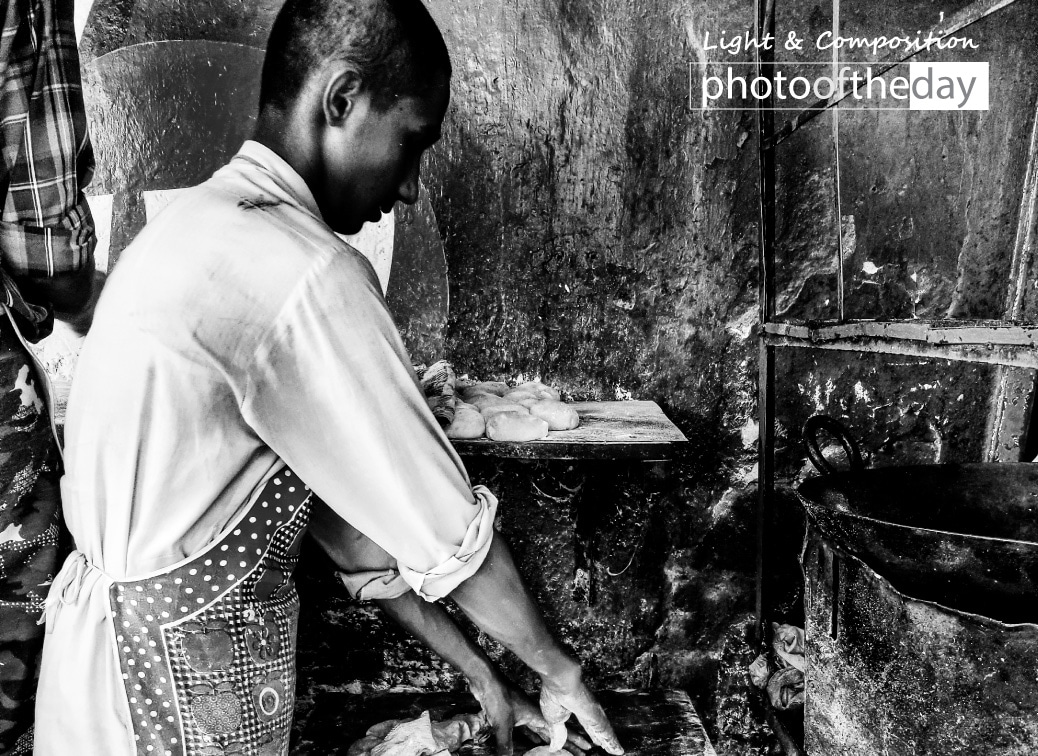
In the bustling atmosphere of a local bakery in Sialkot, a young boy is captured meticulously preparing dough balls for the traditional mud oven. This documentary photograph highlights the rhythmic, communal nature of bread-making, a process that imparts a unique, authentic flavor distinct from domestic cooking. The photographer focuses on the human element within this cultural ritual, emphasizing the boy's specific role in the production line. By documenting these vanishing traditional practices, the image serves as a poignant visual record of local heritage, earning recognition for its ability to transform a routine task into a compelling narrative of daily life.
Jabbar Jamil
Jabbar Jamil is a dedicated street photographer based in Sialkot, Pakistan. He views the medium as a vital bridge to the outside world, using his camera to step beyond his comfort zone and forge meaningful connections within his community. His work often explores the raw, unfiltered realities of his environment, serving as both a creative outlet and a personal form of expression. Through his lens, Jamil captures the essence of daily life, documenting the cultural nuances and human stories that define his surroundings.
Resonance Score Breakdown
Transparency Note: The resonance score (10.5/20) is calculated based on social engagement metrics collected before the award announcement.
Expert Photography Reviews · 8
The Weight of Flour
There is a specific silence that lives in the hands of a child learning a trade. It is not the silence of emptiness, but the silence of a future being folded into the present.
Read the reflection →The Weight of Daily Bread
There is a quiet physics to the way we prepare our sustenance. Before the heat, before the transformation of grain into something that sustains life, there is the hand.
Read the reflection →Reviews & Comments
Share your thoughts about this award-winning photograph. Your reviews contribute to the community engagement score.
The boy’s hands move with a precision that makes my own ache. But why is he here, working in the heat of a Sialkot bakery instead of a classroom? Jamil captures the rhythm, yet he ignores the systemic weight behind the labor. Is this heritage, or is it the exploitation of childhood framed as rustic charm? I’m unsettled by how we romanticize this boy’s toil. Does his exhaustion matter as much as the authentic flavor of the bread?
Watching the boy’s hands work the dough, I’m struck by the quiet, rhythmic focus he maintains. It’s a rare, unforced intimacy. In my field, we’re often guilty of forcing proximity, but here, the photographer has simply allowed the scene to breathe. He hasn’t intruded; he’s waited for the ritual to unfold naturally. It’s refreshing to see such restraint. When you stop chasing the shot and start respecting the space, the truth finally emerges.
The boy’s hands are mid-motion, but the rhythm is off. He’s pressing the dough, yet his fingers haven’t reached the point of maximum compression. It’s a millisecond early; the tension in his forearms hasn’t peaked. I’ve spent my life chasing that singular, explosive frame, and this just misses the mark. It’s a shame, really, because I wanted to feel the weight of that dough. It’s almost there, but not quite the one.
The ochre of the flour-dusted skin against the bruised, umber shadows of the Sialkot bakery evokes a Morandi-esque stillness that I find utterly intoxicating. It’s a palette of earth and heat, where the golden light doesn’t merely illuminate the dough but seems to knead it, turning the boy’s labor into a tactile symphony of toasted wheat and cooling stone. One can almost taste the dust; it’s a gorgeous, heavy quietude that lingers long after the gaze shifts.
It’s a dusty, flour-caked affair, isn’t it? One wonders how many hours Jamil spent leaning against that oven wall before the boy stopped noticing the lens entirely. Most would’ve snapped a frame and bolted for the tea shop. Instead, he’s captured the rhythm of the work, not just the motion. I’ve spent enough time in kitchens to recognize that focus. It’s a quiet, earned moment. He didn’t just find this; he waited for it.
The bakery’s threshold dissolves here, framing a raw, tactile datum where dough meets soot-stained masonry. It’s a study in solid and void; the boy’s focused posture anchors the composition against the oven’s cavernous, light-starved depth. I’m struck by how the raking light defines the texture of the flour against the dark, uneven wall. It’s not just a portrait; it’s a visceral sense of enclosure. You can almost smell the heat radiating from that mud.
The flour dust hanging in the bakery air mimics the interstellar medium, scattering light just as nebulae obscure distant suns. I’ve spent my life chasing photons that traveled eons, yet here, the warmth of a mud oven feels equally ancient. It’s a quiet, rhythmic gravity. Watching the boy’s hands work, I feel a sudden, sharp ache for our fleeting human warmth. We’re all just flickering light, aren’t we? It’s a beautiful, grounding perspective on our brief existence.
There’s a quiet dignity in how this boy handles the dough, but I can’t help feeling he’s just a prop in a scene he didn’t choose. He’s looking past the lens, not at the person behind it. It’s a clean shot, sure, but it lacks that spark of connection. I’ve spent years in kitchens like this; I wish the photographer had put the camera down and just talked to him first. It’s missing a soul.