Tough Lady by Jabbar Jamil
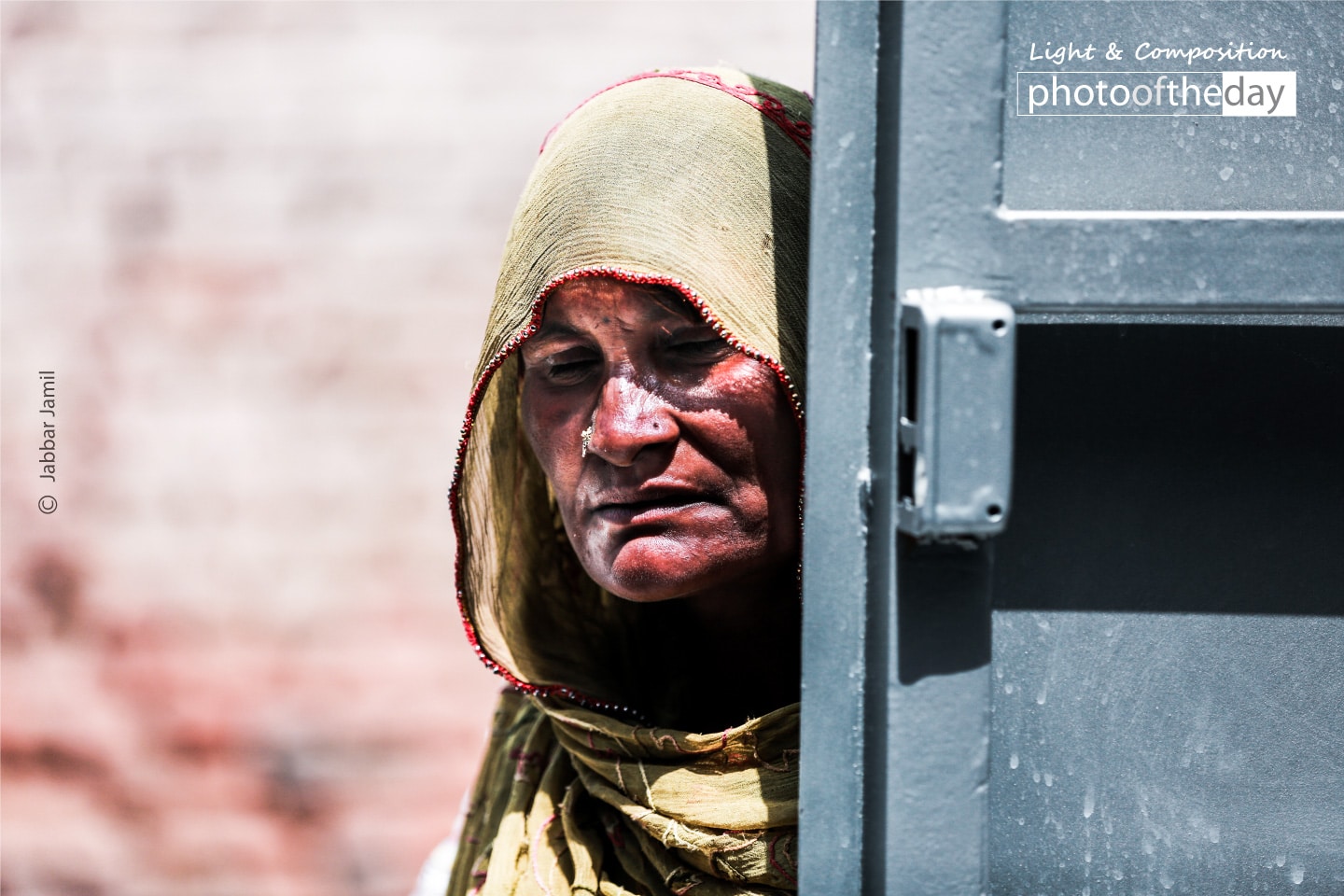
Captured under the harsh, unforgiving sun of Sargodha, this portrait depicts a woman waiting patiently at the threshold of a wedding house. The image documents a traditional Pakistani custom where families distribute gifts to visitors during wedding celebrations. Jabbar Jamil masterfully frames the subject, whose weary yet resilient expression speaks to the long wait endured in the heat. The photograph is award-worthy for its poignant cultural storytelling and the raw, authentic connection it establishes between the viewer and the subject, transforming a simple moment of social tradition into a powerful study of human patience and endurance.
Jabbar Jamil
Based in Sialkot, Pakistan, Jabbar Jamil is a dedicated street photographer who views his craft as a vital bridge to the outside world. By stepping beyond his comfort zone, he captures the unfiltered realities of daily life, finding both creative expression and personal solace in the lens. His work is defined by a commitment to documenting the world exactly as it appears, often highlighting the poignant, unvarnished moments that define the human experience within his community.
Resonance Score Breakdown
Transparency Note: The resonance score (10.5/20) is calculated based on social engagement metrics collected before the award announcement.
Expert Photography Reviews · 7
The Architecture of Endurance
In the arid scrublands, certain desert shrubs enter a state of profound dormancy during the peak of the heat, withdrawing their vital fluids deep into the root system to survive the relentless glare of the sun.
Read the reflection →The Weight of the Threshold
I often find myself thinking about the people who hold the edges of our lives together—the ones who stand at the doorways of celebrations, waiting for the world to turn.
Read the reflection →Reviews & Comments
Share your thoughts about this award-winning photograph. Your reviews contribute to the community engagement score.
The sun in Sargodha doesn’t ask; it demands. She’s anchored in that relentless, vertical glare, waiting while the shadows shrink beneath her feet. I’ve felt that heat, the way it strips everything down to the bone. It’s a heavy, silent vigil. Looking at her, I feel a sudden, sharp ache in my own shoulders. She isn’t just waiting for a wedding; she’s enduring the light itself, holding her ground until the world finally turns.
Sargodha’s sun doesn’t just illuminate; it interrogates. Jabbar Jamil understands that shadows aren’t merely absences, but the heavy, silent architecture of endurance. In the deep, ink-stained recesses of this woman’s veil, I feel a crushing, ancient weight that makes my own breath hitch. She isn’t just waiting for a wedding gift; she’s anchored in the dark, resisting the glare. It’s a brutal, necessary truth. When light is this cruel, only the shadows remain honest.
The frame’s geometry is its salvation. The subject’s placement against the vertical threshold creates a rigid, architectural anchor that prevents the composition from collapsing into mere sentiment. It’s a brutal, disciplined arrangement of mass. The negative space doesn’t just breathe; it exerts pressure on the subject’s weary posture. I’ve rarely seen such structural hostility yield to such precise balance. It’s cold, it’s calculated, and frankly, it’s the only reason this frame holds together at all.
The harsh sun of Sargodha is just a local star, yet it’s the same light that fuels the cosmos. I’m struck by the woman’s eyes; they hold a gravity that rivals a collapsing nebula. While I usually measure exposure by thermal noise and the long journey of photons, here, the sensor captures a different kind of endurance. It’s a quiet, heavy patience. I find myself humbled by her stillness, which feels as ancient as the stars.
That threshold in Sargodha isn’t just a frame; it’s a datum defining the boundary between public expectation and private ritual. The harsh, raking light flattens the masonry, yet it emphasizes the woman’s weary posture against the solid void of the doorway. I’m struck by how the fenestration—or lack thereof—traps the heat, making the architecture feel heavy, almost suffocating. It’s a brutal, honest spatial experience. I can almost feel the dust settling on those sun-baked walls.
She’s waiting in that brutal Sargodha heat, and you can tell she’s tired of being watched. There’s a distance in her eyes that tells me she didn’t invite this lens into her space. It’s a capture, not a gift. I feel a heavy ache in my chest looking at her hands; they’ve done so much work. I wish the photographer had sat with her long enough to earn a smile, or at least a nod.
Most portraits from Sargodha this year relied on staged intensity, but Jamil’s subject is different. It’s the way her calloused hands grip that fabric—a detail so heavy with exhaustion it makes my own shoulders ache. She isn’t performing for the lens; she’s simply enduring. What separates this from technically similar work is the refusal to romanticize her wait. It’s a brutal, honest document of patience that will still matter thirty years from now. It’s earned.