Risky Path by Jabbar Jamil
In the bustling outskirts of Sialkot, Jabbar Jamil captures a precarious daily ritual where locals traverse water streams via active rail tracks. Recognizing that only two trains pass through daily, residents treat these tracks as a routine shortcut, creating a scene of high tension and stark contrast. Jamil masterfully identifies the visual potential in this dangerous environment, utilizing the geometry of the tracks and the human element to craft a compelling composition. The resulting image is award-worthy for its ability to transform a mundane, risky commute into a powerful narrative of resilience and urban survival, rendered with a keen eye for dramatic light and shadow.
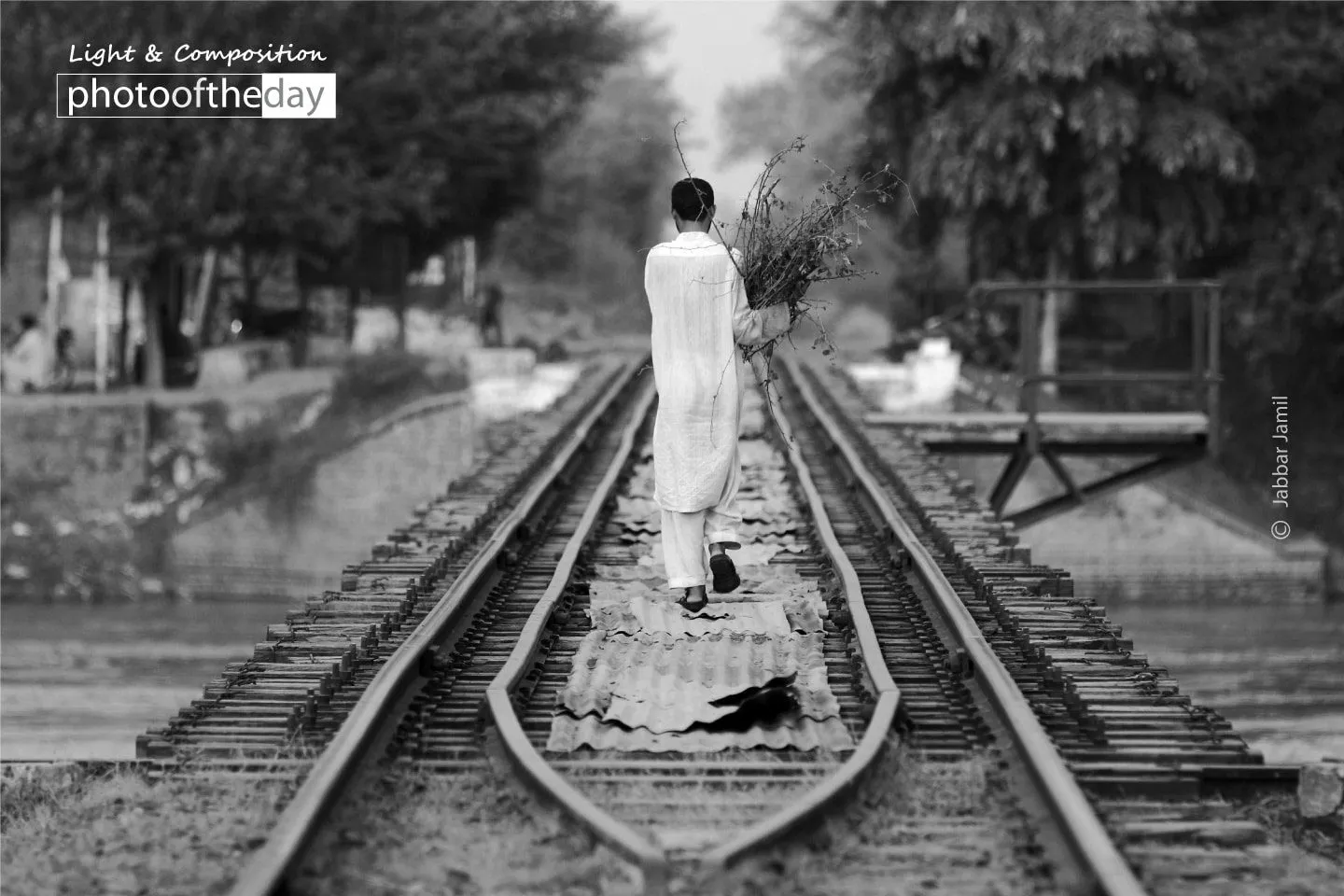
Jabbar Jamil
Based in Sialkot, Pakistan, Jabbar Jamil is a dedicated street photographer who views his craft as a vital bridge to the outside world. By stepping outside his comfort zone, he captures the raw, unfiltered reality of his surroundings, often finding beauty in scenes that are not inherently picturesque. For Jamil, photography serves as both a profound creative outlet and a therapeutic practice, allowing him to forge meaningful connections with the people and environments he documents through his lens.
Resonance Score Breakdown
Transparency Note: The resonance score (5.0/20) is calculated based on social engagement metrics collected before the award announcement.
Expert Photography Reviews · 3
The Weight of the Crossing
Why do we insist on walking the lines that were never meant to hold our weight? We spend our lives navigating the narrow margins between safety and ruin, often mistaking the path of least resistance for the path of least danger.
Read the reflection →The Iron Thread of Routine
We are creatures of habit, stitching our days together with the same repetitive threads. We walk the same lines, believing that familiarity is a shield against the unpredictable.
Read the reflection →Reviews & Comments
Share your thoughts about this award-winning photograph. Your reviews contribute to the community engagement score.
The steel rails slice the frame, forcing the eye toward that narrow, dangerous crossing. It’s a high-wire act of daily survival. Jamil caught them right as the geometry aligned with the human pulse. One tenth of a second later and the tension would’ve evaporated into just another commute. My heart actually skipped a beat looking at the scale of those tracks. That’s the Winogrand spirit—finding the chaos, then freezing it before it escapes. Perfect timing.
Sialkot’s rail tracks offer a geometry that’s begging for more than just a crisp, documentary gaze. I’m struck by how Jamil keeps the scene so rigidly sharp; it’s almost too polite for such a precarious, kinetic ritual. Why resolve every pebble when the danger lies in the blur of a passing train? I’d have preferred a long exposure here, turning that human resilience into a ghostly smear, closer to Sugimoto’s theatres than this static, safe record.
The geometry here is striking, but I can’t help feeling uneasy. When we treat human survival as a mere compositional element, we risk turning desperation into a spectacle. I’ve spent weeks in the field waiting for a creature to trust my presence; it’s a slow, quiet pact. This scene feels extracted, not earned. It’s a high-tension frame, sure, but did the photographer consider the cost of lingering where life is already so precarious?